


Life moves fast. And somewhere between the notifications, the to-do lists, and the thousand small things demanding your attention, it’s easy to lose that quiet feeling inside yourself. Most people spend their whole day reacting — to other people, to noise, to whatever comes next — and by the time they fall into bed at night, they haven’t had a single moment that truly belonged to them. That steady, calm center you’re looking for? It hasn’t gone anywhere. It just needs a little help finding its way back.
The good news is you don’t need a meditation retreat or a complete life overhaul to feel more at peace. What actually works are small, consistent rituals — things you can do in five or ten minutes that signal to your body and your mind that it’s safe to slow down. These aren’t complicated. A cup of tea made slowly. A few deep breaths by an open window. A short walk with your phone in your pocket. Simple things, done with intention, carry a kind of quiet power that most people completely underestimate.
This is really about coming back to yourself. Every single day the world pulls you outward — toward screens, toward noise, toward other people’s urgency. Rituals pull you back in. And the more you practice them, the more you start to notice something shifting. A little more steadiness when things get hard. A little more space between you and whatever is stressing you out. This is what daily peace rituals can do when you actually stick with them — and this article is going to show you exactly how to build them into your life.
Your Morning Sets the Whole Day’s Tone

Most people start their day by checking their phone. Within two minutes of waking up, they’ve already let the world in — emails, news, social media, someone else’s emergency. And then they wonder why they feel behind before they’ve even had breakfast.
A morning ritual for calm starts before any of that. Even something as small as keeping your phone face-down for the first fifteen minutes can completely change how your morning feels. That small pocket of time — quiet, unhurried, just yours — is where you get to choose what headspace you’re starting from.
Try this: when you wake up, sit on the edge of your bed for two minutes before you stand up. Just breathe. Let yourself be groggy. You don’t have to be alert or productive yet. This one tiny habit is almost laughably simple, but it works because it puts a pause between sleep and the world. You’re not rushing into the day. You’re easing in.
From there, making your bed counts. It sounds almost too basic to mention, but there’s real magic in it. You’ve already completed something. The room looks better. Your brain registers a small win before 7am, and that feeling carries. Calm people tend to have rituals around tidiness — not because they’re obsessive, but because outer order genuinely creates inner calm.
If you drink coffee or tea in the morning, try making it slowly on purpose. No multitasking. Just the kettle, the cup, the smell of it. Stand at your kitchen window while it steeps or brews. Watch the light. This is a mindfulness practice — it just doesn’t require a cushion or an app.
Breathing is the Most Underrated Ritual of All

Here’s something most people don’t know: your breath is the only part of your nervous system you can control consciously. Everything else — your heart rate, your digestion, your stress hormones — runs on autopilot. But breathing sits right at the crossover point. When you breathe slowly and deliberately, you’re actually sending a message to your brain that the threat is over. The body hears it. The nervous system responds.
The 4-7-8 breath is one of the simplest breathing rituals for stress relief you’ll ever try. Breathe in for four counts, hold for seven, breathe out for eight. Do this four times. That slow, extended exhale activates your parasympathetic nervous system — the rest-and-digest mode that most people are completely starved of during a normal day. It takes less than two minutes and it works. Genuinely works.
Box breathing is another one. Breathe in for four counts, hold for four, breathe out for four, hold for four. Repeat. This is the same technique used by navy divers and emergency room nurses to stay calm under pressure. You don’t need a crisis to use it — it’s just as powerful sitting at your kitchen table.
You can do these anywhere. In your car before you walk into a stressful meeting. In the bathroom at a party when you need a moment. In bed when your thoughts won’t stop. The breath is always available. It’s the most portable calm ritual there is.
The Ritual of Moving Slowly

There’s a type of walking most people never do. Not the walking that gets you somewhere, not the power walk with headphones in — but slow, quiet walking with nowhere in particular to be. In Japan they call a version of this shinrin-yoku, or forest bathing. You’re not exercising. You’re just moving through the world at human pace, actually noticing it.
You don’t need a forest. A neighbourhood street works. A park. Even a slow lap around your backyard. The point is to leave the phone behind — or at least in your pocket, off and face-down — and just walk. Look at things. The texture of bark. The way light falls. The sound of birds or traffic or wind. Your only job is to notice.
This kind of slow walking practice for calm is one of the fastest ways to reset a busy or anxious mind, because it gently forces your attention onto the present. You can’t ruminate about tomorrow’s problems when you’re actually paying attention to what’s in front of you. And unlike meditation, which some people find difficult to sit still for, walking gives the restless part of you something to do.
Even ten minutes of this, a few times a week, makes a difference. People who build this into their lives often describe it as the part of their day they protect most fiercely — their non-negotiable.
Evening Rituals That Actually Help You Wind Down

Sleep is where your body and mind do most of their healing. But most people make it nearly impossible for that to happen because they go from screen to pillow with no transition at all. The brain needs time to shift gears. That’s what evening rituals are for.
Start with light. In the hour before bed, dim whatever you can. Overhead lights off, lamps on. This isn’t just aesthetic — lower light tells your brain it’s getting close to dark, and your body starts producing melatonin. Bright blue light from screens suppresses that process completely, which is why scrolling until midnight makes sleep harder even when you’re exhausted.
Journaling is one of the most powerful nightly rituals for peace of mind, and it doesn’t have to be deep or literary. Three things you’re grateful for. One thing that bothered you that you’d like to set down. What you’re looking forward to tomorrow. Writing thoughts down gets them out of the loop they run in your head. It’s like closing browser tabs — the brain stops trying to hold everything open.
If you have a bath or shower at night, make it slower. Let it be the ritual. Use something that smells good. Let the warm water be a physical signal that the day is done and your body is safe to relax.
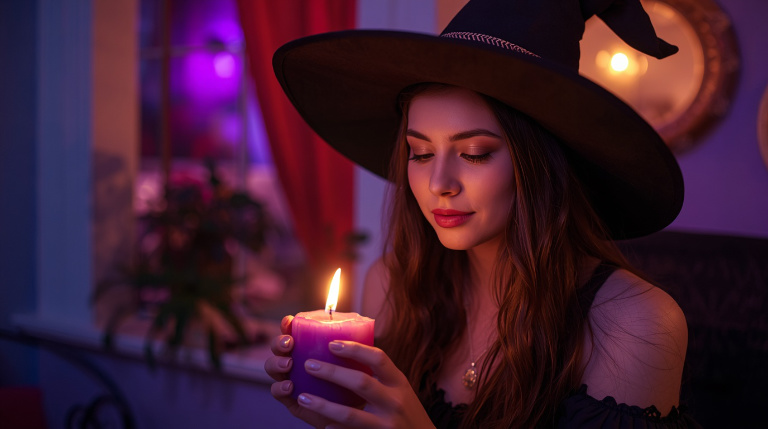
Some people light a candle in the evening and blow it out right before bed. It sounds small, almost silly. But that repeated cue — the match, the flame, the slow breath to extinguish it — becomes a powerful signal over time. The body starts associating it with the end of the day. Rituals work partly through repetition. The more you do the same thing in the same sequence, the more deeply it gets wired in.
The Secret Power of Doing One Thing at a Time
Most people think multitasking is efficient. Research consistently shows the opposite — switching between tasks actually costs more time and energy than doing them sequentially, and it keeps your nervous system in a low-level state of alert. Single-tasking is one of the most underappreciated calming rituals for anxiety and stress that exists.
Try picking one ordinary task tomorrow and doing only that. Wash the dishes and just wash the dishes. Feel the water temperature, hear the sound of it. Fold the laundry slowly, match the socks without checking your phone. Read a book without glancing at your messages every few pages.
This is hard at first. Your brain has been trained for constant stimulation and it will push back. But stick with it, and within a few minutes something quietly shifts. Your shoulders drop. Your breathing slows. Your mind stops racing. You’re not meditating. You’re just doing one thing. And it turns out that’s enough.
This is what ancient traditions have always understood — that full presence, in whatever you’re doing, is its own form of peace. You don’t have to go looking for calm. You can find it in the ordinary.
How to Actually Make These Stick

The reason most people don’t have peace rituals isn’t that they don’t want them. It’s that they try to add too much too fast. They download the app, plan the morning routine, buy the journal — and two weeks later it’s all fallen apart because life got in the way.
Start with one. Just one ritual. Pick the one that calls to you most from this article and do it for two weeks before you add anything else. Attach it to something you already do — your morning coffee, getting into bed, stepping outside. When a new behaviour hooks onto an existing habit, it’s ten times more likely to stay.
And on the days you miss it — because you will miss it sometimes — that’s fine. The ritual doesn’t break. You just come back to it the next day. Peace practices aren’t about being perfect. They’re about returning, again and again, to yourself.
That’s the whole thing, really. Not some distant state you arrive at and then get to keep. A practice. A direction you keep choosing. A quiet coming-home, every single day.