


The ocean covers most of this world, and most of it, we will never see with our own eyes. Down where the light fades and the water turns cold and blue-black, there’s a whole society living out lives most people never think twice about. Mermaids aren’t a myth tucked into old sailor stories for fun. They’re real, they’re organized, and they’ve been sharing these waters with us since before anyone was writing anything down.
This article is a look into that world. Not the cartoon version with the shell bras and the catchy songs, but the actual mermaid folklore passed down through generations of coastal families, sea witches, and the odd fisherman who came back with a story nobody believed. We’ll go through how mermaids live, where they live, why they exist at all, the different types you might come across, and what happens when their world and ours start to overlap.
Some of what’s here is comforting. Some of it is a genuine warning. Not every creature under the waves wants to be your friend, and knowing the difference between a curious reef mermaid and something older and hungrier from the deep trenches could matter more than you’d think. So take your time with this one. Whether you’re planning a trip to the coast, dabbling in a little sea magic, or just curious about the neighbours nobody talks about, there’s something here for you.
The Lives of Mermaids

Mermaids live in pods, not unlike a family or a small village. A pod usually centers around an older mermaid, someone who’s been around long enough to know the currents, the food sources, and which humans to trust and which to steer clear of. Younger mermaids stay close to their pod for decades before branching out on their own, and it’s rare to find one living completely alone unless something has gone wrong.
Their days follow the water more than the sun. Mermaids are most active during the hours when the tide is turning, since that’s when fish are easiest to catch and when the currents carry the most interesting things down from the surface. A lot of mermaid life revolves around gathering — shells, stones, bits of sunken treasure, anything shiny that catches the current. It’s not hoarding for the sake of it. These items get traded, gifted, and worn as a kind of social currency within the pod.
Communication between mermaids happens through a mix of song, touch, and a kind of pressure-language felt through the water itself, something like the way you’d feel a bass note in your chest before you actually hear it. This is part of why their singing carries so far and why it affects humans so strongly — it was never built for our ears, but we pick up fragments of it anyway, and it tends to hit something primal in us.
Mermaids also age very differently from humans. A mermaid might spend what looks like a human lifetime as a young adult, barely changing in appearance, before entering a much longer stretch of maturity. Some of the oldest mermaids in a pod have lived long enough to remember coastlines that don’t exist anymore, harbours that have shifted, towns that used to be villages. That kind of memory gives them a patience about the world that’s hard for most humans to relate to.
The Mermaid City

Deep beneath the surface, in the parts of the ocean where the water pressure would crush most things we know, mermaids build. Not huts or nests, but proper cities, grown out of coral, shell, and stone shaped over centuries by careful hands. These cities sit in warm, sheltered basins where the current is gentle enough to build without everything getting swept away, and they’re often protected by natural reef walls that keep out anything unwanted.
The architecture is unlike anything on land. Towers spiral upward instead of standing straight, following the way coral naturally grows, and the streets, if you can call them that, are really open channels of water that flow between buildings like avenues. Bioluminescent plants and creatures are cultivated along these channels, so the whole city glows faintly at night in blues, greens, and the occasional deep purple, without a single flame needed anywhere.
Each mermaid city tends to have a central gathering hall, usually the oldest structure in the settlement, where pods come together for ceremonies, trade, and decisions that affect the wider community. Around that hall you’ll find markets where mermaids trade gathered treasures, food, and even favours. Some cities specialize — one might be known for its pearl divers, another for its healers, another for singers whose voices are said to be strong enough to calm a storm.
Access to these cities is heavily guarded, and for good reason. A mermaid city holds generations of history, magic, and treasure, and letting the wrong creature — or the wrong human — find the entrance could put the whole community at risk. Most humans who’ve claimed to see one only caught a glimpse from a great distance, a soft glow under dark water that vanished the moment they got closer.
Purpose of Mermaids
Every creature has a role, and mermaids are no exception. One of their oldest and most important jobs is keeping balance in the ocean itself. They tend reefs the way a gardener tends a garden, encourage certain currents, discourage others, and generally act as caretakers for the parts of the sea that would otherwise be left completely wild and unmanaged.
Mermaids also act as something like guardians of the boundary between our world and theirs. The ocean holds more than fish and coral — it holds old magic, sunken secrets, and things that are better left undisturbed. Mermaids keep watch over that boundary, and a lot of what looks like mischief or trickery from a mermaid is actually them steering a human away from danger they can’t see.
Beyond the practical side, mermaids carry stories. With such long lives and such strong memories, they end up as the keepers of history for the sea — remembering shipwrecks, lost treasures, old pacts made between humans and the water, and the true versions of legends that got twisted into something else by the time they reached dry land. In a way, talking to a mermaid is talking to a living archive of everything the ocean has ever seen.
Types of Mermaids

Not all mermaids are the same, and lumping them together is a mistake plenty of people have made before realizing the type in front of them wasn’t the friendly kind. Here are seven of the most recognized types found across the world’s waters.
Sirens
Sirens are probably the most famous type of mermaid, and also the most feared. Found mostly around rocky coastlines and narrow straits, sirens use their voices as their main tool, singing in a way that pulls a person’s attention completely away from anything else, including their own safety. Sailors have been drawn straight into rocks by a siren’s song, not because the siren necessarily wanted them dead, but because sirens don’t always understand how fragile human bodies and human boats really are.
Physically, sirens tend to have sharper features than other mermaid types — more angular faces, longer fingers, and eyes that seem to shift colour depending on the light. Their tails are usually darker, deep greens and blacks that blend into rocky shallows rather than open water. This lets them stay hidden among the rocks while they sing, appearing only once someone has already gotten close.
Sirens live in smaller, tighter groups than most mermaid types, sometimes as few as two or three together. They’re territorial about their stretch of coastline and don’t take kindly to other mermaids, or humans, wandering into it uninvited. That territorial streak is part of why sirens have such a dangerous reputation, even though not every siren means harm.
If you’re near a coastline known for shipwrecks or strange disappearances, a siren may well be the reason, and caution is genuinely warranted. Unlike some of the other types on this list, sirens are not always safe to approach, and their song can be extremely difficult to resist once it starts.
Reef Mermaids
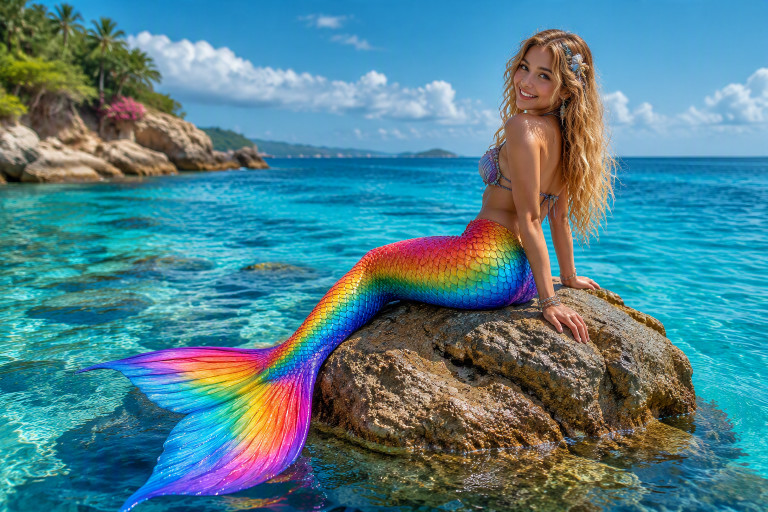
Reef mermaids are the type most people picture when they imagine a friendly, colourful mermaid. They live in shallow, warm waters around coral reefs, and their tails often mirror the colours of the reef they call home — bright oranges, pinks, and turquoises that shift slightly depending on the season and the health of the coral around them.
These mermaids are naturally curious and, compared to other types, far more comfortable around humans, especially swimmers and divers who show respect for the reef. Reef mermaids spend much of their time tending the coral itself, clearing away debris, encouraging fish populations, and repairing damage from storms.
Socially, reef mermaid pods are large and welcoming, often absorbing outsiders — including other mermaid types — more easily than most. Their cities, or more often villages, tend to be smaller and less fortified than deep-water cities, built into the coral itself rather than carved from stone.
Because they’re so approachable, reef mermaids are usually the ones people mean when they talk about a “friendly mermaid encounter.” They enjoy trading trinkets, playing games with visitors, and are generally seen as good luck by coastal communities who treat the reef with care.
Deep Sea Mermaids
This is where things get genuinely serious. Deep sea mermaids live far below where sunlight reaches, in the cold, crushing dark of ocean trenches. Very little is known about their society firsthand, because very few who’ve encountered one have come back to describe it clearly.
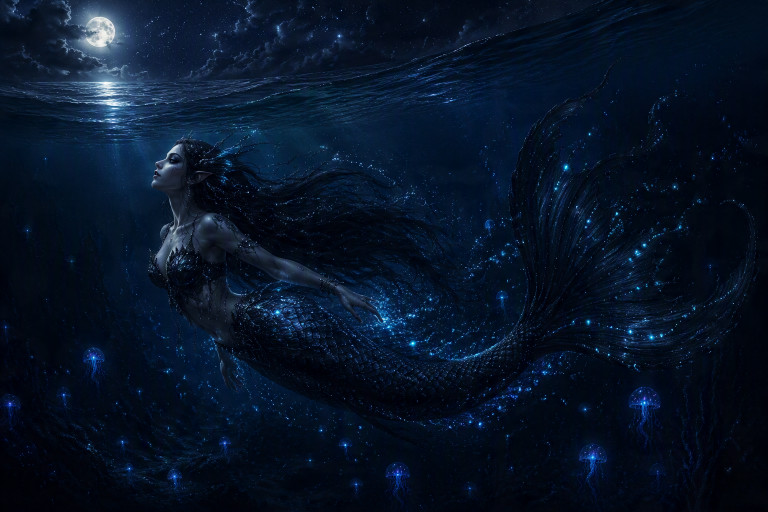
Their appearance reflects where they live — pale, almost translucent skin, oversized eyes built for total darkness, and tails that are more eel-like than the graceful fins associated with shallow-water mermaids. Some are said to produce their own light, similar to anglerfish, using it to lure prey rather than to communicate.
Deep sea mermaids are not considered evil exactly, but they operate on rules that have nothing to do with human morality. To them, a human wandering into deep water is simply another creature that’s wandered somewhere it doesn’t belong, and they treat it accordingly. This is the type most worth genuinely avoiding.
If you ever get a strong, sudden feeling of being watched in deep or open water, especially far from shore, it’s worth heeding that instinct and heading back. Deep sea mermaids rarely chase into shallow water, so getting back to the shallows is usually enough to be safe.
River Mermaids
Not all mermaids live in the sea. River mermaids, sometimes called freshwater merfolk, live in large rivers, lakes, and the wide mouths where rivers meet the ocean. They’re smaller than their saltwater cousins, with tails built for speed against a current rather than long-distance swimming.
River mermaids tend to be deeply tied to a single stretch of water, sometimes never leaving a particular river system their entire lives. This gives them an intimate knowledge of that specific place — every bend, every hidden pool, every human settlement along the banks — and they’re often considered the guardians of the rivers they inhabit.
Their relationship with nearby human communities tends to be old and complicated, built up over generations of small trades and small favours. A river mermaid might guide a lost boat back to shore, or warn of a flood before it happens, in exchange for offerings left quietly at the water’s edge.
Because rivers are more fragile ecosystems than oceans, river mermaids are also more sensitive to pollution and disruption. A river mermaid pod struggling or disappearing from a waterway is often the first and clearest sign that something in that ecosystem has gone badly wrong.
Ice Mermaids
Found in the frigid waters near the poles, ice mermaids have adapted to a life most other types couldn’t survive. Their tails are a pale silvery-blue, almost white, and their skin has a faint shimmer to it, similar to frost catching the light. They’re built for endurance in freezing water rather than speed.
Ice mermaid society is quieter and more solitary than most other types, with smaller pods spread across huge distances of icy ocean. They communicate over long ranges using low, resonant calls that travel further through cold water than warm, similar to the calls of whales.
These mermaids are generally reserved but not hostile. They tend to avoid contact with humans simply because so few humans venture into their territory in the first place. Sailors and explorers who’ve reported ice mermaid sightings usually describe them as watchful from a distance rather than approaching directly.
Ice mermaids are closely tied to the health of polar ice, and their pods shift and relocate as ice patterns change season to season. Coastal communities near the poles have old stories describing them as quiet omens, appearing before a harsh winter or a particularly good hunting season.
Merrow
Merrow are a type most associated with the cold, rocky coastlines of the North Atlantic. What makes merrow unique is a strong tradition of shape-shifting — many merrow are said to own a special cap or cloak that lets them walk on land in human form, and losing that item can trap them ashore.
Merrow society places a heavy emphasis on family lines and old pacts. Stories of merrow marrying humans go back centuries, usually beginning when a human finds and hides a merrow’s cap, preventing her from returning to the sea. These stories rarely end happily, and they’re often told as much as a warning about honesty as they are a romance.
In their natural form, merrow have green-tinted hair, webbed hands, and eyes with a distinct golden ring around the pupil. Male merrow, sometimes described separately, tend to be far less concerned with appearances and are said to be a rougher, more solitary presence along the coast compared to the female merrow.
Merrow pods are tightly knit and protective of their coastline, similar to sirens, but without the same reputation for danger. They’re more likely to test a human’s character than to cause direct harm, using tricks and illusions rather than outright deception with malicious intent.
Storm Mermaids
Storm mermaids live in open, unpredictable waters and are deeply tied to weather patterns, particularly storms. Their tails shift in colour with the weather itself — calm grey-blue in fair conditions, deepening to near-black with flashes of white during a storm. Some sailors describe them as almost impossible to spot until the weather turns.
These mermaids don’t create storms, but they’re drawn to them, riding the powerful currents that come with rough weather and using the chaos as cover to travel long distances quickly. A storm mermaid sighting was traditionally taken as a sign that dangerous weather was coming, giving coastal communities valuable warning before modern forecasting existed.
Storm mermaid pods are loose and shifting, more like a network than a fixed community, since members travel constantly and rarely settle in one place for long. This makes them harder to study or understand compared to other types, and much of what’s known about them comes from scattered sailor accounts rather than any direct contact with their cities or gathering places.
Despite their intimidating association with rough seas, storm mermaids aren’t considered malicious. Ships that show respect for the sea and don’t push their luck in worsening weather are generally left alone, while those that ignore clear warning signs are the ones more likely to have a genuinely bad encounter.
Mermaids and Humans

The relationship between mermaids and humans is old, tangled, and a lot more common than most people realize. It goes back as far as coastal life itself — wherever humans have lived near the water long enough, some kind of relationship with the mermaids nearby tends to form, whether that’s trade, friendship, rivalry, or something deeper.
Most day-to-day interactions are small. A fisherman who leaves part of his catch as thanks after a good season. A mermaid who nudges a drifting boat back toward shore before a storm hits. These small exchanges build trust over generations, and coastal families with a long history in one place often have their own private stories about “their” local mermaids, passed down the same way any family history would be.
Romantic relationships between mermaids and humans are less common, but they do happen, and they tend to follow one of two paths. In the first, a human falls for a mermaid who can take human form, at least temporarily, and the relationship plays out on land, in the human world, with the mermaid returning to the water when she needs to. These relationships can last a long time, though they usually require real compromise, since a mermaid living too long away from the sea tends to weaken, both in body and in spirit.
The second path is rarer and more serious — a human choosing to become a mermaid themselves in order to build a life in the ocean world. This isn’t a decision made lightly, and it’s not something that happens by accident. It usually requires the help of a sea witch, a willing mermaid partner, and a genuine, tested commitment, since undoing the change once it’s done is extremely difficult. Those who go through with it leave behind their old life almost entirely, joining a pod and starting over in a world with very different rules.
Mermaids themselves are generally more open to these relationships than people might expect, particularly female mermaids, who have a long history of curiosity about human life, human customs, and human company. It’s not unusual for a mermaid to spend time observing a coastal town for years before ever making contact, drawn in by the same things that draw humans toward the sea — curiosity about a different way of living.
Merman, on the other hand, tend to feel very differently. Where female mermaids are often curious and open, merman are typically far more guarded and prefer to avoid human contact altogether. Their reasoning tends to come down to history — merman have historically borne the brunt of human hunting, netting, and exploitation far more than their female counterparts, and that history has left a lasting wariness that gets passed down through generations. A merman who does interact with humans usually does so out of necessity, not curiosity, and rarely lingers.
This difference shapes a lot of mermaid-human folklore. Nearly every story about a romantic or close relationship between a human and a mermaid involves a female mermaid, while merman appear far more often as background figures, protectors of their pod, or occasionally as a warning about what happens when trust between the two worlds breaks down.
Trust, in general, is the real foundation of any mermaid-human relationship, romantic or otherwise. Mermaids have long memories, and a community that has treated the sea and its creatures with respect will usually be treated well in return, sometimes for generations. On the flip side, a community that’s polluted its coastline, overfished its waters, or broken old agreements can find that trust very hard to earn back.
For anyone hoping to build any kind of relationship with a mermaid, whether it’s friendship, trade, or something more, patience is everything. These aren’t creatures that respond well to being rushed, and a relationship built on genuine respect for the water and its inhabitants will always go further than one built on trying to take something.
How to Meet a Mermaid
Meeting a mermaid isn’t about luck so much as it’s about putting yourself in the right place, with the right attitude, and giving it time. Here are a few of the most reliable methods coastal communities have used for generations.
Quiet tide pools at dawn or dusk. Mermaids, especially reef mermaids, are more active during the low-light hours when the tide is turning. Sitting quietly near a tide pool or shallow rocky area during these times, without splashing around or making noise, gives a curious mermaid the chance to approach on her own terms.
Leaving a small, genuine offering. A little something left at the water’s edge — nothing needs to be expensive — shows good faith and is often the first step toward any contact. This works especially well in areas with a known local history of mermaid sightings.
Singing or humming softly near the water. Mermaids communicate heavily through sound, and a human showing they understand and appreciate that, even in a small way, tends to draw curiosity. This isn’t about trying to imitate a mermaid’s song, which isn’t recommended, just showing a genuine appreciation for music near the water.
Working with a sea witch. For those serious about making contact, especially for something beyond a passing sighting, a sea witch experienced in ocean magic can act as a go-between, since many have long-standing relationships with local pods already.
Patience above everything else. However you go about it, the single most important thing is not to rush. Mermaids can sense desperation or impatience easily, and it tends to push them further away rather than closer.
Offerings for Mermaids

Offerings are one of the oldest and most reliable ways to build trust with a mermaid, whether you’re hoping for a first meeting or maintaining an existing relationship with a local pod. The key isn’t value in a human sense, but meaning and effort. A handmade or personally chosen item will almost always be received better than something expensive but generic.
Mermaids are drawn to things that reflect their own world back to them, especially anything with shine or shimmer, since light behaves so differently underwater compared to on land. This is part of why so many traditional offerings involve jewellery or anything with a bit of sparkle. It’s less about greed and more about the way these items catch and hold light, which mermaids find genuinely beautiful.
Where you leave an offering matters almost as much as what it is. Somewhere at the natural edge of the water, a rock pool, a quiet stretch of beach at low tide, or a spot with a known history of sightings, works best. Leaving it with a bit of intention — a quiet word of thanks, a moment of stillness — tends to be far more effective than just dropping it and walking off.
Commonly used offerings include:
- Jewellery, especially rings, bracelets, and anything with a bit of movement to it
- Pearls, whether real or costume, given how closely they’re tied to the sea itself
- Sea shells, particularly ones that are unusually shaped or colourful
- Sparkly or reflective items like small mirrors, sequins, or polished glass
- Coins, especially older or unusual ones
- Fresh flowers, particularly those with a strong scent that carries over water
- Small carved figures or trinkets made from natural materials like wood or shell
Magic with Mermaids

Mermaids and magic have always gone hand in hand, and for anyone interested in practicing sea witchery or ocean magic, working alongside mermaids, even indirectly, can make that practice significantly stronger. Their connection to the water is direct and constant in a way no land-based practitioner can fully replicate, and that connection tends to lend real weight to magic done near the coast or with their blessing.
Sea witchery, as a practice, leans heavily on tides, moon cycles, and the natural rhythm of the ocean, and this lines up closely with how mermaids themselves experience time and energy. Magic performed at high tide tends to carry more strength, and magic done with the blessing or presence of a mermaid, even from a distance, adds a layer of depth that’s hard to achieve alone. This is part of why so many sea witches build long relationships with a local pod rather than treating mermaids as a one-time resource.
Ocean magic focused on protection, cleansing, and emotional healing tends to work especially well with mermaid involvement, since these are areas mermaids already understand deeply from tending their own waters and their own communities. A charm blessed near mermaid waters, or an offering left with a specific intention in mind, often carries that intention further than the same working done on land.
For those newer to this kind of practice, starting small is the best approach. Simple workings, like charging a shell or a piece of sea glass under a full moon near the water, or setting a quiet intention while leaving an offering, are a good way to build a genuine connection over time. The relationship between a witch and a local mermaid pod tends to deepen slowly, much like any other relationship built on trust, and rushing the process with big or demanding requests rarely goes well. Respect, patience, and consistency will always outperform force when it comes to working with mermaid magic.
Life Beneath the Surface

The world of mermaids is far bigger, older, and more layered than the stories most of us grew up with. From the quiet reef pods to the guarded depths of the trench-dwellers, from the cities glowing beneath the waves to the small, quiet offerings left at the water’s edge by people hoping for a little connection, this is a world that’s been running alongside ours the whole time, mostly out of sight.
Whether you’re drawn to the folklore out of curiosity, hoping to build your own relationship with the sea, or simply wanting a little more respect for the water next time you’re near it, there’s a lot to take from the life of mermaids. Treat the coastline with care, listen when something feels off, and who knows — you might just catch a glimpse of something glowing gently beneath the surface one day.