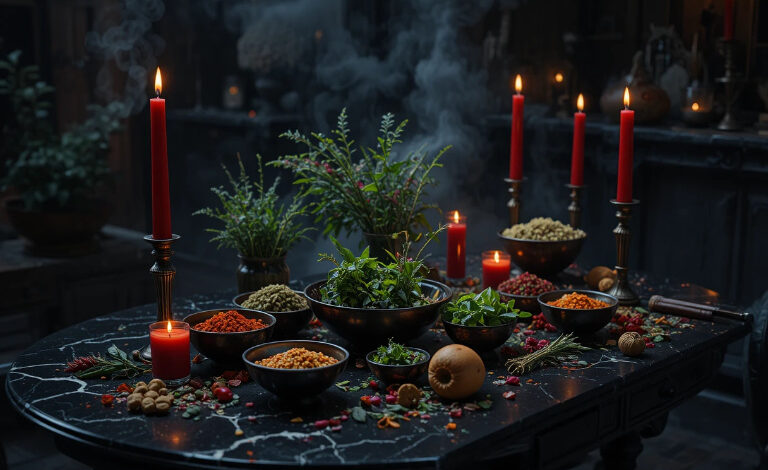


We all hit those slow afternoons where nothing on your to-do list feels worth doing and Netflix has somehow lost its appeal. You’re not tired, you’re not busy — you’re just bored. And honestly? That kind of quiet, restless energy is exactly what magic runs on. Witchcraft has never been about grand rituals in candlelit towers. It’s about tuning in to what’s already around you — the herbs in your kitchen, the moon outside your window, the funny feeling you get when something’s about to change.
The cool thing about witchy practices is that they fit into real life without you needing a whole setup or a shelf full of crystals (though nobody’s stopping you). Whether you’ve been curious about magic for years or you just feel drawn to something a little more meaningful than doom-scrolling, these activities meet you exactly where you are. No experience needed. No special tools required. Just a little curiosity and a willingness to slow down and pay attention.
So if you’ve got an hour — or even just twenty minutes — here are seven genuinely fun witchy things to do when you don’t know what to do with yourself. Some of them are calming, some of them are creative, and all of them have a way of making ordinary time feel a lot more alive. Think of this as your soft entry point into a world that’s been waiting for you to get a little bored.
1. Pull a Tarot or Oracle Card

Most people grab a card, read the little booklet, nod vaguely, and move on. But the real magic in tarot is in the sitting with it — the part where you let the image speak to whatever’s quietly going on in your life right now. Pull one card, set it somewhere you can see it, and just look at it for a few minutes without rushing to decode it. What’s the mood of the image? What does it remind you of? What part of your week does it seem to be pointing at?
You don’t need a full deck or years of study to get something meaningful out of this practice. Even oracle cards — which tend to be simpler and more intuitive — can give you a surprisingly accurate little mirror of where your head is at. The point isn’t to predict the future. It’s to give your brain a visual prompt that helps you think about your life from a slightly different angle, which is something most of us desperately need.
Try journaling a few lines about whatever comes up. You might find that one card sends you down a rabbit hole of self-reflection that lasts way longer than you expected — in the best possible way. Over time, keeping a small record of your daily pulls starts to show you patterns, and patterns are where the real wisdom lives.
2. Make a Simmer Pot

A simmer pot is exactly what it sounds like — you fill a pot with water, toss in herbs, spices, fruit peels, and anything else that smells good and means something to you, and you let it simmer on the stove. The whole house starts to smell incredible, and the act of choosing your ingredients with intention transforms a simple kitchen task into a genuine witchy ritual. Cinnamon for warmth and abundance, rosemary for clarity, orange peel for joy — the combinations are endless and mostly already sitting in your pantry.
The magic here is in the intention you bring to it. As you add each ingredient, think about what you want to call into your life or clear out of it. You don’t have to say anything out loud or do anything elaborate. Just hold the thought, drop it in, and let the steam carry it. It sounds simple because it is simple — and simple is often exactly what real magic looks like in practice.
Beyond the spiritual side, simmer pots are also just a genuinely lovely thing to do with a slow afternoon. They make your space feel cozy and cared for, which is its own kind of magic. You can google endless recipes or just freestyle it based on what you’ve got — both approaches work beautifully.
3. Go on a Witch Walk

A witch walk is just a walk, but with your attention turned all the way up. You’re not listening to a podcast or making a mental grocery list. You’re noticing — the way the light falls, which plants are growing in the cracks of the footpath, whether the birds sound different today, what you keep being drawn to look at. It’s mindfulness, basically, but framed in a way that makes it feel a lot more interesting than “being present.”
The practice comes from the idea that the natural world is constantly communicating, and most of us are just too distracted to notice. When you slow down and actually look, you start to see things — a feather in an unusual spot, a spider doing something elaborate, a cloud shaped like something that feels weirdly relevant. Whether you call that magic or just a sharper kind of attention, it genuinely changes how a walk feels. You come back different than when you left.
If you want to take it further, bring a small bag and collect anything that calls to you — a pebble, a fallen leaf, a seed pod. These become the beginnings of a nature altar or just little reminders of that specific afternoon. Over time, you start building a personal relationship with the land around you, and that connection is one of the oldest witchy practices there is.
4. Cleanse Your Space (The Witchy Way)

Most people think space cleansing means burning sage, but there are actually dozens of ways to shift the energy in a room, and not all of them involve smoke. Sound is one of the most underrated — clapping into the corners of a room, ringing a bell, or playing a singing bowl recording can move stagnant energy just as effectively. You can also use a spray made with water, salt, and a few drops of essential oil to mist around a space you want to refresh.
The witchy approach to cleaning your home is really just cleaning with awareness. Instead of going through the motions on autopilot, you’re thinking about what you’re clearing — old arguments, anxious energy, that general heaviness a room gets when life has been a lot lately. It turns a chore into a ceremony, and somehow the space genuinely does feel lighter afterward. Whether that’s energetic or psychological probably doesn’t matter.
Start small — one room, or even just your bedroom. Open a window, move things around a little, get rid of anything that’s been sitting there making you feel vaguely guilty for months. Light a candle when you’re done and just sit in the space for a minute. That moment of acknowledgment is the ritual, and it costs nothing.
5. Start a Grimoire or Witch Journal

A grimoire is basically a personal magic book — a place where you write down spells, observations, moon phases, things you’re learning, herbs you’re curious about, and anything else that feels worth keeping. You don’t have to have a specific craft or tradition to start one. All you need is a notebook and the willingness to write things down. Think of it less like a textbook and more like a creative journal with a magical slant.
The act of writing things down by hand is itself a form of magic — it makes intentions concrete, it helps you remember, and it creates a record of your own evolving practice that becomes genuinely precious over time. Start anywhere. Write down three things you already know or believe about the natural world. Write about a dream that felt significant. Sketch a plant you found interesting. Copy out a quote that made something click. There are no wrong entries.
Over time, your grimoire becomes a mirror of your inner world — a document of who you were when you were curious and paying attention. Some people’s grimoires become multi-volume collections; others keep the same tatty notebook for years. Both are equally valid. The only rule is that it’s yours, and you write in it honestly.
6. Work With the Moon
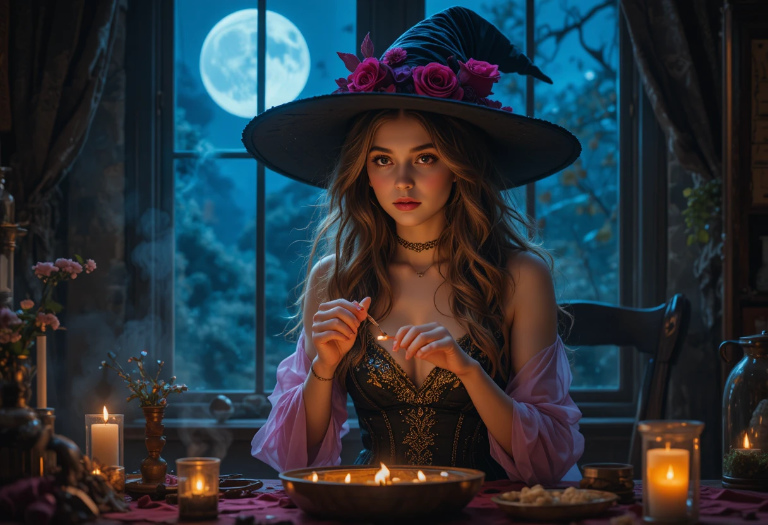
You don’t have to do anything elaborate to have a moon practice. Even just knowing what phase the moon is in and letting that awareness gently shape your day is enough to start. New moons are for setting intentions and starting fresh. Full moons are for releasing what’s not serving you and celebrating what’s grown. The waxing phase in between is for building and taking action; the waning phase is for reflecting and letting go.
Once you start tracking the moon, you’ll probably notice patterns in your own energy that line up with it more than you’d expect. A lot of people find that full moons genuinely make them feel more emotional or restless, and that new moons feel like a natural reset. Working with those rhythms rather than against them is the core of lunar magic, and it requires nothing more than a free moon phase app and a little intention.
On a full moon night, try sitting outside (or by a window) and just looking at it for a few minutes. Think about what you’ve been carrying that you’re ready to put down. You can write it on a piece of paper and burn it safely, or just say it out loud and let the acknowledgment be the release. Simple, quiet, and surprisingly powerful.
7. Make a Small Altar

An altar doesn’t have to be Instagram-worthy or expensive. It can be a corner of a shelf, a windowsill, or a small tray on your desk. The point is that it’s a dedicated little space where you put things that mean something to you — a candle, a crystal or a pretty rock from outside, a photo of someone you love, a flower, a feather, a coin. Objects that represent what you want to call in or what you want to honor.
The act of arranging an altar is meditative in itself. You’re making decisions about meaning — what matters, what represents what, what feels right next to what. It’s a tactile, creative practice that grounds you in your body and your space. And once it’s there, it gives you a place to come back to — to light a candle when you need a moment, to sit with your morning coffee and just be quiet for a second.
Altars shift and change over time. You’ll add things, remove things, rearrange them with the seasons. That’s the whole point — it’s a living reflection of where you are right now, not a permanent installation. Starting with just three or four objects you already own is completely fine. Let it grow at its own pace, and let it be as simple or as layered as feels right to you.