


Ever walked past the same patch of garden every day for a week, and one morning there’s a perfect ring of mushrooms that definitely wasn’t there before? Or maybe you’ve set your keys down on the kitchen counter, only to find them balanced on the windowsill an hour later, like someone moved them just to see if you’d notice. Little moments like these get brushed off all the time. But the truth is, fairies are everywhere. They live in the gaps most people never think to look at: under hedgerows, inside hollow trees, along the edges of ponds, and even in the corners of a tidy backyard. They’re just very good at not being seen.
Fairies aren’t the sparkly, wand-waving cartoon characters a lot of us grew up picturing. They’re older than that, and a lot more mischievous. Some like to help out quietly, tidying a garden overnight or nudging a lost pet back home. Others enjoy a good prank, hiding a single sock or making a gate swing shut on its own. What they mostly have in common is a love of subtlety. Fairies don’t want a parade. They want you to almost catch them out of the corner of your eye and then question whether you really saw anything at all.
That’s exactly why so many people go their whole lives without realizing fairies have been living right alongside them. The signs are small, easy to explain away, and usually happen when nobody’s looking directly at them. But once you know what to watch for, it gets a lot harder to ignore. Below are ten of the clearest signs that fairies might have set up shop somewhere near your home, garden, or favorite walking trail.
10 Signs of Fairies
1. Fairy Rings Appearing Overnight

One of the oldest and most reliable signs is the fairy ring: a near-perfect circle of mushrooms, or sometimes just a ring of darker, greener grass, showing up in a lawn or field seemingly out of nowhere. These rings mark the spot where fairies have been dancing through the night, moving in a circle for hours until the ground itself starts to show it.
What makes fairy rings so telling is how sudden and precise they are. A patch of wildflowers might grow in messy clumps, but a fairy ring holds its shape, almost like it was drawn with a compass. If you find one in your yard, it’s worth pausing before you mow straight through it.
Old folklore is full of warnings about stepping inside a fairy ring, and for good reason. It’s said to be rude at best and disorienting at worst, since it’s essentially walking into the middle of someone else’s dance floor uninvited. A polite nod as you walk around it tends to go over a lot better.
If you spot more than one ring appearing in the same season, especially in a quiet corner of a garden or a shaded part of the woods, that’s a strong hint the local fairies have found a spot they like and are settling in for a while.
2. Small Objects Go Missing, Then Reappear Somewhere Odd

Everyone loses a sock, a pen, or a set of keys now and then. But when things vanish from a spot you know for certain you left them, only to turn up days later in a completely unrelated place, that’s classic fairy behavior. They love borrowing small, shiny, or oddly interesting things.
The reappearing part is the real giveaway. A lost item that’s simply misplaced tends to stay lost, or turns up somewhere that makes logical sense once you retrace your steps. A fairy-borrowed item shows up somewhere it has no business being, like a hair clip perched on a tree branch or a coin sitting neatly on a windowsill that was empty the night before.
Fairies aren’t usually being malicious when they do this. It’s closer to curiosity, or sometimes a bit of a test to see how you react. Objects with a bit of shine or sentimental value seem to attract the most attention, so jewelry, coins, and small trinkets are common targets.
If this keeps happening in the same house or yard, it’s a sign fairies have taken a liking to the place, and possibly to you specifically. Leaving a small trinket out as a friendly gesture is a time-honored way of easing the back-and-forth.
3. Strange Lights Flicker at Dusk

Just as the sun dips below the horizon, some people catch a glimpse of small, soft lights drifting low over grass or hovering near tree lines. These aren’t fireflies, and they don’t move like anything electrical. They tend to bob gently, pause, and then vanish the moment you look at them directly.
This phenomenon has a name in a lot of old traditions: will-o’-the-wisps, or fairy lights. They’re often associated with fairies leading travelers along a path, sometimes helpfully and sometimes just for the fun of watching someone wander in circles.
The lights are almost always spotted at the edges of things: the border of a forest, the far end of a garden, or along a fence line at the property’s edge. Fairies seem to favor these in-between spaces, the places that are neither fully wild nor fully tamed.
If you notice these lights more than once in the same location, especially around dusk or a misty evening, it’s worth treating the area with a bit of extra respect. It’s likely a well-used fairy path, and crossing it at the wrong moment can lead to some seriously confusing detours.
4. Flowers Grow in Suspiciously Perfect Patterns

Nature is beautiful, but it’s rarely tidy. Wildflowers tend to scatter unevenly, chase the sunniest patches, and grow at all different heights. So when a cluster of blooms shows up in a neat spiral, a straight line, or a tight little cluster that looks almost planted, that precision is worth a second look.
Fairies are known to tend small patches of flowers the way some people tend a vegetable garden, only their version comes with a bit of extra flair. A flower bed that seems to bloom earlier, brighter, or longer than everything around it is often a sign someone has been giving it a little extra help.
These patches tend to show up in spots that don’t get much foot traffic, like the base of an old tree or a forgotten corner near a fence. That’s not a coincidence. Fairies prefer quiet, undisturbed ground where they won’t be interrupted mid-project.
If you find one of these patches, it’s best to admire it rather than pick from it. Flowers grown with fairy care are considered a bit of a gift to the land, and taking them without asking tends to sour the goodwill.
5. Offerings of Milk or Cream Disappear

This one’s an old tradition for a reason. Leaving out a small saucer of milk or cream near a garden or doorstep, and having it go missing by morning, is one of the clearest signs fairies have accepted an invitation to visit.
The key difference between a fairy visit and, say, a neighborhood cat, is how clean the saucer looks. Animals tend to leave a mess, knock the dish over, or leave paw prints in the surrounding dirt. A fairy-visited saucer is usually left spotless and undisturbed, as if it was simply lifted, emptied, and set back down with care.
This tradition goes back centuries, especially in rural communities where leaving a small offering was seen as a way of staying on good terms with the fairies living just beyond the garden fence. It wasn’t about summoning them so much as being a good neighbor.
If a saucer of milk keeps disappearing night after night without a trace of an animal in sight, that’s a strong sign a fairy has made your home a regular stop. Keeping the offering going is generally seen as good luck for the household.
6. Faint Giggling or Whispering With No Source

Standing alone in a garden or a quiet wooded path and catching a faint sound like laughter or hushed conversation, only to find nobody around, is a classic and slightly unnerving sign of nearby fairies. The sound tends to be light, quick, and just barely on the edge of hearing.
What sets this apart from birdsong or rustling leaves is the rhythm. Whispering has a pattern to it, a back-and-forth quality, even if the words themselves are impossible to make out. It often stops the second you turn to look directly at where it came from.
This tends to happen most in places fairies already favor, like near a fairy ring, close to a hollow tree, or along one of their favored dusk pathways. It’s less common in open, high-traffic areas, since fairies generally prefer not to be overheard by too many people at once.
Hearing this once might just be the wind playing tricks. Hearing it repeatedly in the same spot is a good sign that a little community of fairies has made that patch of land their regular gathering place.
7. Pets Stare at or Avoid Empty Spaces
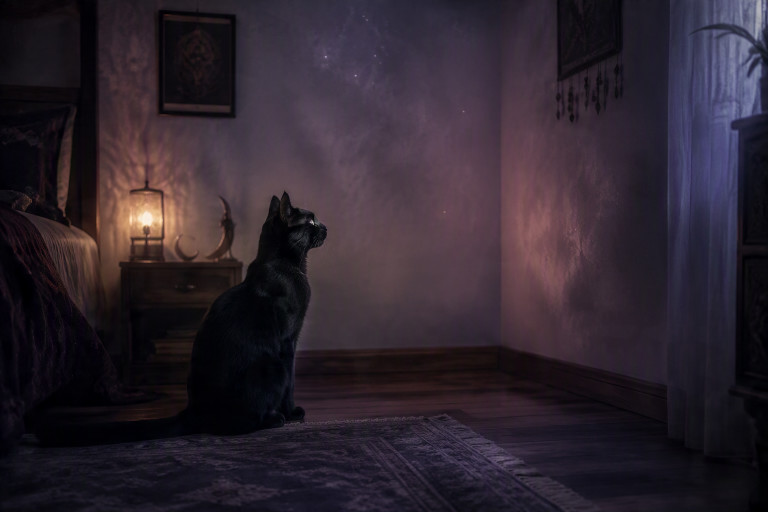
Cats and dogs seem to have a much easier time noticing fairies than people do. If a pet suddenly fixates on an empty corner of a room, tracks something invisible across the yard, or flatly refuses to walk past a certain tree or bush, there’s a good chance they’re reacting to something that’s actually there.
This behavior tends to be oddly specific and consistent. A pet spooked by a random noise usually settles down quickly. A pet reacting to a fairy tends to return to the exact same spot again and again, staring, growling softly, or perking up its ears at nothing anyone else can see.
Dogs in particular sometimes wag their tails at seemingly empty air, which is often taken as a sign the fairy in question is a friendly one. A flattened-back, wide-eyed stare, on the other hand, might mean the pet has crossed paths with something a little more territorial.
If this becomes a regular pattern in one specific spot in the house or yard, it’s worth treating that area gently. Pets are picking up on something, and it’s usually a good idea to trust their instincts here.
8. Circles of Flattened Grass With No Explanation
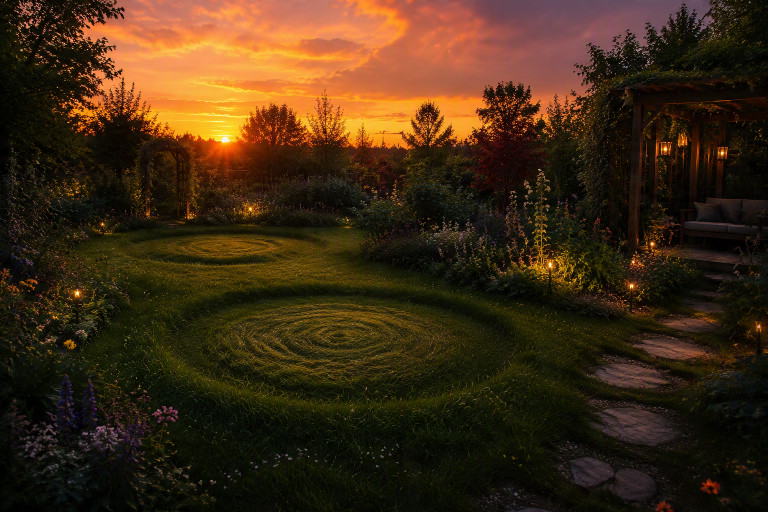
Beyond the classic mushroom fairy ring, sometimes grass itself gets pressed down into a neat circular or spiral pattern, without a fairy ring’s telltale mushrooms in sight. This flattening looks intentional rather than random, more like something walked in careful circles than something simply fell over.
Weather and lawn equipment tend to leave messier, straighter marks. A fairy-flattened patch has a smoothness and symmetry to it that’s hard to explain with wind or a stray soccer ball. It often shows up overnight, in a spot that was perfectly normal the evening before.
These circles are usually linked to fairy dancing or gathering spots, similar to mushroom rings but a bit more temporary. They can appear and disappear over just a few days as the grass slowly grows back upright.
Finding one of these is a strong hint that fairies have been using your lawn as a meeting spot, even if only for a night or two. It’s generally taken as a good sign, since fairies tend to gather where the land feels calm and welcoming.
9. Tiny Footprints or Handprints Turn Up in Dew or Mud

After a dewy morning or a light rain, take a look at soft mud, damp sand, or a dew-covered lawn before anyone’s walked through it. Every once in a while, people spot a trail of impossibly small footprints, sometimes barefoot, sometimes with a delicate, almost bird-like shape, leading from nowhere to nowhere.
These prints tend to be far too small and light to belong to any child or animal. They often appear in a line that simply stops, as if whoever made them lifted off the ground rather than walked away. That detail alone rules out most everyday explanations.
Handprints show up less often, but when they do, they’re usually found on dew-covered windows, dusty windowsills, or the surface of a puddle. They’re small, delicate, and gone within a few hours once the surface dries or the water settles.
Spotting these prints even once is a solid sign fairies have been exploring close to home. If it happens more than once in the same general area, it likely means they’ve grown comfortable enough to stick around.
10. A Persistent Feeling of Being Watched in Gardens or Old Trees

Sometimes there’s no visual sign at all, just a feeling. Standing near an old, gnarled tree or working quietly in a garden, and getting that unmistakable sense that something is watching, even though a full look around turns up nothing. That sensation is one of the most commonly reported signs of nearby fairies.
Old trees in particular are considered classic fairy dwellings, especially ones with hollows, thick moss, or twisted roots. The bigger and older the tree, the more likely it’s hosting more than just birds and squirrels.
This feeling tends to be gentle rather than frightening, more like being quietly observed by a curious neighbor than anything threatening. Most people describe it as a light prickle at the back of the neck or a sense that they’re not quite alone, even in total silence.
If this feeling shows up consistently in one particular spot, whether it’s a certain tree, a garden bed, or a shaded corner of the yard, it’s usually a good sign that fairies consider that spot part of their territory. Treating it kindly, and maybe leaving a small offering nearby, tends to go a long way.
Keep an Eye Out, Fairies Are Closer Than You Think

Once you start noticing these little signs, it’s hard to unsee them. A ring of mushrooms here, a missing coin there, a pet staring intently at nothing in particular, they all start to add up. Fairies have never really been far away. They’ve just been very good at staying just out of sight, tucked into the quiet corners of gardens, old trees, and shaded paths that most people walk right past without a second thought.
The best approach if you think fairies might be sharing your space is simple kindness. A small offering, a bit of respect for their rings and pathways, and a willingness to leave a little mystery unexplained tends to keep things friendly. Who knows, maybe the next time you glance out the window at dusk, you’ll catch a light flickering at the edge of the yard, and you’ll know exactly what it means.