
Ask ten people what a “witch” is and you’ll probably get ten different answers. Some picture a green-skinned woman on a broomstick. Others think of a woman in flowing black robes lighting candles under a full moon. And a lot of folks throw around the words Wicca, Witchcraft, Paganism, and Magick like they all mean the same thing. They don’t. And if you’re serious about actually understanding any of this, that mix-up is the first thing you need to untangle.
Here’s the thing: these four words describe genuinely different pieces of a much bigger picture. One is a religion. One is a practice. One is an umbrella term covering a huge range of belief systems. And one is a tool — a way of working with the energy already running through the world around you. Confuse them, and you’ll spend your whole journey standing on shaky ground. Get them straight, and everything else you learn from here on out will actually click into place.
So that’s what this piece is for. No fluff, no Hollywood nonsense, just a clear, honest breakdown of what each term really means, where they overlap, and where they split apart completely. If you only read one section before diving into the deeper stuff, make it this one.
What Is Paganism?
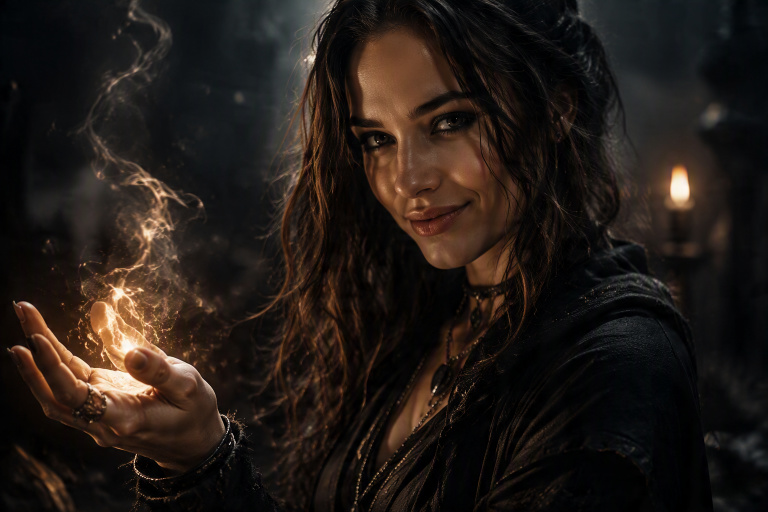
Let’s start broad. Paganism isn’t a religion — it’s a category. Think of it like “sport” is a category that includes soccer, tennis, and boxing. Paganism is the umbrella that covers a whole range of spiritual paths, most of them rooted in the pre-Christian traditions of ancient cultures around the world. It’s about honoring multiple gods, goddesses, or nature spirits rather than a single deity. So when someone says they’re “Pagan,” that’s really just the first sentence of their story — there’s a lot more to ask.
Wicca vs. Witchcraft: Where the Confusion Actually Started
People use “Wicca” and “Witchcraft” like they’re interchangeable, and honestly, it’s easy to see why. The mix-up goes back to the 1940s, when what we now call Wicca was simply lumped in under the word Witchcraft. Go back even further, and the word “Wicca” itself comes from Old English, tracing back to the Anglo-Saxons, where it referred to a sorcerer or diviner. Magical skill was genuinely respected in that culture, and over centuries of the English language shifting and evolving, “Wiccan” and “Witch” got flattened into one word in most people’s minds.
But they’re not the same thing. Not even close.
Wicca: A Religion Built Around Nature
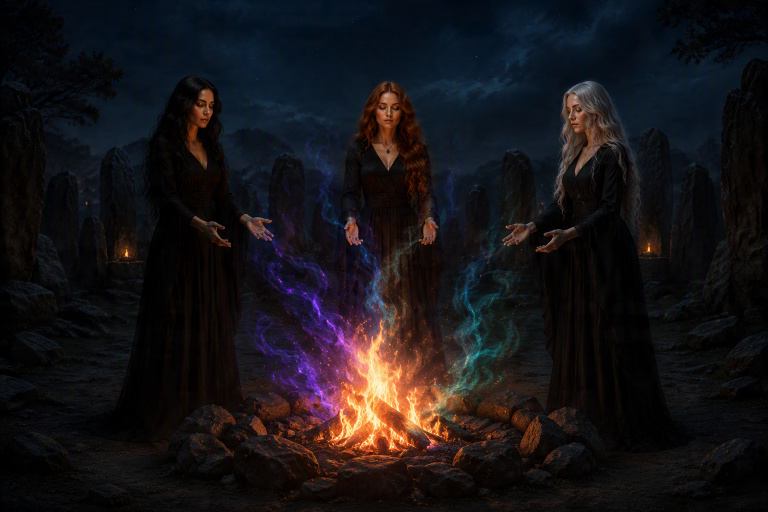
Wicca is a religion — full stop. It’s earth-centered and nature-driven, built around devotion to the Goddess and God, and shaped by the turning points of the Wheel of the Year. It’s a genuine spiritual path, complete with its own values and its own code of conduct: the Wiccan Rede, which basically boils down to “harm none.” Wiccans don’t chase revenge, even against people who’ve wronged them — the belief is that karma handles that on its own. Messing with someone else’s free will is also considered a serious no-go. Wicca is generally treated as one branch under the larger Pagan umbrella, but it comes with its own distinct theology and rituals.
Witchcraft: A Practice, Not a Faith

Witchcraft is something else entirely — it’s a practice, not a belief system. It’s about tapping into the power already present in the universe and directing it to create real change in your life. That might look like meditation, divination, astrology, spirit communication, or straight-up spellwork. And here’s the part that trips people up: you don’t need to be Wiccan, or even spiritual at all, to practice Witchcraft. Someone with zero belief in gods or goddesses can still work with herbs and intention for protection, healing, or love. Technically, even an atheist can be a Witch. Every culture on the planet has its own flavor of Witchcraft, which is exactly why the term covers so much ground.
Wicca and Witchcraft in Practice: Ethics, Intent, and Where They Overlap

Wiccans follow the Rede. Witches don’t have to follow anything. Without a built-in moral code, Witchcraft can be aimed at healing just as easily as it can be aimed at harm — there are entire traditions built around one or the other, from protective folk magick to darker paths involving figures like St. Cyprian or King Solomon, or practices tied to Anton LaVey’s Church of Satan, Santeria, or Hoodoo. Witchcraft is exactly as varied as the people practicing it, which is part of why the English language failing to separate “healing Witch” from “harming Witch” causes so much confusion.
Bottom line: not every Wiccan is a Witch, and not every Witch is Wiccan. You can absolutely practice Witchcraft with zero Wiccan background — you just need to understand where the two paths differ. Unfortunately, centuries of persecution left a stain on the word “Witch” that still lingers today, and most people’s first exposure to any of this comes from movies that barely scratch the surface of what it actually means.
Magick: The Art of Directing Your Will

People come to magick for all kinds of reasons — wanting to understand their place in the universe, searching for answers, or just craving a life that feels a little more enchanted. Before going further, it’s worth clearing up the spelling: “magick,” with a k, was coined by Aleister Crowley, founder of the Pagan religion Thelema, specifically to separate occult magick from stage magic tricks. Other spin-off spellings like “majick” or “magik” popped up over time without much reason behind them — but “magick” is the one this piece sticks with, purely by preference.
At its core, magick is the manipulation of the physical world through ritual action and metaphysics — though even that definition doesn’t fully capture it, since plenty of magickal acts aren’t strictly metaphysical at all. It’s the art of using pure will and the natural forces around you to create change. And magick itself is neutral. It has no built-in morality. The direction it takes — toward good or harm — comes entirely from the person wielding it. Worth noting: prayer isn’t magick. A prayer is a request sent to the divine. Magick is you doing the work yourself.
White Magick vs. Black Magick: It Comes Down to Intent
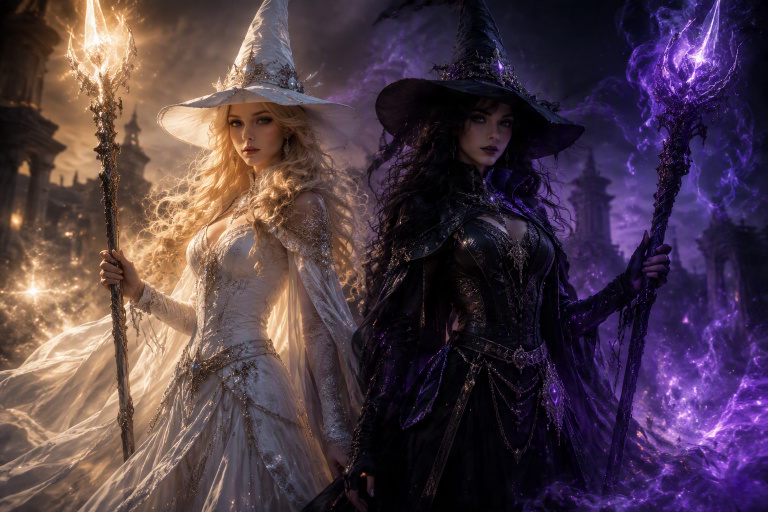
White magick and black magick have been debated for centuries. Alice Bailey, in her 1934 work Treatise on White Magic, described white magick as a selfless practice — one performed by a witch with a pure heart, aimed at serving others rather than the self. Black magick, on the other hand, serves the magician. That doesn’t automatically make it evil — the definition can be narrow or broad depending on who you ask. Broadly, black magick is simply whatever the practitioner considers immoral or wrongful. It’s not inherently malevolent. It’s entirely about the intention behind the act.
Where This Leaves You
At this point, the picture should be a lot clearer: Paganism is the umbrella, Wicca is a religion underneath that umbrella, Witchcraft is a practice that can exist with or without any religion at all, and Magick is the tool that both Wiccans and Witches (and plenty of everyday people) use to work with the energy around them. None of these terms are interchangeable, and none of them require the others to be valid on their own.
Wherever you land in all this — whether you’re drawn to Wicca’s spiritual structure, the independence of Witchcraft, or simply curious about how magick actually works — the important part is starting from solid ground. Now that the terms are sorted out, you’re ready to actually dig in.