

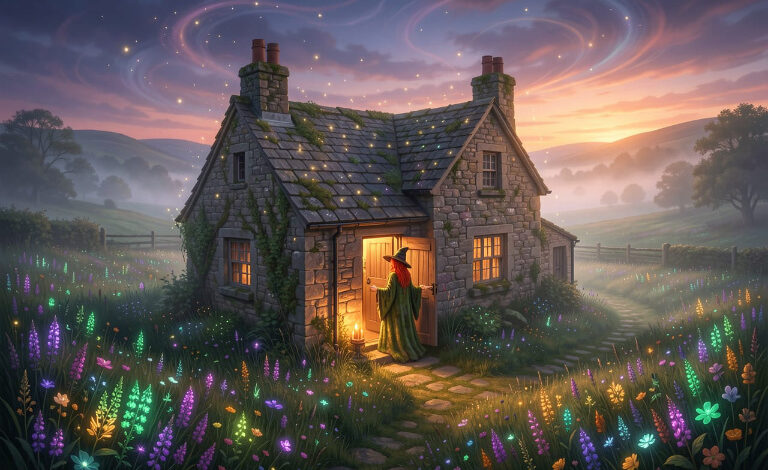
There’s something about old European cottages that pulls at you. Not just the charm of the thatched roofs or the mossy stone walls, but something deeper — like the building itself is trying to tell you something. And it turns out, it really is. The people who built these humble little homes weren’t just stacking rocks and cutting timber to stay warm. Every room, every doorway, every window had a reason. A purpose that went way beyond keeping the rain out.
For centuries across rural Europe, the layout of a cottage wasn’t just practical — it was spiritual. The way a home was arranged said something about who lived there, what they believed, and how they understood the world around them. Magic was woven into the very bones of these buildings. Not the kind of magic you read about in fairy tales (though that’s part of it), but a quiet, everyday kind of magic that kept the family safe, the hearth warm, and the bad things outside where they belonged. People took it seriously, and honestly, it’s hard to blame them.
What’s wild is that a lot of this has been hiding in plain sight. Historians and folklorists have been piecing it together for years — and what they’ve found is that the floor plans of old cottages in places like Ireland, Germany, Scandinavia, and the Slavic regions all share certain patterns. Patterns that show up too often, and too consistently, to be coincidence. The placement of the fire, the direction the front door faced, the position of the bed, the threshold you stepped over when you entered — all of it meant something. All of it was intentional.
This article is going to walk you through what those meanings were, why they mattered so much to the people who lived by them, and why the old cottage layout is really one of the most fascinating lost languages we’ve almost forgotten how to read. Once you know what to look for, you’ll never look at an old stone cottage the same way again.
The Hearth: Heart of the Whole House
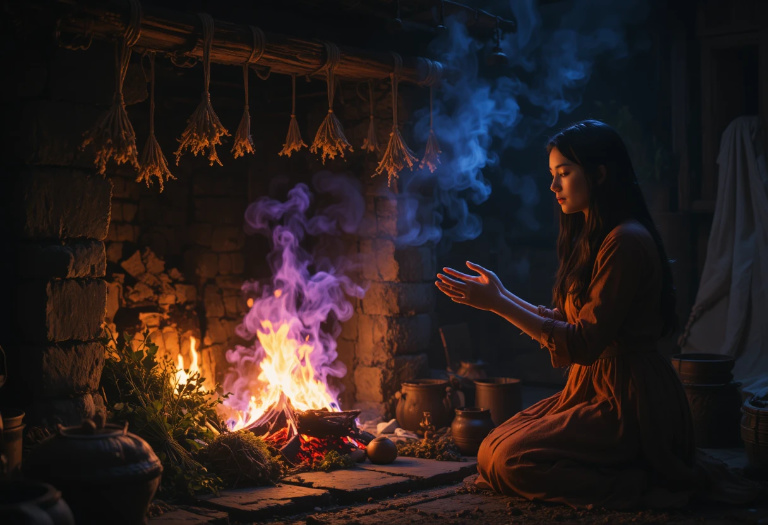
If you want to understand old European cottage layout symbolism, start with the fire. The hearth was never just a place to cook or keep warm — it was the living center of the home, almost like a beating heart. In most traditional cottages from Ireland to the Baltic coast, the hearth sat in the middle of the main room, or very close to it. That wasn’t an accident.
Fire was considered a living thing. A protector. In many cultures, the fire in the family hearth was kept burning continuously — sometimes for generations. Letting it go out was considered a terrible omen, almost like a death in the family. The smoke rising through the roof hole was seen as a kind of communication with the spirit world above. A connection between the living and the dead, the human and the divine.
In Slavic cottage traditions, the area around the hearth was called the “red corner” or “sacred corner,” and it was where the family icons or protective charms were kept. The grandmother of the house was often the keeper of the hearth magic — she knew the prayers, the words to say when the fire was lit each morning, and the right herbs to throw in to keep illness away. The entire rhythm of daily life rotated around that fire, and so did the spiritual energy of the space.
Even the direction of the hearth smoke mattered. If the smoke curled back into the house instead of rising, that was a warning. Something wasn’t right. The cottage itself was speaking.
Doors, Thresholds, and the Space In Between
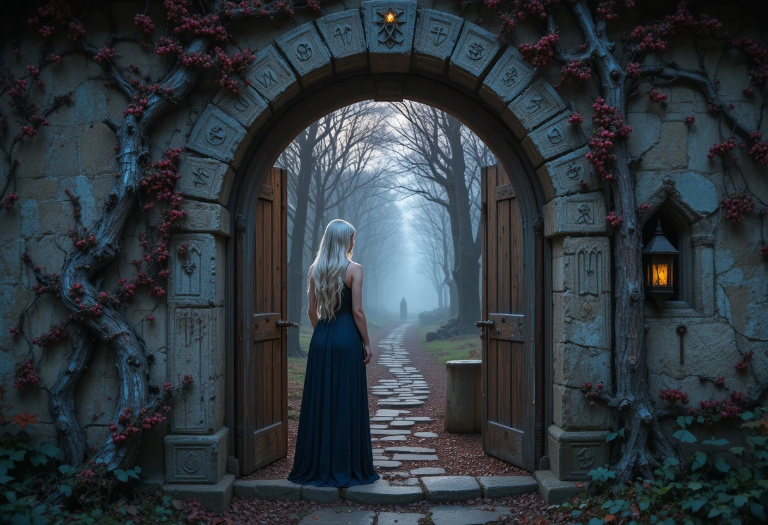
The front door of an old European cottage is where things get really interesting. The threshold — that strip of wood or stone you step over to get inside — was one of the most magically charged spots in any traditional home. It was the boundary between two worlds: the wild, unpredictable outside, and the protected, ordered inside. And crossing it without the right precautions could invite trouble in.
In old Irish and Scottish folk tradition, iron was nailed above the door to keep fairies and harmful spirits from entering. Rowan branches were tied in bundles and hung at the doorpost. In German and Scandinavian cottages, runic symbols were sometimes carved directly into the doorframe — not as decoration, but as a ward. A lock that no spirit could pick.
The placement of the door itself was often determined by the landscape. Doors rarely faced north in northern European cottage design because north was considered the direction of cold, darkness, and the dead. South or east-facing doors were preferred — oriented toward the rising sun, toward life and warmth. In some traditions, the first light of the morning sun was supposed to enter the home and “clean” it, chasing out anything that had wandered in during the night.
Brides were carried over the threshold for a reason too. It wasn’t just a cute tradition — stepping over that boundary as a new wife meant crossing into a new spiritual identity. The old self stayed outside. And evil that might follow her, tied to her old life, couldn’t cross if she never touched the threshold herself.
The Sleeping End and the Working End
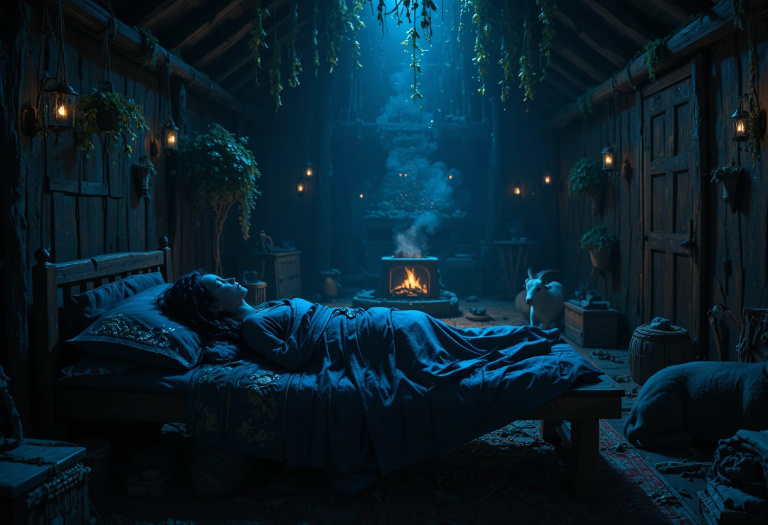
One of the most consistent features of traditional European cottage layout symbolism is the division of the space into two halves: where you slept, and where you worked. This wasn’t just about practicality. It reflected a deep belief that life itself was divided into sacred and functional time.
In the typical long house or single-room cottage, the sleeping area was always at the far end from the door — the deepest, most protected part of the building. The further from the entrance, the safer you were. Children especially were placed in the innermost corner, shielded on multiple sides. In some Norse traditions, the sleeping bench along the innermost wall was considered a slightly sacred space, almost like a small temple within the home.
The working end — near the door — was where animals sometimes sheltered in winter. This sounds strange to modern ears, but it made perfect spiritual sense at the time. Animals were considered guardians in their own way. The warmth they gave off was practical, yes, but they also represented the boundary between the domestic and the wild. They lived at the edge of the home because they belonged to the edge of two worlds.
Between the sleeping end and the working end, the hearth sat as a kind of mediator. It kept the two halves of the cottage in balance. Cold on one side would mean too much of the outside creeping in. Too much heat meant the fire was consuming rather than protecting. Everything had to be in balance, and the layout of the cottage made that balance visible.
Windows, Walls, and the Eyes of the House
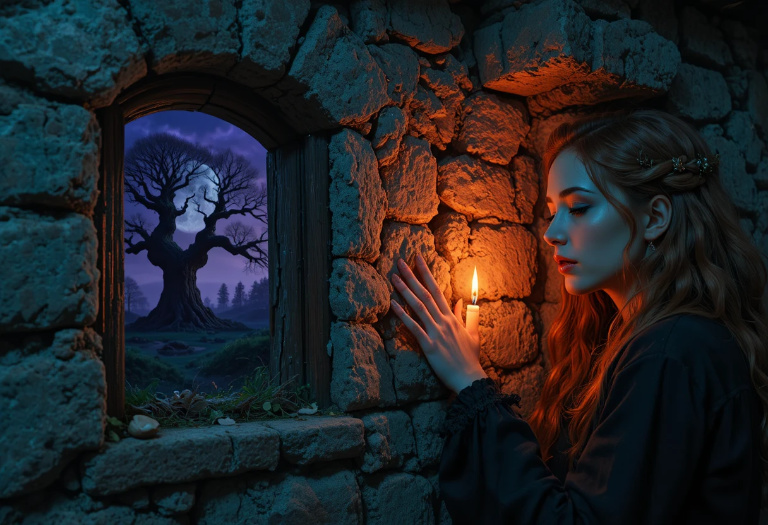
Windows in old European cottages weren’t just openings for light. They were eyes. And like eyes, they had to be watched. In a lot of folk tradition, windows were a weak point — a place where spirits could peer in, or where the soul of a dying person could leave the body and float free. It was common practice in many regions to cover windows when someone in the house was near death, so the soul wouldn’t get confused and drift out before it was time.
The number of windows was often deliberately limited — not just because glass was expensive, but because fewer openings meant a more protected home. In some Eastern European cottage traditions, specific plants were grown beneath windows to act as living wards. Certain herbs were believed to be unpleasant to malevolent forces, so they formed a kind of living fence at every point where light entered.
Walls themselves were places of power. In many cultures, objects were built directly into the walls during construction — coins, animal bones, dried herbs, small carved figures. These weren’t hidden because people were embarrassed by them. They were hidden because that’s how protective magic works: it operates quietly, out of sight, doing its job without being disturbed.
Archaeologists across Europe have found these concealed objects in old cottage walls with surprising regularity. Shoes turn up a lot, especially children’s shoes. Cats — sometimes mummified — were found sealed inside walls in English cottages for centuries. The belief was that these objects trapped or confused harmful spirits, giving the walls a kind of immune system.
What the Layout Was Really Saying

When you pull it all together, the old European cottage wasn’t just a shelter. It was a map of how people understood the universe. The hearth was the sacred center. The door was the guarded border. The sleeping space was the holy of holies. The walls were alive with quiet protection. Every element had its place in a system that made the small, humble home into something genuinely powerful.
These weren’t superstitions in the dismissive sense of the word. They were technologies — ways of managing fear, uncertainty, and the very real forces that people knew surrounded them every day. Magic was real, and it lived in the layout of the house just as surely as it lived in the forest or the sky. The cottage was a spell, carefully arranged, renewed each day by the people who lived inside it.
That’s worth remembering the next time you see one of these old places, still standing in the Irish countryside or the German hills. The stones haven’t forgotten what they were built for.