Long before witchcraft had hashtags or crystal shops on every corner, it had smoke, candlelight, and quiet hands doing careful work. These were people who read the moon like a calendar, talked to their dead like they were still in the next room, and trusted a bundle of herbs tied with string more than they trusted most doctors. None of that was performance. It was survival, guidance, and connection, passed down because it worked.
What’s wild is how much of that old-world magic never actually left. Walk into any witch’s home today, ancient or modern in her outlook, and you’ll likely find the same bones of practice her ancestors used centuries ago: a bowl of water for scrying, a jar of herbs on the windowsill, a candle burned down to nothing for a wish that needed help getting where it was going. The tools might look a little different, but the intention behind them hasn’t aged a day.
This list pulls together twelve of those old-world witchcraft practices, the ones that still carry the weight and mystery of centuries past. Some are quiet and personal, some call in spirits and ancestors, and some are as simple as a knot tied at the right moment with the right words. All of them have survived because they’ve earned their place. Let’s walk through them.
1. Scrying: Ancient Witchcraft’s Window Into the Unknown

Scrying might be one of the oldest tricks in the witch’s book, and it’s exactly as mysterious as it sounds. A witch stares into a reflective surface, a black mirror, a bowl of dark water, sometimes even a polished stone, and waits. Not for her own reflection, but for something else to come through. Images, shapes, flashes of a scene that has nothing to do with the room she’s sitting in. It’s one of the purest forms of divination because it needs almost nothing except stillness and a willingness to see.
The setup barely changes from how it was done a thousand years ago. Low light, maybe a single candle behind her rather than in front so it doesn’t create a reflection to distract her. The water is often left untouched for hours beforehand, sometimes collected specifically from rain or a moving stream, because clean, undisturbed water holds a clearer window. She’ll soften her focus, almost like daydreaming with her eyes open, until the surface stops being a surface and starts being a doorway.
What keeps scrying alive today is that it doesn’t ask for anything fancy. No elaborate altar, no rare ingredients. Just patience and a mirror or a bowl. That simplicity is exactly why it survived every era it passed through, from candlelit villages to modern apartments where the phone is turned face-down and the only light left on is a single flame.
2. Casting Protective Circles: The Oldest Shield in Witchcraft

Before a witch does any serious work, spellcasting, spirit communication, deep divination, she often draws a circle around herself first. This isn’t decoration. It’s a boundary, one that keeps her energy contained and keeps anything unwelcome from wandering in while she’s got her guard down doing delicate work. Circles have shown up in magical practice across cultures for centuries, drawn in salt, chalk, or simply traced in the air with a hand or a blade.
The process is usually slow and deliberate. She’ll walk the edge of the space, often clockwise, calling on the four directions or the elements as she goes, north for earth, east for air, south for fire, west for water. Some witches add candles at each point, others use stones or herbs. The circle gets “closed” once it’s fully traced, and from that moment, the space inside feels different. Quieter. Held.
This practice has stuck around because it works as both a spiritual tool and a mental one. Stepping into a circle tells the mind and the spirit alike that something important is about to happen, and that this ground, right here, is safe. That’s a feeling witches have needed since long before written history, and it’s one they still reach for today.
3. Herbal Spellwork: Witchcraft’s Original Medicine Cabinet

Long before there were spell jars sold in shops, there were witches drying herbs from their own gardens and hanging them upside down from rafters to cure. Herbal spellwork is as old as witchcraft itself, built on the belief that plants carry their own energy and purpose, rosemary for protection, lavender for peace, mugwort for opening the sight. Every leaf and root had a job, and a witch’s knowledge of them was often the difference between a village thriving or struggling.
Using herbs in spellwork can look like a lot of things. Burning them as incense to clear a space, sewing them into small pouches to carry for luck or protection, steeping them into teas meant to calm the nerves or sharpen the mind, or simply scattering them across a windowsill to keep trouble from crossing the threshold. Timing mattered too. Herbs picked at dawn were thought to hold different power than herbs picked at dusk, and many were only harvested under a particular phase of the moon.
This practice never really left because plants never stopped growing. Every backyard, every windowsill herb pot, every farmer’s market bundle of sage is a small continuation of something ancient. It’s witchcraft you can literally hold in your hands, and that tangibility is probably exactly why it’s outlasted almost every other form of magic.
4. Candle Magic: A Flame That’s Burned for Centuries

There’s something almost hypnotic about a single candle burning in a dark room, and witches figured that out a very long time ago. Candle magic works on the idea that fire carries intention upward and outward, turning a simple wish or request into something active and alive. A candle isn’t just lit, it’s chosen, carved, anointed, and set with purpose before the match ever touches the wick.
The color of the candle usually matters most. Red for passion or courage, green for money or growth, black for banishing, white for purity or when nothing else feels right. Before lighting it, a witch might carve a word or symbol into the wax, or rub it with oil from the base to the tip to “charge” it. Then she’ll sit with it, sometimes speaking her intention aloud, sometimes just watching the flame and letting her focus do the work, until the candle burns all the way down or she chooses to snuff it out.
Candle magic has held on through every era because fire itself hasn’t changed. It still flickers the same way, casts the same shadows, and demands the same quiet attention it always has. In a world full of noise, sitting with a single flame remains one of the most old-world things a person can do.
5. Poppet Magic: Ancient Witchcraft’s Most Misunderstood Practice
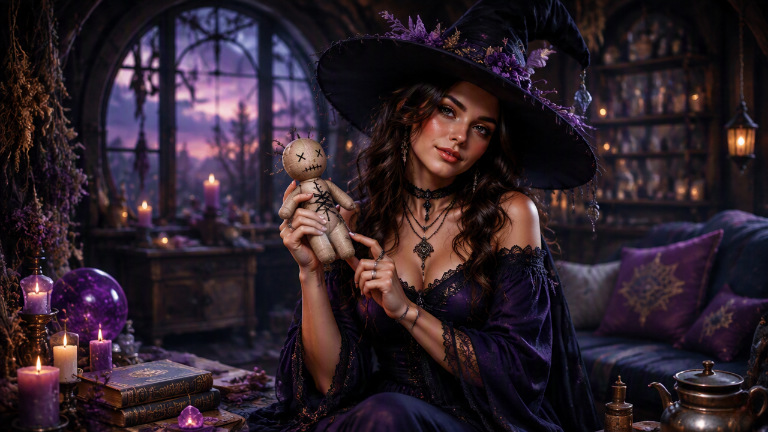
Poppets are small dolls, usually made from cloth, wax, or clay, crafted to represent a specific person for the purpose of a spell. The idea is old and appears in folk magic traditions all over the world: what’s done to the poppet is meant to reach the person it represents, whether that’s healing, protection, or drawing them closer. It’s one of the most talked-about and least understood corners of witchcraft, mostly because of how it’s been portrayed in film and fiction.
In practice, making a poppet is a careful, personal act. A witch will often stitch the doll herself, stuffing it with herbs chosen for the intention, lavender for calm, rose petals for love, and sometimes including a personal item connected to the person, a strand of hair, a scrap of their clothing, even just their name written on paper tucked inside. The doll is then treated gently, kept somewhere safe, and worked with slowly over time rather than all at once.
This practice has survived because it makes magic feel physical and personal in a way few other methods do. Holding something in your hands that represents another person, and treating it with the same care you want to send their way, is a deeply old instinct. It’s less about pins and curses than most people assume, and far more about intention held in a small, quiet object.
6. Bone and Rune Casting: Divination From the Old World
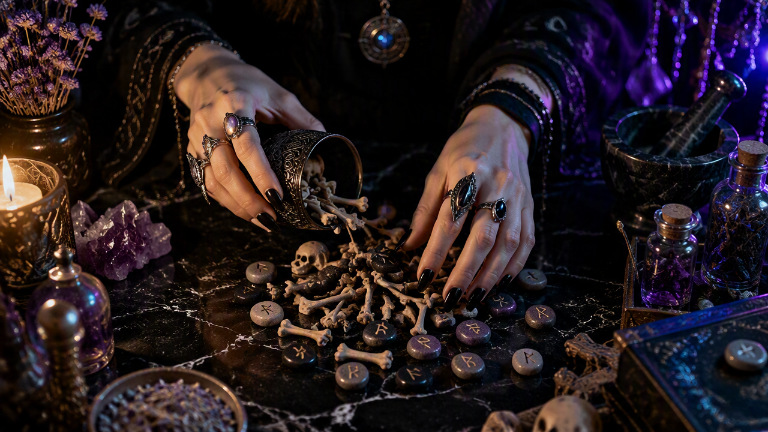
Before tarot decks were widely available, witches read their answers in bones, stones, and runes cast across a cloth. This form of divination, often called casting or throwing the bones, involves tossing a collection of small objects and reading meaning into how they land, their position, their distance from each other, whether they land face up or down. It’s raw, physical, and deeply intuitive.
A casting set might include actual small bones, carved runes, shells, coins, or polished stones, each one carrying its own meaning built up over years of use. The witch will hold the set, focus her question clearly in her mind, and let them fall from her hands onto a cloth or a marked board. Nothing about the outcome is planned. The randomness is the point, because it’s believed that unseen hands guide where each piece lands.
This kind of divination has endured because it strips things down to something almost primal, throw, watch, interpret. There’s no screen, no shuffle animation, just objects in the hand and a question in the heart. That rawness is exactly what keeps witches returning to it, generation after generation.
7. Knot Magic: Tying Intentions the Old-World Way
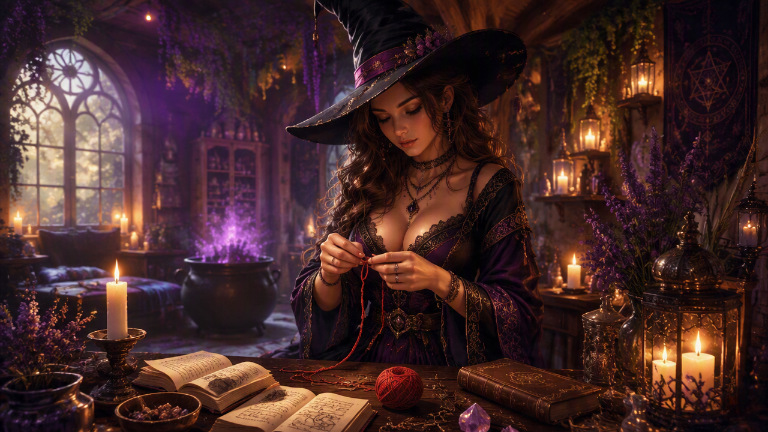
Knot magic is deceptively simple: a witch ties knots into a cord or string while focusing on a specific intention, and each knot locks a bit of that intention into the material itself. It’s one of the oldest and most portable forms of spellwork, requiring nothing more than a length of cord and a clear mind. Sailors and travelers once carried knotted cords believed to control the wind, a tradition that shows just how far back this practice reaches.
The process usually follows a rhythm. Nine knots is a common number, tied one at a time while speaking a chant or phrase with each one, “by knot of one, the spell’s begun,” and so on down the line. The cord is then kept somewhere close, worn, hidden under a pillow, or tucked into a drawer, until the intention comes to pass. Some witches slowly untie the knots as the goal is reached, releasing the built-up energy piece by piece.
Knot magic has lasted because it’s so wonderfully low-maintenance. No special ingredients, no elaborate setup, just hands, a cord, and focus. It’s the kind of magic that travels easily, which is probably exactly why it followed witches across oceans and centuries without ever needing to change much at all.
8. Ancestor Veneration: Witchcraft’s Oldest Connection to Spirit
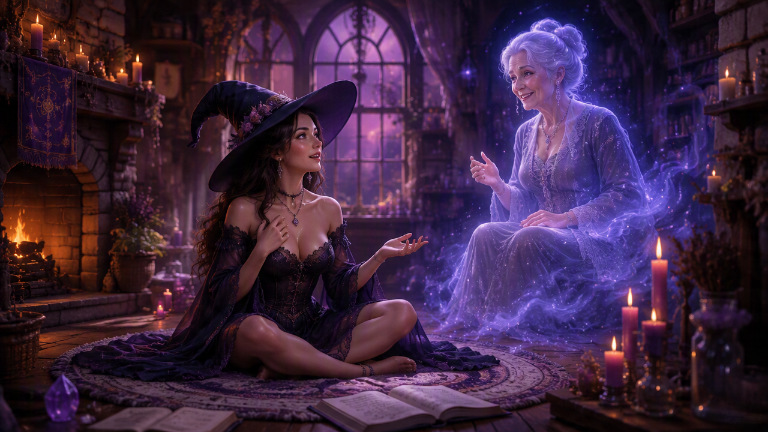
Long before spellbooks, there were altars set with food, flowers, and quiet conversation meant for the dead. Ancestor veneration is one of the oldest spiritual practices there is, built on the idea that death doesn’t end a relationship, it just changes its shape. Many witches keep this tradition close, treating their ancestors as guides who can be spoken to, asked for help, and thanked in return.
An ancestor altar usually includes photographs, small personal items that belonged to loved ones who’ve passed, candles, and offerings like water, bread, or a favorite drink or food of the person being honored. Witches will sit with the altar regularly, sometimes daily, speaking aloud or in their minds, sharing updates, asking questions, or simply sitting in the quiet company of those who came before. Certain times of year, particularly around the thinning of the veil in late autumn, call for deeper, more focused ancestor work.
This practice has never faded because grief and love never really do either. Every culture, in every era, has found some way to keep talking to the people they’ve lost. Witchcraft simply gives that instinct a structure, a shape, and a place to sit down and have the conversation.
9. Moon Rituals: Ancient Witchcraft’s Original Calendar
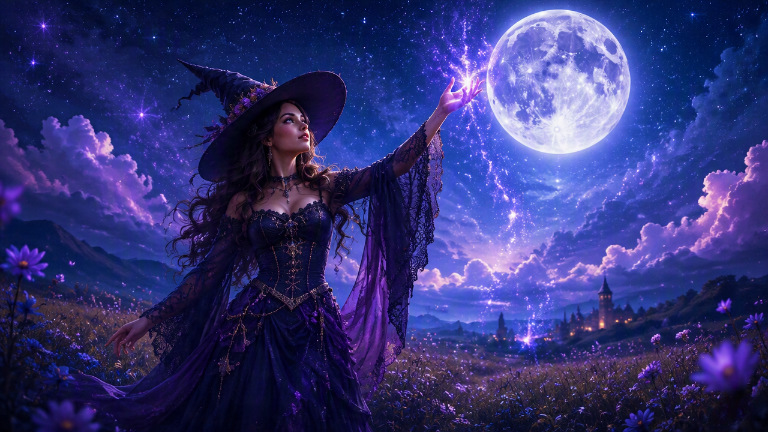
Before clocks and calendars, the moon told witches everything they needed to know about timing. Moon rituals are built around the idea that different phases carry different energy, the new moon for beginnings, the full moon for power and manifestation, the waning moon for release and cleansing. This wasn’t guesswork. It was a system, refined over generations, that shaped when spells were cast and when they were left alone entirely.
A full moon ritual might involve charging crystals or water under the moonlight, writing down intentions and reading them aloud, or simply sitting outside under the open sky to soak in what witches often describe as the moon’s fullest, most potent energy. A new moon, by contrast, calls for quieter work, planting seeds of intention rather than pushing hard for results. Waning moon rituals often involve releasing, burning a written grievance, or cleansing a space of stagnant energy.
This practice has held on for one simple reason: the moon still does exactly what it’s always done. It still pulls the tides, still changes shape overhead every single night, still offers itself as a quiet, reliable clock for anyone willing to look up. That kind of constancy is rare, and witches have never stopped building their work around it.
10. Protective Sigils and Wards: Ancient Symbols Still at Work
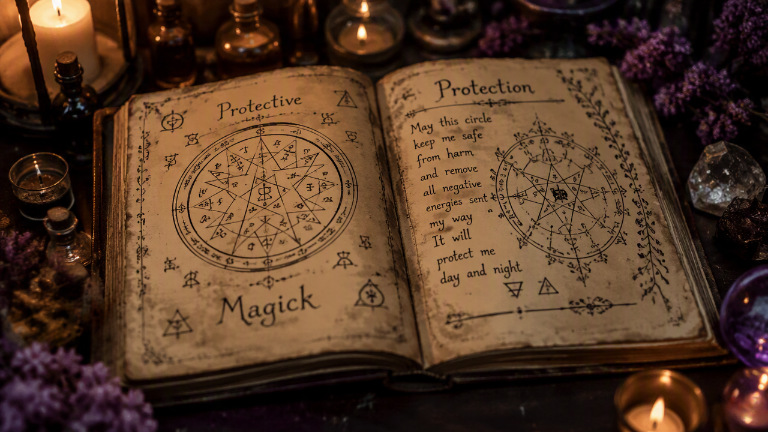
A sigil is a symbol, often built from letters or shapes combined together, that carries a specific intention sealed inside it. Wards work in a similar way but are usually meant to guard a space rather than carry out a single spell. Both practices go back centuries, appearing carved into doorframes, painted on barns, and tucked inside amulets meant to be worn close to the body.
Creating a sigil is part art and part focus. A witch might take a word like “protect” or “heal,” strip out the repeating letters, and weave what’s left into a single, unique symbol. That symbol is then drawn, carved, or painted somewhere meaningful, a door, a journal page, a piece of jewelry, and often “activated” by staring at it while holding the intention firmly in mind. Wards follow a similar path but are drawn at entry points, doors, windows, thresholds, specifically to stop unwanted energy from crossing over.
This one has survived because symbols are just powerful that way. A shape drawn with real focus behind it carries weight far beyond the ink or chalk it’s made of, and that’s been true since the very first symbol was ever carved into stone.
11. Tarot and Cartomancy: Old Wisdom Held in a Deck of Cards
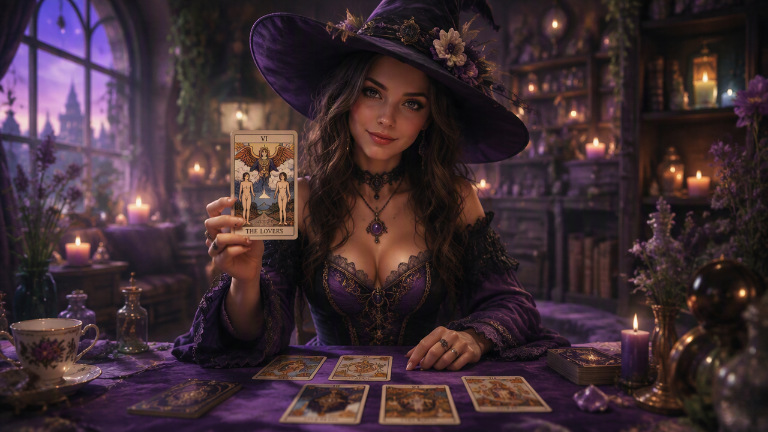
Tarot feels almost modern with its glossy decks and app versions, but the roots go back centuries, growing out of card games that slowly picked up layers of symbolism and meaning over time. Cartomancy, reading fortunes from cards, is one of witchcraft’s most recognizable divination tools, offering a structured way to ask questions and receive answers layered in imagery and story.
A reading usually starts with a clear question or an open request for guidance, followed by a shuffle and a chosen spread, sometimes a single card, sometimes an elaborate ten-card layout. Each card carries its own meaning, but a skilled reader also pays attention to the cards around it, the way they interact and shift each other’s tone. It’s less about memorizing a rulebook and more about learning to read a conversation happening across the table.
Tarot has endured because it gives structure to something that can otherwise feel formless. Divination without a system can feel overwhelming, but a deck of cards offers a shape to hold onto, a way to ask the universe a question and actually get something back to work with.
12. Mojo Bags and Charm Bags: Portable Magic From the Old Ways
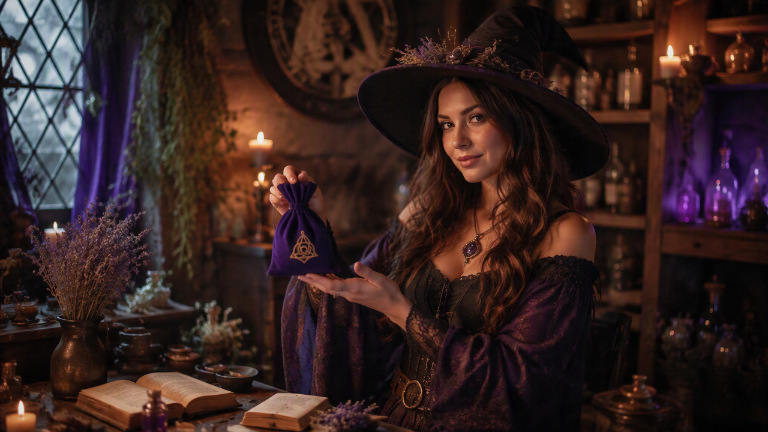
A mojo bag, sometimes called a charm bag or conjure bag, is a small pouch filled with herbs, stones, and personal items, all chosen and combined for a single clear purpose. This practice runs deep through folk magic traditions, built on the idea that magic doesn’t need to stay on an altar. It can travel in a pocket, tucked under a car seat, or worn against the skin.
Putting one together is a slow, intentional process. Every item goes in for a reason, a lodestone for drawing luck, a bit of cinnamon for money, a personal photo or written name for a love or protection working. Once filled, the bag is usually tied shut and “fed” occasionally, a drop of oil, a whispered word, to keep its energy alive and working over time. Some witches carry theirs for years, only opening them to refresh the ingredients inside.
This practice has lasted because it solves a very old problem: how do you take your magic with you? A mojo bag answers that question perfectly, small enough to hide in a pocket, powerful enough to carry real intention wherever the person wearing it goes.
Old Magic, New Hands
These twelve practices have crossed centuries, oceans, and countless hands to land right here, still very much alive and still very much working. What ties them together isn’t a specific ingredient or ritual, it’s intention, patience, and a willingness to trust something that can’t always be explained in plain terms. That’s exactly what magic has always asked of the people who practice it.
None of these traditions need to be treated like museum pieces. A candle lit with real focus tonight carries the same weight it did a thousand years ago. A knot tied with intention still holds. A conversation with an ancestor at a quiet altar still gets heard. Old-world witchcraft isn’t a thing of the past, it’s simply been waiting for hands willing to pick it back up.