

There’s a moment most practitioners hit at some point — you’ve been working with spells you found in books or online, and something starts to feel a little off. Not bad, exactly. Just… not quite yours. The words belong to someone else. The rhythm doesn’t match the way you think. And deep down, you already know: the most powerful magic you can do is the kind that comes straight from you.
Writing your own spells from scratch sounds intimidating, but it really isn’t. You don’t need to be a poet. You don’t need decades of practice or a stack of grimoires. What you need is a clear intention, a basic understanding of how spells are structured, and the willingness to trust your own voice. The magic isn’t in the fancy language — it’s in the meaning behind it, and nobody knows your meaning better than you do.
Spell writing for beginners often gets overcomplicated, but the truth is that humans have been crafting spoken and written magic for thousands of years — long before anyone wrote it all down in a guidebook. Your ancestors were doing this by firelight, making it up as they went, working with what they had and what they felt. That instinct is still in you. This guide is just here to help you remember how to use it.
Whether you’re looking to write spells from scratch for the first time or you’ve tried before and it felt flat, this breakdown will walk you through everything — from figuring out your intention all the way to the final words. By the end, you’ll have a real, working spell that belongs entirely to you.
Start with a Crystal-Clear Intention
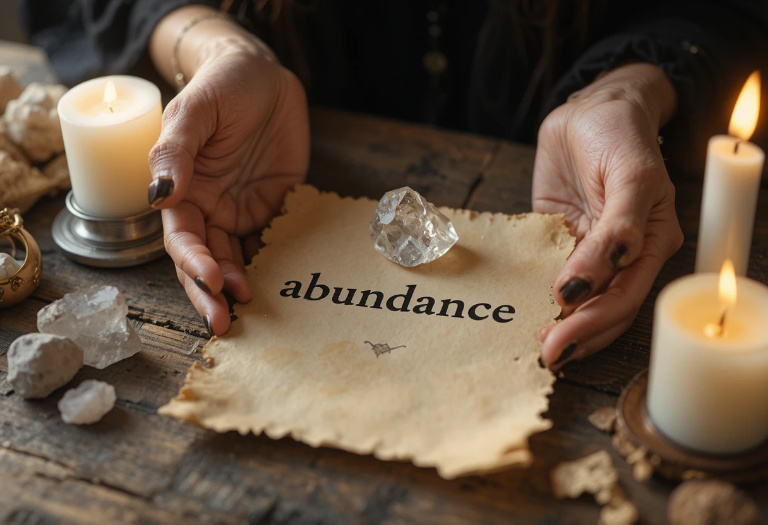
Before you write a single word, you need to know exactly what you’re asking for. This is the foundation of every spell — and the part most people rush. Vague intentions produce vague results. ‘I want more money’ is a wish. ‘I am drawing steady, unexpected income toward me this month’ is an intention. Feel the difference?
Take a few minutes before you sit down to write your spell and really get specific. What do you want? When? How do you want it to feel when it arrives? Write it out in plain language first — messy, honest, real. That raw version is the seed of your spell. Everything else grows from it.
One more thing: word your intention in the present or future-present tense, as if the thing is already in motion. Spells that beg or plead carry a frequency of lack. Spells that declare and affirm carry a frequency of power. There’s a big difference between ‘please help me find love’ and ‘love is finding its way to me now.’
Choose Your Ingredients and Tools with Meaning

You don’t need anything elaborate to write spells from scratch, but the ingredients and tools you choose should mean something. A candle color isn’t just decoration — it’s a signal. An herb isn’t just a scent — it’s a carrier of specific energy. When you pick your materials intentionally, they become part of the spell itself.
Start simple. Pick one or two ingredients that feel right for your intention. Green for abundance, red for passion, white for clarity and new beginnings. Rosemary for protection and remembrance. Cinnamon for speed and fire. Lavender for peace. You don’t have to memorize a huge correspondence chart — just choose what resonates with you and your goal.
Here’s a secret: the more personal the association, the more powerful the ingredient. If the smell of coffee means comfort and abundance to you, coffee belongs in your prosperity spell. If a certain crystal reminds you of someone who always made you feel safe, that crystal is protection for you. Your personal symbolism is real magic. Trust it.
Understand the Basic Structure of a Spell
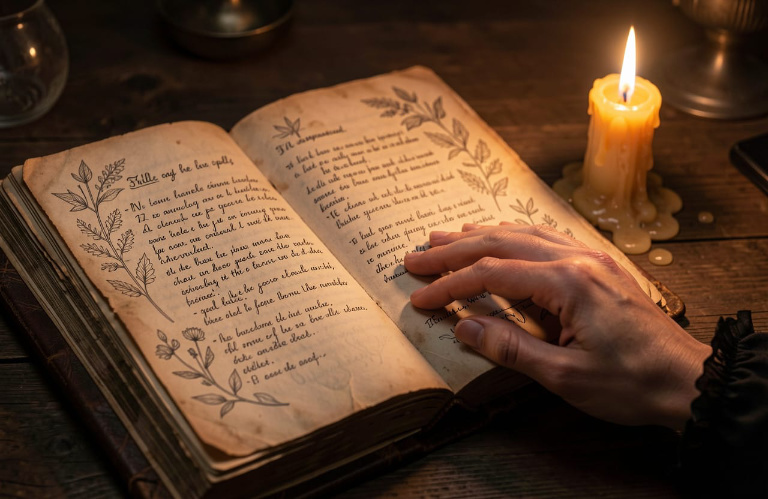
When you learn how to write your own spells, it helps to know the basic bones of how a spell is built. Most spells follow a loose structure: opening, working, closing. You don’t have to follow it rigidly, but having this shape in your head makes the writing a lot easier.
The opening is where you call in whatever you work with — your guides, the elements, the directions, a deity, the universe, your higher self. It sets the space and signals that something intentional is happening. Keep it simple. Even just ‘I open this space for sacred work’ is enough.
The working is the heart of the spell — this is where you state your intention clearly and build the energy. You might repeat your words three times, build in actions with your materials (lighting a candle, tying a knot, writing something down), or weave in rhyme if that feels natural to you. Rhyme isn’t required, but rhythm helps. It keeps the mind focused and raises the energy.
The closing releases the energy and seals the spell. Something as simple as ‘so it is’ or ‘as I will it, so it shall be’ works perfectly. You can also close by thanking whatever you called in, snuffing out a candle, or simply taking three deep breaths and letting it go.
How to Write Spells from Scratch: The Words Themselves

Here’s where people tend to freeze up — the actual writing. Don’t. Your words don’t need to be beautiful. They need to be true. Start with your raw intention statement from earlier and begin shaping it into something that feels like it wants to be spoken out loud.
Try writing your core intention as a statement first. Then see if any natural rhythm appears when you say it aloud. If you want to rhyme, keep it loose — forced rhymes break the spell’s momentum. ‘By fire bright and will of mine, what I seek is now aligned’ feels natural. ‘I call upon the sacred force to bring me money in due course’ feels forced and kind of kills the energy.
Write in first person. Use present or future-present tense. Be specific. Use sensory language if you can — what will it feel like, smell like, look like when this arrives? The more vividly you can feel the outcome while you’re writing, the more charged your spell becomes.
And don’t be precious about it. Write a draft. Say it out loud. Edit it. Say it again. When it makes your chest feel open and your energy rise, you’ve got it.
Timing, Moon Phases, and When to Cast

Timing isn’t strictly necessary, but if you want to add an extra layer of energy to your spell writing for beginners practice, paying attention to the moon is a great place to start. The new moon is perfect for planting seeds — new beginnings, fresh starts, drawing things in. The full moon supercharges anything you’re working on and is especially powerful for manifestation and gratitude.
The waxing moon (between new and full) supports growth, building, and attraction. The waning moon (between full and new) is better for releasing, banishing, and letting go. If your spell is about drawing something toward you, aim for waxing or full. If it’s about removing something — a habit, a relationship, a fear — aim for waning or dark moon.
Days of the week carry energy too. Monday connects to the moon and emotional work. Friday is Venus’s day — perfect for love and beauty. Sunday is solar energy — confidence, success, abundance. But honestly, the best time to cast a spell is when you feel ready and your energy is high. Don’t wait months for the ‘perfect’ timing if the feeling is strong right now
Casting Your Spell: Actually Doing the Thing

You’ve written your spell. You’ve gathered your ingredients. Now it’s time to cast it — and this part is simpler than it sounds. Create a small sacred space: clear the area, light a candle or some incense, take a few deep breaths to get out of your head and into your body. You’re shifting gears from ordinary time into something intentional.
Read or recite your spell slowly. Don’t rush. Let yourself feel the words. If you stumble or mess up a line, that’s fine — the energy knows what you meant. Perfection isn’t the goal; presence is. Some people like to repeat the core words three times, or seven, or nine. Do whatever feels right for you.
When you’re done, close the spell with your chosen closing words and then — this is the important part — let it go. Don’t keep turning it over in your mind, anxiously checking if it worked. A spell you wrote yourself carries your full energy, and obsessive doubt undercuts that energy fast. You planted the seed. Trust the process. Let it grow.
Keep a Spell Journal

One of the best things you can do when you start writing your own spells is keep a journal. Write down the date, the moon phase, your intention, the words you used, the ingredients, and what happened afterward. Not just the big results — the small shifts, the unexpected developments, the things that showed up sideways.
Over time you’ll start to notice patterns. Certain words hit harder for you. Certain ingredients show up again and again. Certain moon phases work faster. This is your personal magical vocabulary developing, and it’s genuinely one of the most valuable things you can build. No book in the world can hand it to you — it comes from your own experience.
Your spell journal also becomes a living grimoire. In a year or two, you’ll flip back through it and see how far your craft has come. What started as a clumsy first attempt at spell writing for beginners will grow into something rich, nuanced, and unmistakably yours.
Common Mistakes to Avoid When You Write Spells from Scratch

The biggest mistake people make is writing a spell while they’re emotionally activated in a negative way — angry, desperate, fearful. That energy gets baked into the spell. Before you sit down to write, do something to get yourself grounded first. Take a walk, meditate for five minutes, make tea. You want to be calm, clear, and intentional.
Another common one: trying to control the outcome too specifically. You can state what you want clearly, but leave room for the universe to deliver it in ways you haven’t thought of. ‘This or something better’ is a phrase a lot of experienced practitioners add to their closings for exactly this reason.
Also, don’t write spells for other people without their knowledge or consent. Even well-meaning magic aimed at someone else is a boundary issue. Focus your energy on yourself — on how you want to feel, what you want to call in, what you’re ready to release. That’s where your power actually lives.
A Simple Template to Write Your Own Spells

If you’re not sure where to start, use this simple template as your first skeleton. Swap in your own intention and adjust the language until it sounds like you.
Opening: ‘I open this space with intention and purpose. I call in [whatever you work with] to witness and support this working.’
Working: ‘I [state your intention in present tense]. I release what blocks this, and I welcome what supports it. With each breath I take, this grows stronger and closer. [Repeat the core line three times if you feel moved to.]’
Closing: ‘This is done. This is real. So it is — this or something better, in the highest good of all. I close this space with gratitude.’
Read it out loud before you use it. Edit whatever doesn’t feel right in your mouth. That process of adjusting and refining? That is spell writing. You’re already doing it.
Your Magic, Your Words

Once you write your first original spell and feel it land — really land, in your chest and your energy field — you’ll understand why so many practitioners say it’s a turning point. There’s something that shifts when you stop borrowing someone else’s words and start trusting your own. The magic was always in you. The spell is just the vehicle.
Start small. Write one spell. Keep it simple, keep it honest, keep it yours. And when it works — and it will — write it down, note what you did, and build from there. That’s how you learn how to write your own spells from scratch. One honest, intentional, imperfect, powerful word at a time.