
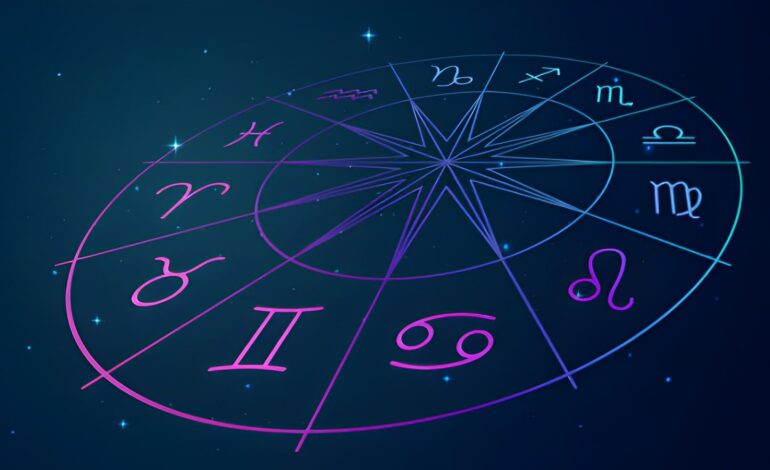
When most Westerners think of the Chinese horoscope, they picture the twelve animals — Dragon, Rabbit, Ox, Tiger — cycling through the years on restaurant placemats and New Year decorations. It’s charming, culturally rich, and genuinely rooted in one of humanity’s oldest cosmological traditions.
But here’s what most people don’t know: that twelve-animal zodiac is just the outermost layer of a far deeper system developed in ancient China. Beneath it lies a sophisticated, mathematically precise method for reading individual destiny — one that uses not just your birth year, but the exact hour, day, month, and year of your arrival into the world.
That system is called the Four Pillars of Destiny — known in Korea as Saju (??). It emerged from the same classical Chinese civilization that gave us the zodiac, was refined across dynasties by China’s greatest cosmological scholars, and has been practiced continuously across East Asia for over 1,400 years. Today, it is widely regarded as the most precise individual birth-reading system ever developed in the Eastern world.
If you’ve only ever encountered the Chinese horoscope, you’ve seen the introduction. Saju is the book.
From Ancient China: The Shared Root of Both Systems
Both the Chinese horoscope and Saju draw from the same foundational source: the classical Chinese cosmological worldview developed during the Han dynasty and systematized through the Tang and Song periods. The core building blocks — the twelve Earthly Branches (??), the ten Heavenly Stems (??), the Five Elements (??), and the cyclical calendar — are shared by both systems.
The difference lies in how each system uses those building blocks.
The twelve-animal zodiac — the popular Chinese horoscope most people know — uses only the Earthly Branch of your birth year. One character. One dimension. One animal for every person born across twelve months of the same year.
The Four Pillars system — Saju — uses all four temporal markers of your birth: the Heavenly Stem and Earthly Branch of your birth hour, day, month, and year. Eight characters total. A unique cosmological signature that practically no two people in history share exactly. This method was systematized by the Tang dynasty scholar Li X?zh?ng (???) and further refined into its modern form by Xu Ziping (???) of the Song dynasty — names that remain foundational in classical Chinese metaphysical literature to this day.
The Chinese horoscope captures the broad seasonal and generational energy of an era. Saju reads the individual.
Why the Same Tradition Produced Two Very Different Experiences
Think of it this way. Classical Chinese cosmology is like a vast body of music theory — deeply sophisticated, internally consistent, refined over centuries. The twelve-animal zodiac is one accessible melody drawn from that theory: easy to remember, culturally beloved, broadly resonant.
Saju is the full symphony.
The reason Saju feels so much more personal isn’t that it comes from a different tradition — it’s because it uses dramatically more of the same tradition’s depth. Where the zodiac gives you one variable (birth year ? animal), Saju calculates:
- Four Pillars: year, month, day, and hour — each expressed as a pair of classical characters.
- Five Elements balance: your personal ratio of Wood, Fire, Earth, Metal, and Water.
- Ten Stars: ten relational energies mapping your relationship with wealth, authority, creativity, and connection.
- Body Strength (??/??): whether your personal energy is dominant or receptive — a key determinant of how you thrive.
- Fortune Cycles: ten-year and annual timing cycles that show when specific fortunes activate — or go quiet.
The result isn’t a different cosmology. It’s the same cosmology, applied with full fidelity to the individual.
1,400 Years of East Asian Validation
One of the most compelling things about Saju — from an intellectual standpoint — is the sheer breadth of its civilizational track record. This isn’t a system invented by a single thinker or popularized by a modern self-help movement. It evolved across:
- Tang dynasty China (618–907 CE): foundational systematization of the Four Pillars framework.
- Song dynasty China (960–1279 CE): refinement into the Ziping method still used today.
- Korea: (Joseon dynasty through the present): continuous integration into Korean court culture, folk practice, and eventually modern digital platforms.
- Japan and Vietnam: parallel traditions developed from the same Chinese source, adapted to local cultural contexts.
Across more than a millennium and across multiple distinct civilizations, the core of this system has remained stable — not because it was never questioned, but because practitioners across generations kept testing it against real human lives and refining it accordingly. That’s a level of empirical longevity that almost no other personality or destiny framework can claim.
The Chinese horoscope shares this ancient root. What Saju adds is the precision to apply that root’s full depth to one specific person — you.
A Concrete Example: Same Chinese Horoscope, Completely Different Lives
Consider two people born in the Year of the Dragon, 1988. The popular Chinese horoscope assigns them the same profile: charismatic, ambitious, a natural leader, romantically compatible with Rats and Monkeys.
In Saju, their charts are nothing alike:
- Person A, born February 1988 in the morning: a chart heavy in Wood energy with a strong Wealth Star orientation. Entrepreneurial, financially driven, with an Authority Star peak activating in her late thirties. The classic builder archetype — independently motivated, best when setting the direction herself.
- Person B, born October 1988 at night: Metal and Water dominant, Expression Star leading, receptive body strength. Highly creative, deeply collaborative, wealth flows through partnerships and artistic output rather than solo ambition. His peak fortune cycle arrives a full decade after hers.
Same animal. Same year. Same zodiac reading. Completely different people, with completely different timing and completely different paths to success.
This is not a failure of the Chinese horoscope — it was never designed for this level of resolution. It is simply what can be achieved when the classical East Asian system is embraced in its entirety rather than as a sum of its components.
Does This Work If You’re Not Asian?
Unequivocally yes — and understanding why helps clarify what Saju actually is.
Saju reads cosmic energy at the moment of birth, calculated using the traditional lunisolar calendar that tracks the cyclical movements of the heavens. Those cycles don’t recognize national borders or cultural backgrounds. A person born in São Paulo, Lagos, or Vancouver at the same moment as someone born in Beijing has the identical Heavenly Stems and Earthly Branches. The chart is determined by universal astronomical timing — not by ethnicity, geography, or cultural heritage.
What does require cultural sensitivity is interpretation. Classical texts written in dynastic China encoded certain social assumptions — what counted as fortune for a woman, what counted as success for a man — that no longer apply cleanly to the modern world. A sophisticated Saju system applies contemporary interpretive frameworks to timeless classical calculations. The formulas are universal; the language is modern.
How AI Has Finally Made This Accessible
For most of its history, serious Saju reading required a master practitioner who had spent decades studying classical Chinese and Korean texts, memorizing thousands of character interactions, and developing the pattern-recognition intuition that only comes from reading chart after chart. This made precision readings expensive and geographically rare — the kind of thing you might access once in a life-changing moment, if you knew the right person.
The classical Saju formulas are, at their core, algorithmic. The rules for calculating Fortune Cycles, mapping Ten Stars, identifying Noble Stars and Charm Stars, and analyzing Pillar interactions are precise and consistent. An algorithm built correctly on those classical foundations can calculate flawlessly — and interpret the results without fatigue, inconsistency, or the variable skill of whoever happens to be available.
What AI changes isn’t the system. It’s the access. A 1,400-year tradition, built across the greatest civilizations of the Eastern world, becomes available to anyone with a birth date and a genuine question about their life.
Ready to Go Beyond the Zodiac?
If you’ve felt that flicker of recognition — followed by the gap — when reading your Chinese horoscope, what you’re sensing is the distance between the system’s surface and its depth. The depth has always been there. Saju is the door to it.
SajuWiki at luckyloveme.com/en was built by Korean algorithm engineers working alongside a master practitioner with decades of classical expertise. The system they created draws directly from the Ziping tradition — the same framework that has been refined across China, Korea, and East Asia for over a millennium — and is implemented with algorithmic precision, interpreted in clear, modern English.
You enter your birth details and your specific concern — a career question, a relationship crossroads, a financial uncertainty. The system analyzes your Four Pillars, Five Elements, Ten Stars, Fortune Cycles, Noble Stars, and Charm Stars, then delivers a reading tailored to your actual question. Not a generic horoscope. A decoded map of your life’s coordinates.
Your free reading includes your complete Four Pillars chart, Five Elements composition, and a personality-level interpretation — enough to see for yourself whether this 1,400-year tradition speaks to you.
Over 200,000 users have trusted SajuWiki, with a 4.9-star average across more than 22,000 reviews. The same system that has served them is now available in English, for the first time, to anyone in the world.
Start your free reading at luckyloveme.com/en — and discover what the full depth of classical East Asian cosmology has to say about you.
The Four Pillars of Destiny (?????) originated in Tang and Song dynasty China and has been practiced continuously across East Asia for over 1,400 years. SajuWiki / luckyloveme.com offers AI-powered readings based on the classical Ziping tradition.