

There’s something happening in your kitchen right now that most people completely overlook. Every time you crush a clove of garlic, simmer a pot of soup, or sprinkle cinnamon into something sweet, you’re working with forces that humans have understood as magical for thousands of years. The smells, the heat, the transformation of raw ingredients into something nourishing — none of that is ordinary, even if it feels that way. Kitchen witchery says it never was.
The kitchen witch is probably the oldest kind of magic worker there is. Not the dramatic kind with elaborate rituals and expensive tools, but the quiet, practical kind — the grandmother stirring something on the stove with a specific kind of focus, the person who always seems to cook food that makes you feel genuinely better after eating it. That’s not a coincidence. That’s craft. It’s been passed down through families and communities for so long that most people stopped recognizing it as magic at all, which is honestly the most effective kind of magic there is.
What makes kitchen witchery different from most magical practices is that it doesn’t ask you to step outside your normal life. It slots directly into what you’re already doing every single day. You eat, you cook, you make tea, you fill your home with smells and warmth — and every one of those moments is a doorway. The magic isn’t separate from the meal. The magic is the meal. The intention you pour into the cooking goes directly into the people who eat it, into the walls of your home, into the energy of your day.
This isn’t about performing rituals that feel foreign or learning a system that takes years to understand. Kitchen witchery is immediate, instinctive, and completely real. Every ingredient carries energy. Every cooking method shapes that energy differently. Every meal you make is already a kind of spell — the only question is whether you’re casting it consciously or not. What follows is everything you need to start doing this on purpose.
Your Kitchen Is Already a Temple

Walk into your kitchen and actually look at it differently for a second. You have fire. You have water. You have earth in the form of herbs, roots, grains, and vegetables pulled directly from the ground. You have air moving through steam and smoke and the scent of things transforming. Every single classical element that magical traditions across the world consider sacred is sitting right there in your kitchen, available to you every day.
The stove is the heart of the whole operation. Fire has been considered magical in every culture on earth — it transforms, it purifies, it destroys what no longer serves and creates something new in its place. When you cook with fire, you’re participating in that process. Gas flame burns differently than electric heat, and kitchen witches who work with both will tell you they feel genuinely different to cook with. Gas is immediate, responsive, alive. Electric is slow, steady, accumulating. Neither is better — they’re just different energies to work with depending on what you’re making and why.
Water in the kitchen is where emotional and intuitive magic lives. Soups, broths, teas, anything where water is the main medium — these are traditionally the most powerful vehicles for kitchen witch magic because water absorbs intention more readily than almost anything else. When you make a broth and you’re thinking about someone you love, genuinely holding them in your mind as you stir, that energy goes somewhere real. It doesn’t disappear. It goes into the liquid, and then into whoever drinks it.
The cutting board is an altar. The pantry is a magical supply cabinet. The spice rack is a collection of potent, concentrated plant magic organized neatly in little jars. Once you start seeing your kitchen this way, you can’t really un-see it.
The Secret Language of Ingredients

Every ingredient has a specific magical energy, and this isn’t symbolic or metaphorical — it’s based on the actual properties of the plant or food itself. Ginger generates heat and momentum. It’s used in magic that’s meant to speed things up, create courage, or get things moving when they’ve gone stagnant. When you add ginger to a dish, you’re adding that energy to whatever you’re cooking and whoever’s going to eat it.
Garlic protects. This one shows up in practically every folk magic tradition in the world independently, which is usually a good sign that something real is being pointed at. Garlic at the door, garlic in the meal, garlic braided and hung in the kitchen — it’s been driving away harmful energy in every culture that knew about it. The antibacterial, antiviral properties of garlic are now completely scientifically documented, and kitchen witches would just nod at that and say yes, obviously, that’s what protection means.
Rosemary is for memory and clarity. Lavender is for calm and sleep. Cinnamon calls in abundance and warmth and speeds up results. Basil brings love and prosperity — fresh basil especially, which is why so many Italian grandmothers grew it in the kitchen window without being able to explain exactly why it needed to be there. Mint clears the mind and the space. Thyme builds courage. Bay leaves are powerful enough that they’re burned on their own as a standalone magical tool, written on with wishes before lighting.
Sweeteners are in their own category. Honey is ancient magic — it doesn’t expire, it preserves, and it’s been found in Egyptian tombs still perfectly edible. Honey in your cooking draws sweetness toward whatever the meal is being made for. Sugar works similarly but lighter, less ancient, more immediate. If you’re baking something meant to celebrate or attract good things, the sweetener you choose and the intention behind how you use it matters more than most people realize.
Eggs are pure potential. Bread is one of the most complete acts of kitchen witchery that exists — you take grain, water, salt, and something living (yeast), you work it with your hands over time, you let it rest and rise, and you transform it completely through heat into something that feeds people at a deep, fundamental level. Every step of bread making is a magical act if you’re paying attention to it.
Stirring Direction, Timing, and the Details That Actually Matter

Kitchen witchery lives in the details, and this is where it gets genuinely interesting. Stirring clockwise — called “deosil” in older traditions — draws things in. It’s used when you want to attract, build, or bring something toward you. Stirring counterclockwise releases, banishes, or moves something away. This sounds small, but commit to it once with full intention while cooking something specifically aimed at a goal, and you’ll feel the difference in how the process feels.
The timing of when you cook matters. Monday is connected to the moon and is ideal for emotional healing, intuition, and dream work — make your softest, most comforting foods on Mondays. Friday is Venus’s day, which means it’s the day for love, beauty, and abundance — Friday is the right day for a dinner meant to deepen a relationship or celebrate something good. Sunday has solar energy, which means vitality and success — Sunday roast is actually a surprisingly appropriate form of sun magic, which probably explains some of why it feels so satisfying as a ritual.
Seasonal cooking is kitchen witchery at its most natural. Cooking with what’s actually growing right now in the world connects your energy to the larger cycles of the earth in a way that eating strawberries in December simply cannot. Root vegetables in winter, greens in spring, stone fruits in summer — these aren’t just nutritional choices, they’re ways of syncing up with what the world is actually doing at any given moment.
The temperature of your hands when you’re working with food matters. Cold hands, closed energy. If you’ve had a bad day and you’re going into the kitchen, kitchen witches traditionally recommend washing your hands first — not just for hygiene, but as a reset, a physical act of clearing what you’ve been carrying before you start pouring it into food.
Making Tea Like It’s the Spell It Actually Is
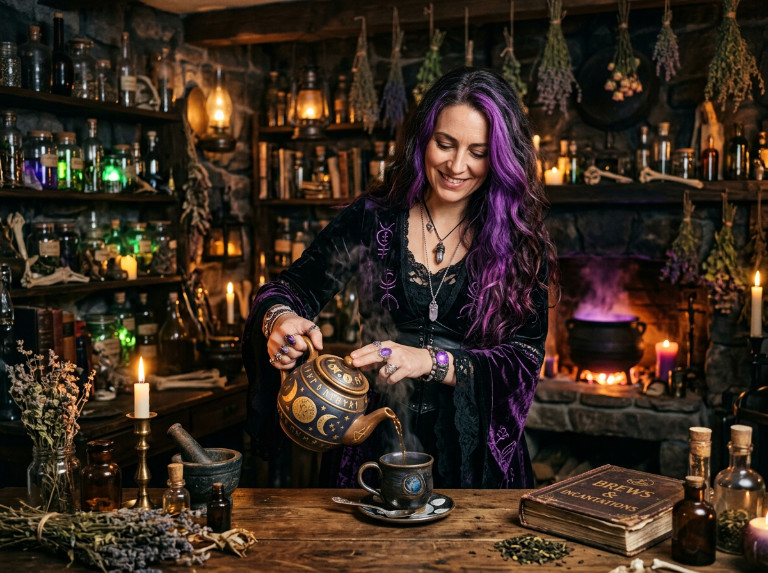
Tea is the most accessible kitchen witch practice in the world, and most people make it half asleep without thinking about it at all, which is a genuine loss. A cup of tea made with intention is a real, powerful thing. A cup of tea made on autopilot is just hot water with a bag in it. The difference is entirely in how you engage with the process.
Start with the water. Let it actually boil rather than stopping it early — fully boiling water has more energy to it, which sounds vague until you pay attention to how different teas made from properly boiled versus barely-hot water feel going down. While the water heats, decide what you want this cup of tea to do. This doesn’t need to be elaborate. It can be as simple as: I want to feel calm. I want clarity this afternoon. I want to feel warm and protected.
Choose your herbs or tea based on that intention. Chamomile for calm and sleep. Peppermint for energy and clarity. Nettle for strength and grounding. Lemon balm for lifting a dark mood. Ginger for warmth and confidence. Elderflower for beauty and intuition. Rose hip for heart healing. These aren’t random folk associations — most of them are backed by genuine phytochemical research that confirms what kitchen witches already knew.
Pour slowly. Watch the color bloom into the water. This isn’t just aesthetics — it’s a way of staying present with what you’re making, keeping your intention alive through the process instead of drifting off to check your phone. Hold the cup in both hands before you drink. Feel the warmth. State your intention out loud or in your head clearly, once. Then drink it. That’s a spell. It’s a real one.
Feeding People as the Most Powerful Magic There Is
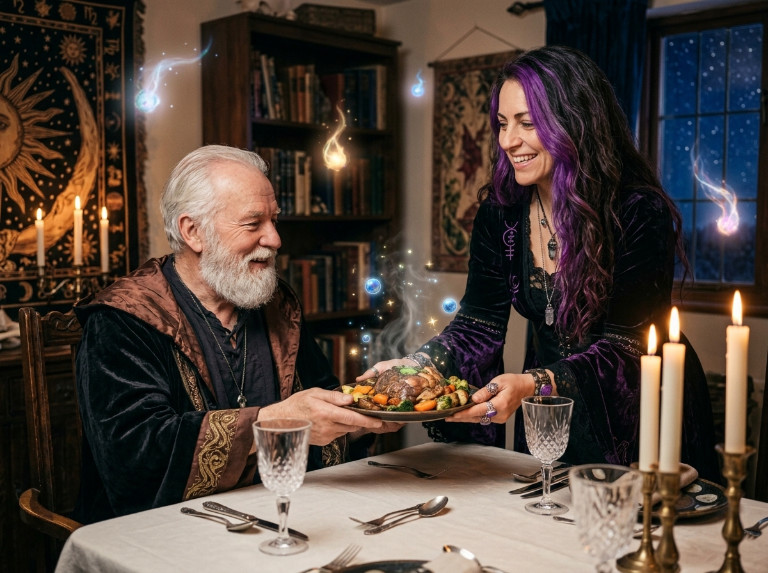
The reason kitchen witchery has survived in one form or another across every culture on earth is because feeding people is the most fundamental act of care that exists, and care is genuinely magical. When you cook for someone with real love or intention, that registers in the food in a way that people can feel even without knowing why. “This tastes like it was made with love” is not a cliché — it’s people correctly identifying something real in the food they’re eating.
Every meal you send someone off with in the morning, every birthday cake you make, every soup you bring to someone who’s sick, every dinner you cook when someone needs comfort — these are all acts of kitchen witch magic whether you name them that or not. The naming just makes them more intentional, more concentrated, more effective. You’re not adding magic to something that wasn’t magical. You’re recognizing the magic that was always already there and choosing to use it on purpose.
A kitchen witch protects her home through what she cooks and how she cooks it. She shapes the energy of her household through the smells that fill it. She heals the people she loves through meals aimed specifically at what they need. She celebrates, marks time, calls in good things, and releases difficult ones through the food she makes. The kitchen is command central for everything that matters in a home, and it always has been.
You don’t need to call yourself a kitchen witch to practice kitchen witchery. You don’t need to announce it or adopt any particular identity around it. You just need to start paying attention to what you’re already doing, add a little intention to it, and watch what happens. The magic was always there. It was just waiting for someone to notice.