

Yoga is one of those things that looks simple from the outside — maybe some stretching, some breathing, a bit of quiet time on a mat. But the deeper you go, the more you realize it’s actually a complete map for living. Not just for the body, but for the mind, the heart, and everything in between. The ancient teachers who gave us yoga weren’t just designing a workout. They were handing down a whole system for becoming more fully human.
At the center of that system is something called the 8 Limbs of Yoga. This framework comes from a sage named Patanjali, who wrote it down around 2,000 years ago in a text called the Yoga Sutras. Think of it less like a rulebook and more like a path — one that winds through how you treat others, how you treat yourself, how you breathe, how you sit, and ultimately how you wake up to what’s really going on inside you. Every step builds on the last, and none of them are wasted.
What’s remarkable about this path is how alive it still feels today. The 8 limbs of yoga practice don’t ask you to leave your life behind or go live in a cave. They meet you exactly where you are — in the middle of a busy week, in the middle of a hard relationship, in the middle of trying to figure out who you really are. They work whether you’ve been doing yoga for twenty years or you just bought your first mat last Tuesday.
This article walks through all eight of them, one by one. Some will feel instantly familiar. Some might surprise you. A few might quietly change the way you see things. That’s kind of the whole point.
What Are the 8 Limbs of Yoga?
The 8 limbs of yoga are eight interconnected branches of practice, each one addressing a different layer of your life and your inner world. Patanjali laid them out in sequence, but they’re not really a to-do list you knock out in order. They work more like roots and branches — all part of the same living thing, feeding each other in ways that aren’t always obvious at first.
The word “limb” itself is a good clue. Just like a body doesn’t work without all its limbs, the yoga path is meant to be walked as a whole. The first two limbs are about how you live and relate to the world around you. The middle ones bring the body and breath into alignment. And the final three go deep inside, into the quieter territory of the mind and what lies beyond it.
Together, the 8 limbs of yoga offer something rare — a complete and grounded spiritual path that’s practical enough to actually use. Not just philosophy for its own sake, but a living practice that starts the moment you wake up in the morning and doesn’t really end.
The 8 Limbs of Yoga
1. Yama — Ethics: How You Meet the World
Yama is the first limb, and it’s all about how you show up in your relationships — with other people, with animals, with the planet. There are five Yamas in total: Ahimsa (non-violence), Satya (truthfulness), Asteya (non-stealing), Brahmacharya (right use of energy), and Aparigraha (non-greed). They sound like a list of rules, but they’re really more like invitations to pay closer attention.
Take Ahimsa — non-violence. Most of us aren’t out here hurting anyone on purpose. But Ahimsa asks you to look at the subtler stuff too. The way you talk to yourself when something goes wrong. The quiet judgments you make about others. The small choices that add up over time. It’s less about perfection and more about awareness.
Satya, or truthfulness, goes hand in hand with Ahimsa. Telling the truth feels obvious until you start noticing all the little ways people bend it — including yourself. Satya asks you to be honest, but always with kindness as the compass. Truth without compassion is just bluntness. Together, they create something more powerful.
The Yamas aren’t about being perfect. They’re about building a life that feels clean and honest from the inside out. When your actions and your values start to line up, something relaxes. That relaxation — that ease — is what makes everything else on the path possible.
2. Niyama — Personal Disciplines: How You Treat Yourself
If the Yamas are about how you move through the world, the Niyamas are about your private inner life. There are five of them too: Saucha (cleanliness), Santosha (contentment), Tapas (discipline), Svadhyaya (self-study), and Ishvara Pranidhana (surrender). Think of them as your daily spiritual hygiene.
Saucha means cleanliness — and this goes beyond a tidy room. A clear body, a clear mind, a clean environment. The Niyamas suggest that outer order and inner order are more connected than we think. When your space is chaotic, your mind often follows. When you clean things up on the outside, something inside often settles too.
Santosha — contentment — might be the most radical one on the list. Not happiness, not excitement, but a deep, quiet okay-ness with exactly where you are right now. In a world that constantly sells you on what you’re missing, choosing contentment is almost a revolutionary act. It doesn’t mean you stop growing. It means you stop suffering over where you already are.
Svadhyaya, or self-study, is the practice of turning the lens inward — reading, reflecting, asking honest questions about your own patterns and beliefs. And Ishvara Pranidhana, surrender, asks you to hold it all a little more lightly. Together, the Niyamas build the kind of inner steadiness that makes the rest of the journey actually enjoyable.
3. Asana — Postures: The Moving Temple
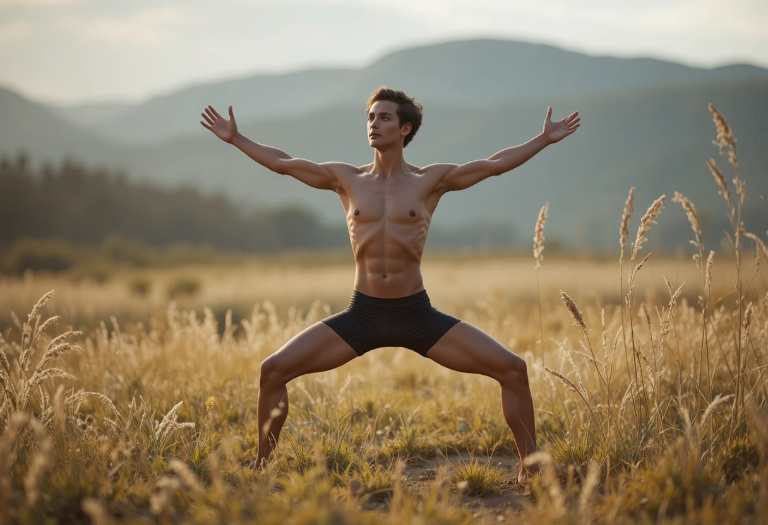
This is the one most people know. Asana is the physical practice of yoga — the postures, the flows, the shapes the body makes on the mat. In the modern world, this is often where yoga begins and ends. But in the classical path, it’s actually the third limb. There’s a lot that comes before the mat work, and a lot more waiting after it.
Patanjali’s original definition of asana was simply “a steady, comfortable seat.” That’s it. The whole point of physical practice, in his view, was to prepare the body to sit still for meditation. Centuries of teachers expanded this into the rich landscape of postures we have today — but the core intention never really changed.
What asana actually does is teach you to be present in your body. When you hold a pose that’s challenging, you can’t really be somewhere else mentally. The body pulls you back. You learn to breathe through discomfort, to find ease inside effort, to stay curious rather than reactive. These are skills that travel way beyond the mat.
And there’s something genuinely magical about a consistent asana practice. The body starts to feel like home. Energy moves more freely. The nervous system begins to settle. You walk through your day differently — a little quieter, a little more grounded — even if you can’t explain why.
4. Pranayama — Breath: The Bridge Between Worlds

Pranayama means the extension or control of prana — life force — through the breath. It’s the fourth limb, and it sits right at the intersection between the outer world and the inner one. The breath is the only function of the body that’s both automatic and voluntary. You can let it run on its own, or you can take the wheel. That makes it uniquely powerful.
Different pranayama techniques do very different things. Some are energizing, like Kapalabhati — rapid, pumping breaths that clear the system and wake up the mind. Others are deeply calming, like Nadi Shodhana — alternate nostril breathing — which balances the two hemispheres of the brain and brings a beautiful, even quality to awareness. The tradition is rich with options.
What the breath practices all share is the ability to shift your state. Anxious and spinning? A few minutes of slow, extended exhales and something genuinely changes in your body. Flat and sluggish? A round of energizing breath and the lights come back on. You already have this tool with you, always, for free. Pranayama is just the art of learning to use it.
Practiced regularly, pranayama breath control builds a kind of inner stability that’s hard to describe until you feel it. The breath becomes an anchor. No matter what’s happening around you, you can find it — and finding it, you find yourself.
5. Pratyahara — Sense Withdrawal: Turning the Volume Down
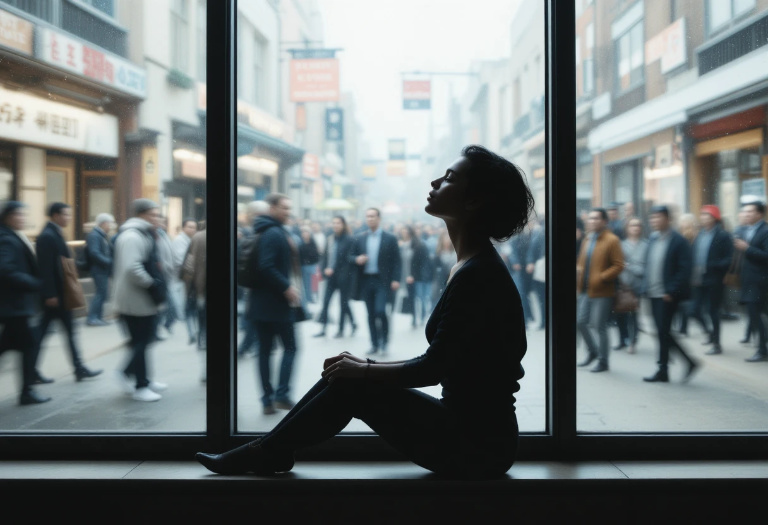
Pratyahara is where things start to get interesting in a quieter way. It’s the practice of drawing the senses inward — not shutting them off, but turning down their pull on your attention. The eyes still see, the ears still hear, but you stop being dragged around by everything you perceive. You become the observer rather than the one being observed.
This might sound abstract, but you’ve likely experienced it already. Ever been so absorbed in something you love that you didn’t notice time passing? That’s a version of Pratyahara — the senses settling because the mind found something more interesting inside. The practice just makes that kind of inner gathering more intentional.
In a world designed to steal your attention, Pratyahara is almost a survival skill. Notifications, screens, noise, stimulation — the modern world is very good at pulling you outward. This fifth limb is the practice of learning to come back. To sit with yourself without needing the next thing to look at.
When you can do this — even briefly, even imperfectly — the inner world opens up. You start to notice what’s actually happening in your own mind and heart, rather than just reacting to the surface of things. That’s the doorway the next three limbs walk through.
6. Dharana — Concentration: Learning to Stay
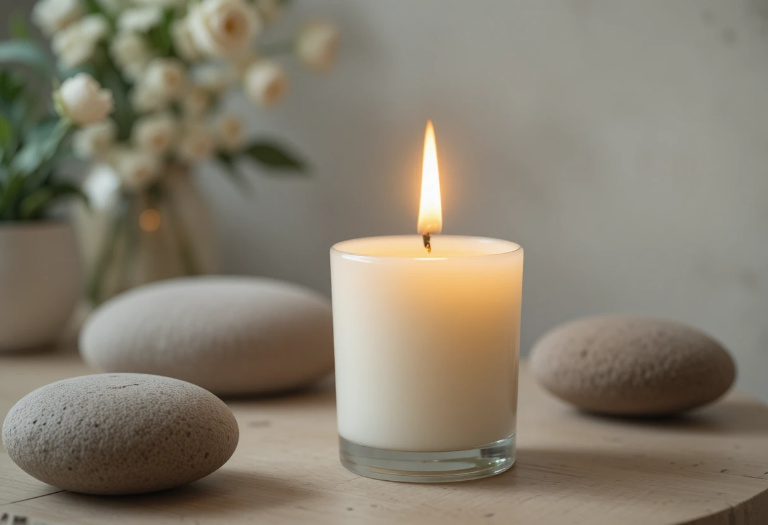
Dharana means concentration — the practice of holding your attention on a single point. A breath, a candle flame, a mantra, a sensation in the body. The mind is going to wander. That’s not a problem. That’s just what minds do. Dharana is the practice of noticing when it’s gone, and gently bringing it back.
It sounds simple. It is not simple. Anyone who’s sat down and tried to focus for five minutes knows the mind has its own ideas about where to go. Old conversations resurface. Plans get made. Grocery lists appear from nowhere. Dharana doesn’t fight any of this — it just keeps returning to the point of focus, over and over, without drama.
Over time, this practice builds something remarkable: the ability to choose where your attention goes. In daily life, this translates into sharper focus, deeper presence in conversations, a calmer inner environment overall. You stop being a leaf blown around by every passing thought. You start to feel like someone who can actually be where they are.
There’s a subtler gift too. As you practice staying, you start to notice the space between thoughts. The quiet that’s always there underneath the noise. Dharana begins to thin the mental chatter, and what shows up in its place is something much more interesting.
7. Dhyana — Meditation: When Everything Softens

Dhyana is what happens when Dharana deepens. If concentration is the effort to stay with something, meditation is what comes when that effort dissolves — when the separation between the meditator and what they’re meditating on starts to blur. It’s less something you do and more something that arrives, when conditions are right.
You can’t really force Dhyana, which is actually quite liberating. What you can do is practice Dharana faithfully and create the conditions where meditation becomes possible. It’s like planting seeds — you do the work, and then you let things grow in their own time. Trying to grab at it directly is like trying to grab at smoke.
In genuine meditation, the sense of effort fades. Thoughts may still arise, but they don’t hook you the same way. There’s a warmth, a spaciousness, a sense of being held by something larger than your usual self. Time does strange things. The body relaxes in ways it rarely does in ordinary life. Many people describe it as coming home.
Regular meditation practice reshapes how you move through the world. Emotional reactions become less automatic. The gap between stimulus and response grows just a little wider. That gap is where freedom lives. And Dhyana, practiced over time, is one of the most reliable ways to find it.
8. Samadhi — Enlightenment: The Return to Wholeness

Samadhi is the eighth limb, and in many ways it’s what the whole path has been quietly building toward. The word is sometimes translated as enlightenment, or bliss, or union. What it really points to is a state of complete absorption — where the sense of being a separate self temporarily dissolves, and what remains is pure, open awareness. Nothing to achieve. Nowhere to go. Just this.
Most traditions treat Samadhi as rare and extraordinary, available only to the most dedicated practitioners after lifetimes of effort. But there are also teachers who suggest it’s closer than we think — that it appears in glimpses throughout ordinary life. A moment of watching a sunset and forgetting yourself completely. The absorption of deep creative work. The wordless love between parent and child. These are all doorways.
What Patanjali describes in his sutras is actually a range of Samadhi states, from subtler to deeper, each one revealing more of what’s really here beneath the surface of everyday experience. It’s not a one-time event that settles things forever. It’s an ever-deepening recognition that something vast and luminous is already present — has always been present — right at the heart of experience.
And here’s the thing about Samadhi that makes the whole eight-limbed path worth walking: you don’t arrive at it and then leave your life behind. You bring it back. The light you find in those deep states slowly begins to color everything — your relationships, your work, your ordinary Tuesday morning. The path isn’t about escaping life. It’s about waking up inside of it.