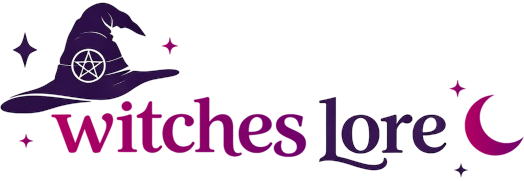


Light a candle, let it burn a while, and watch what happens when the wax starts to move. It never drips the same way twice. Sometimes it pools into a perfect little circle. Sometimes it runs down the side in a thin trail that hardens into something that looks eerily like a snake, a heart, or a face. That’s not just chemistry doing its thing — it’s the wax telling you something, if you know how to listen.
Wax reading (some call it ceromancy, but let’s keep it simple) is one of the oldest and most accessible forms of candle magic there is. You don’t need special tools, a coven, or years of training. You just need a candle, a question, a little patience, and a willingness to trust what shows up. It’s part science, part intuition, and part conversation with whatever forces are listening when you light that wick.
This guide is going to walk you through the whole practice, from the exact second the wax starts to melt, to what the flame itself is trying to tell you, to the shadows the wax throws on your wall, to what color candle you should be burning depending on what you’re asking about. We’ll also cover the shapes themselves — thirty of the most common ones you’ll see, and what each one tends to mean.
None of this is about being “right” or “wrong.” Wax reading is a language, and like any language, it gets easier the more you practice it. Trust your gut. If a shape looks like a heart to you, it’s a heart, even if someone else insists it looks like a leaf. The wax is speaking to you.
How to Read Candle Wax Shapes: A Beginner’s Guide to Wax Reading

At its core, wax reading works a lot like tarot or tea leaf reading. You ask a question, you let the candle burn, and then you interpret whatever shape the wax leaves behind. It’s simple in structure but genuinely deep in practice, because the wax responds to everything — the question you ask, the energy in the room, even the temperature of the air around you.
To start, pick a candle that matches your intention (more on color magic later), light it somewhere quiet, and ask your question out loud or in your head. Some people prefer to write the question on a slip of paper and set it under the candle holder. Either way, the key is to actually focus on the question while the candle burns, rather than lighting it and walking away. You want your energy in the room while the wax does its work.
Let the candle burn for at least fifteen to twenty minutes before checking in, though some questions take a full burn to answer. Watch the wax as it drips, but don’t force an interpretation too early — a shape isn’t “finished” until the wax has cooled and hardened. Reading wet, still-moving wax is like reading a sentence before it’s finished being written.
Once the wax has set, look at it from a few different angles. Turn the candle slightly, get low, get close. Shapes often only reveal themselves from one specific viewpoint, which is part of the magic — you have to find the message, not just glance at it.
A few practical tips to keep in your back pocket:
- Ask one clear question at a time. Vague questions get vague wax.
- Use a dish or plate under the candle so the wax pools somewhere you can actually read it.
- Note the first shape you see, not the fifth one you talk yourself into. First instinct is usually the truest reading.
- Keep a wax journal. Shapes and their outcomes build a personal symbol library over time, which makes future readings faster and more accurate.
- Don’t rush the cooling process. A shape that looks like nothing while soft can hollow out into something clear once it hardens.
The more you practice, the more your own private symbol language starts to form. A spiral might always mean “patience” to you personally, even if it means something slightly different to someone else. That’s not a contradiction — it’s the practice maturing.
Dripping Wax Into Water
You can also follow this exact same process but drip the melted wax straight into a mug of water instead of letting it pool on a plate. Ask your question the same way, tilt the lit candle, and let a few drips fall directly into the water — the wax will seize up almost instantly, freezing whatever shape it was mid-fall into. This version tends to produce more spontaneous, abstract shapes since the water hardens the wax before it has time to settle, which some readers find gives a rawer, less “overthought” answer.
Once the wax has hardened in the water, lift it out and read it the same way you would a shape on a plate — turning it, checking angles, even holding it up for a shadow read. It’s a quick, low-mess variation that a lot of people actually prefer for fast, single-question readings.
The Moment of Melt: How to Read Wax in Real Time
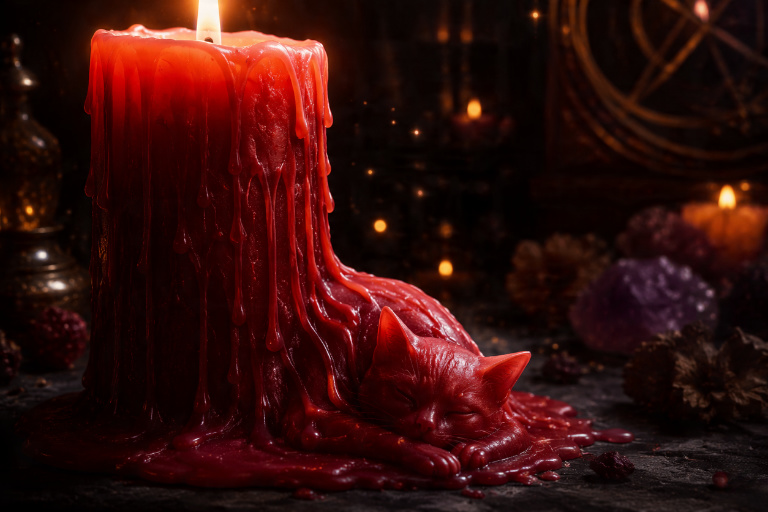
There’s a specific second in every wax reading that matters more than people give it credit for — the moment the first drop breaks free of the candle and starts to run. Everything before that is just heat building. Everything after it is the message. Learning to catch that moment, and really watch it, is where wax reading goes from “interesting hobby” to “genuinely useful practice.”
Right before the first drip, you’ll usually notice the wax pool at the top of the candle start to shimmer and deepen — it goes from cloudy to almost glassy. That’s your cue. In the next few seconds, gravity pulls a thread of wax down the side, and that thread is the “birth” of your symbol. Where it starts, how thick it is, how fast it moves, and where it stops all shape the final form. Watching this moment live, rather than just glancing at the cooled result later, gives you information the finished shape alone can’t — you get to see the story, not just the ending.
There’s also an energy shift that tends to happen right at that moment, one that regular practitioners describe pretty consistently: a kind of settling in the room, like the air itself exhales. Some people feel a light head rush. Others notice the flame dip slightly as if it’s bowing to the drip. This is the point where a lot of witches say the answer is actually being “delivered,” and the hardened wax afterward is just the receipt.
Your job during this moment isn’t to control the wax — it’s to stay present with it. This is the witch’s real role in wax reading: not sculptor, but witness. You’re not shaping the outcome; you’re holding space for it to happen and paying close enough attention to catch the meaning as it forms. A few things to watch for as the melt begins:
- Speed of the first drip — a fast, sudden drop often signals a fast-moving answer or event.
- Direction of the flow — wax that runs toward you (the reader) is generally read as answers coming to you; wax that runs away is read as needing effort from you first.
- Multiple drips at once — suggests more than one factor or person is involved in the situation you asked about.
- A pause mid-drip — often read as a delay or hesitation connected to your question, especially in love or timing readings.
By the time the wax has fully cooled, you’ll already have half the reading done just from watching it happen. The shape is the summary. The melt is the story.
Flame Behavior & Wax Shapes: The Hidden Connection
Most people focus entirely on the wax and forget the flame is telling its own half of the story. But flame and wax are in conversation with each other the whole time the candle burns — the way the flame moves directly influences the heat pattern, which directly influences how the wax runs and where it pools. Reading them together gives you a fuller, more accurate picture than looking at wax shapes alone.
A flickering flame — one that jumps and dances without any obvious draft in the room — usually points to active energy, communication, or spirits/energies present and engaged with your question. Wax shapes formed under a flickering flame tend to be more scattered and detailed, almost busy-looking, which fits: lots of energy in the air tends to produce lots of information in the wax.
A steady, tall flame is the opposite — calm, focused, confirming energy. Shapes formed under a steady flame tend to be cleaner and more defined, single clear symbols rather than a cluster of small ones. This is generally read as a strong, unambiguous “yes” energy, or confirmation that your intention is landing where it should.
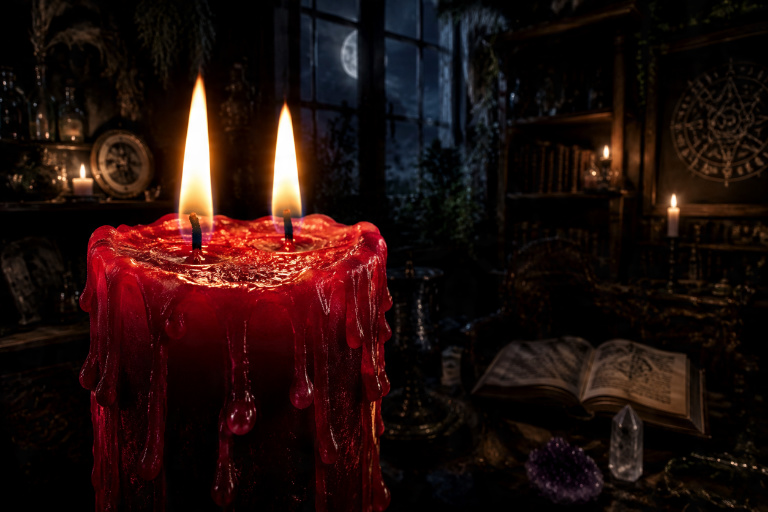
A split or double flame (the wick briefly forms two flame tips) is one of the more talked-about signs in candle magic, often associated with a “twin” presence — two people, two outcomes, or a divided answer. Wax shapes that form during a split flame often come out paired or mirrored, like two small teardrops side by side, or a shape that looks like it’s doubling back on itself.
A dancing flame that leans consistently in one direction, even with no draft to explain it, is generally read as guidance — pay attention to what’s happening in that direction, literally or symbolically. Combine this with the wax:
- Steady flame + clean single shape = a clear, trustworthy answer
- Flickering flame + scattered wax = a busy or unresolved situation, possibly more time needed
- Split flame + mirrored wax = two paths, two people, or a decision point
- Leaning flame + wax pulled in the same direction = strong directional guidance, follow the pull
Once you start reading flame and wax together instead of in isolation, your interpretations get noticeably sharper. The flame sets the tone; the wax writes it down.
Shadow Casting: What the Wax Shape Reveals in Silhouette

Here’s a layer most beginners skip entirely, and it’s honestly one of the most dramatic parts of wax reading: the shadow. Once your wax shape has cooled, hold the candle up near a wall (carefully, with the flame either out or well clear of anything flammable) and let a single light source throw the shape’s silhouette onto a flat surface. What you see in that shadow is often a completely different symbol than what you saw in the wax itself — and that second symbol carries its own meaning.
This works because wax shapes are rarely flat. They have ridges, curves, and thickness that a straight-on look doesn’t fully capture. A shadow flattens all of that dimension into a single outline, and outlines simplify things down to their most essential shape. A blob that looked like nothing much in the wax can throw a shadow shaped exactly like a bird, a key, or a number. Witches who work with shadow casting regularly will tell you the shadow is often the “truer” read, because it strips away the noise and shows you the shape’s bones.
To do a proper shadow reading, use one single, steady light source — a candle flame from another candle, a flashlight, even a phone light works fine, though many practitioners prefer keeping it candlelight-to-candlelight for consistency. Move the light slowly around the wax shape rather than keeping it fixed in one spot; different angles will throw genuinely different shadows, and you’re looking for the one that clicks. When a shadow “clicks,” you’ll usually know — there’s a small jolt of recognition, the same feeling as spotting a shape in the clouds.
A few things to note as you shadow-read:
- A shadow that matches the wax shape confirms the reading — take the original meaning as strongly reinforced.
- A shadow that contradicts the wax shape suggests a hidden layer to your answer, something beneath the surface of what you asked.
- A shadow with sharp, jagged edges often points to tension or conflict connected to the question, even if the wax shape itself looked soft or gentle.
- A shadow that seems to “point” somewhere (like an arrow or a directional line) is read literally — pay attention to what that direction represents to you.
Shadow casting turns a single wax reading into two readings for the price of one, and it’s genuinely one of the more theatrical, satisfying parts of the whole practice. Don’t skip it.
The Dark Side of Wax: Omens, Warnings & Shadow Messages
Let’s be clear up front — this section isn’t about doom and gloom. It’s about the fact that wax, like any honest form of divination, doesn’t only deliver good news. Sometimes it points at something you’ve been avoiding, something blocked, or something you already suspected but haven’t fully faced. That’s not a bad thing. It’s useful. A warning you can actually see is a warning you can actually act on.
Blocked energy tends to show up as wax that pools thick and doesn’t run at all, or runs only a tiny amount before hardening in place. If you were expecting a full, flowing shape and instead got a stubborn little clump, that’s usually a sign that something — a decision, a relationship, a project — is stuck, and probably stuck because of something on your end rather than outside circumstances.
Hidden truths often show up as wax that forms a shape with something enclosed inside it — a ring with a gap that almost, but doesn’t quite, close, or a shape with a hollow pocket in the middle. This is read as information you don’t have yet, or information being deliberately withheld from you by someone or something. It’s not necessarily sinister; sometimes it just means the timing isn’t right for you to know yet.
Shadow work you’ve been avoiding tends to show up dramatically — jagged, sharp-edged shapes, or wax that drips in a broken, stop-start pattern instead of one clean line. Dark or sooty streaks running through the wax (from the flame catching a bit of debris or burning unevenly) are also read this way. This shape is the wax’s way of saying “there’s something here you keep walking past.” A few common dark-side signals to watch for:
- A thick, unmoving clump — stagnation or resistance to change
- A closed loop with a gap — information being hidden or not yet revealed
- Jagged, broken drip lines — unresolved emotional or shadow work
- Soot streaks through the shape — a warning to slow down and reassess before acting
- A shape that collapses or crumbles when touched — an outcome that looks solid but isn’t built to last
None of these are meant to scare you off the practice. If anything, they’re the most useful readings you’ll get, because they tell you exactly where to focus your energy next. A candle that only ever told you good news wouldn’t be much of a guide.
Color Magic + Wax Shapes: How Candle Color Changes the Message

The color of the candle you burn isn’t just aesthetic — it’s a whole extra layer of meaning laid on top of whatever shape the wax forms. The same exact shape can read very differently depending on whether it showed up in white wax, red wax, black wax, or purple wax. Think of color as the tone of voice, and shape as the actual words being said.
White candles are the neutral, all-purpose choice, and shapes formed in white wax tend to read closest to their “textbook” meaning, with no extra color-based spin. This makes white a great candle to start with while you’re still building your personal symbol library, since you’re getting a clean read without an additional layer to decode.
Black candles carry protective, banishing, and shadow-work energy. A heart shape in black wax, for instance, isn’t a warning about love — it’s more likely pointing to protecting your heart, or releasing something that’s been draining you emotionally. Black wax tends to intensify whatever the shape already means, pushing it toward its deeper or more serious interpretation.
Red candles bring passion, courage, and strong physical or emotional energy into the reading. A spiral in red wax reads as building momentum or intensifying desire, while that same spiral in white wax might just mean gradual, steady growth. Red amplifies urgency — whatever the shape says, red wax says it louder and sooner.
Purple candles lean toward intuition, spiritual insight, and higher wisdom. Shapes formed in purple wax are often read as messages meant for your growth or understanding rather than practical, immediate action — think guidance over instruction. Other useful color pairings to keep in mind:
- Green wax — money, growth, abundance; shapes lean toward material and financial meaning
- Pink wax — self-love, gentle romance, friendship; softens whatever shape appears
- Yellow wax — clarity, communication, confidence; sharpens and clarifies a shape’s message
- Blue wax — calm, healing, truth; shapes often point toward emotional resolution
- Orange wax — creativity, opportunity, social energy; shapes lean toward new beginnings
Once you start pairing color with shape consistently, your readings get a lot more nuanced. The shape tells you what; the color tells you how and why.
Ritual Setups That Influence Wax
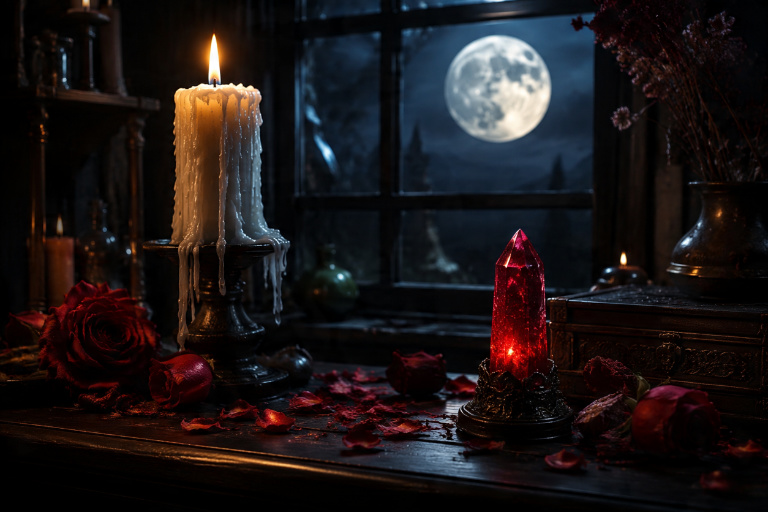
The environment around your candle isn’t just decoration — it actively shapes the reading. Everything from the moon phase to the herbs scattered around the base to the crystals placed nearby all interact with the wax as it burns, guiding the shapes it forms in ways that are subtle but very real. Setting up your space intentionally is one of the easiest ways to get more focused, more useful readings.
Moon phase is probably the biggest environmental factor. Readings done during a waxing moon tend to produce wax shapes connected to growth, new beginnings, and things coming together — expect more open, flowing shapes. A full moon amplifies everything, often producing bigger, more elaborate wax formations and stronger flame behavior. A waning moon favors release and endings, and shapes formed here often come out smaller, thinner, or broken into pieces on purpose (that’s not a bad sign here — it’s the moon’s energy doing exactly what it’s meant to). A new moon favors quiet, internal answers, and readings tend to be more subtle, sometimes requiring the shadow-casting technique above just to see clearly.
Placement matters too. Reading a candle on a windowsill under natural moonlight pulls in more lunar influence, while reading one on a home altar surrounded by your regular tools pulls in more of your personal, established energy. Placing the candle directly on a written question (on paper, underneath the holder) is a classic technique for making sure the reading stays tightly focused on exactly what you asked.
Herbs and crystals placed around the base of the candle act almost like seasoning — they don’t change the core message, but they flavor it. A few common, easy-to-find pairings:
- Rosemary around the base — clarity and memory, good for questions about the past
- Rose petals — love and relationship questions
- Bay leaf — wishes and manifestation, often placed under the candle itself
- Clear quartz — amplifies whatever the reading brings up, good for high-stakes questions
- Black tourmaline — protective, good for shadow work or questions about negative energy
- Citrine — money and abundance questions
Incense rounds out the setup by working with the smoke and air the same way herbs work with the physical space — a little sandalwood for grounding, a little frankincense for spiritual clarity, a little dragon’s blood for intensifying whatever comes through. None of these elements are required to get a valid reading. But used intentionally, they turn a simple candle burn into a fully guided ritual, one where every element in the room is quietly pointing the wax toward a clearer answer.
Wax Shapes in Love, Money, Protection & Shadow Work

The exact same wax shape can mean genuinely different things depending on what kind of question you asked going in, which is why setting your intention clearly before you light the candle matters so much. A heart shape means something different in a love reading than it does in a money reading. Context isn’t just helpful here — it’s half the reading.
In love readings, shapes tend to be read through the lens of connection and timing. A heart shape is the obvious strong “yes,” but even a circle or ring in a love reading points toward commitment or a bond forming. Broken or split shapes in a love context usually point toward a relationship that needs repair rather than an outright ending — pair this reading with the flame behavior above (a split flame here often confirms “two people, working through something together” rather than “over”).
In money readings, the same heart shape shifts meaning entirely — it becomes less about romance and more about generosity, or money tied up in caring for someone. Coin-like circles, ladder shapes, and upward-climbing drip lines are the strongest positive signs here, generally read as growth and increasing abundance. Thick, stuck wax that won’t run (the same “blocked energy” sign from the shadow-work section) reads in a money context as funds tied up, delayed payments, or financial decisions that need to be made before things can move.
In protection readings, look for enclosing shapes — rings, cages, shield-like flat shapes, or wax that hardens in a way that seems to wrap around itself. These are strongly positive here, read as protective energy actively forming around you or your situation. Jagged or sharp shapes in a protection reading aren’t necessarily bad; they’re often read as protective energy that’s active and defensive rather than passive, especially useful if you lit the candle specifically to guard against something.
In shadow work readings, you’re specifically looking for the shapes described in the “Dark Side of Wax” section above — broken lines, closed loops with gaps, sooty streaks. But context flips one thing here: shapes that would be “warnings” in a general reading are often exactly what you’re hoping to see in a shadow work session, since the whole point is surfacing what’s been hidden. A few quick intention-setting phrases to say before lighting, depending on your focus:
- Love: “Show me what’s true about this connection.”
- Money: “Show me where my resources are and where they’re going.”
- Protection: “Show me what I need to guard against, and how well I’m already protected.”
- Shadow work: “Show me what I’ve been avoiding looking at.”
Setting the intention out loud, even just once, noticeably sharpens the reading. The wax listens best when you’ve told it exactly what you’re asking.
Wax Shapes and Their Meanings
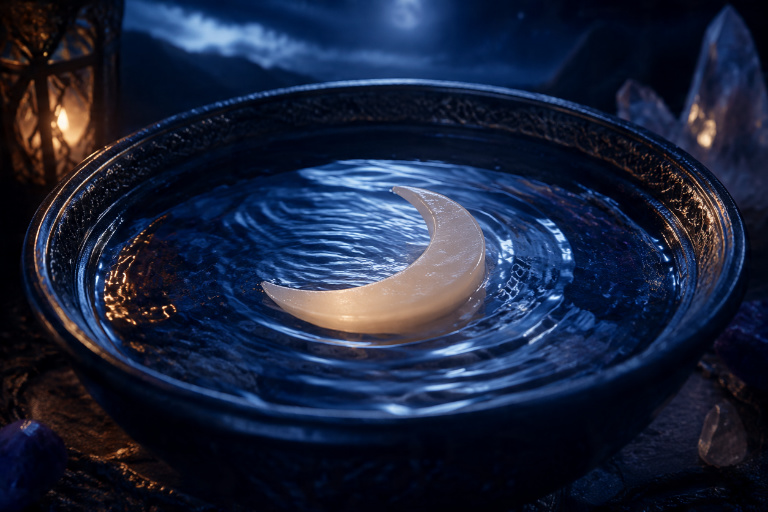
Below are fifty of the most common shapes you’ll encounter in wax readings, along with what each one tends to represent. Remember these are starting points, not rigid rules — your own instinct about a shape always gets the final say.
Heart — The most universally recognized wax shape, and almost always tied to love, connection, or deep emotional truth. A clean, full heart is one of the strongest positive signs you can get in a love or relationship reading.
Circle or Ring — Wholeness, commitment, and cycles completing. Circles suggest something coming full circle, whether that’s a relationship, a project, or a personal pattern finally resolving.
Spiral — Growth, transformation, and gradual unfolding. Spirals point toward change that’s happening slowly and organically rather than all at once, and are often read as a sign to be patient.
Triangle — Balance, manifestation, and sometimes a love triangle or three-way decision. The direction it points matters — pointing up suggests rising energy and manifestation, pointing down suggests grounding or release.
Wavy Lines — Emotional flow, communication, and fluctuating situations. This shape suggests things are moving, even if they don’t feel steady yet, and encourages riding the wave rather than fighting it.
Star — Hope, wishes, and guidance from a higher source. A star shape is generally read as a strongly encouraging sign, especially in readings about the future or big decisions.
Crescent Moon — Intuition, feminine energy, and hidden potential waiting to grow. This shape often points toward trusting your gut over logic in whatever situation you asked about.
Cross — Decision points, crossroads, or a test of faith. Not inherently negative, a cross shape usually signals that a choice needs to be made and that the outcome depends heavily on which path you pick.
Arrow — Direction, decisiveness, and a clear “go” signal. Whatever direction the arrow points, literally or symbolically, is generally read as the path forward.
Flower — Blossoming, new beauty, and things coming into full bloom. Flowers are one of the gentler positive signs, often tied to self-growth or a relationship deepening naturally.
Bird or Wings — Freedom, messages, and news on the way. This shape often precedes some kind of important update or communication arriving soon.
Feather — Lightness, truth, and spiritual confirmation. A feather shape is often read as a sign that you’re being watched over or guided by something beyond yourself.
Snake — Transformation, healing, and sometimes hidden danger depending on context. Snakes are shedding-skin symbols first and foremost, pointing toward a major personal transformation underway.
Key — Unlocking answers, opportunities, or access to something previously out of reach. A key shape suggests you already have what you need to move forward, even if it doesn’t feel that way yet.
Tree — Growth, family, and strong roots. Tree shapes point toward stability being built over time, and are especially significant in readings about home or long-term plans.
Mountain or Peak — Challenges, achievement, and effort that pays off. A mountain shape acknowledges that something will take real work, while also promising the work is worth it.
Skull — Endings, transformation, and letting go of what no longer serves. Despite the dramatic look, skull shapes are rarely a bad omen — they mark a necessary ending rather than a warning.
Tower or Pillar — Strength, stability, and structures either being built or breaking down. Context (and flame behavior) determines which direction this one leans.
Teardrop or Drip Chain — Emotional release, grief being processed, or a slow, steady flow of feeling. A single clean teardrop is often cathartic rather than sad — a sign that something is finally being let go.
Letter or Initial Shape — When wax forms something resembling a letter, it’s traditionally read as pointing toward a specific person whose name starts with that letter, relevant to your question.
Cat or Animal Face — Independence, mystery, and sometimes a literal animal guide or familiar energy present. This shape often shows up in readings connected to intuition or personal boundaries.
Spider Web — Interconnection, patience, and things being carefully woven together behind the scenes. A web shape suggests a bigger plan at work than you can currently see.
Boat or Vessel — A journey, transition, or a situation currently “in motion” toward a destination. Boats are strongly tied to timing — the reading is happening mid-journey, not at the start or the end.
Eye — Awareness, being watched, or a truth about to be seen clearly. An eye shape often shows up right before an important realization.
Staircase or Ladder — Progress, step-by-step advancement, and earned achievement. This shape reassures that you’re moving in the right direction even if progress feels slow.
Anchor — Stability, commitment, and something (or someone) holding steady. An anchor shape is reassuring in almost any context, promising grounded support through change.
Knot — Complications, tangled situations, or a bond that’s becoming complicated. A knot suggests something needs to be worked through carefully rather than forced apart.
Bridge — Connection between two situations, people, or phases of life. A bridge shape suggests a transition is not only possible but already being built.
Door or Archway — New opportunities and thresholds about to be crossed. A door shape is one of the clearest “new beginning” signs in wax reading.
Cage or Bars — Restriction, feeling trapped, or self-imposed limits. Not always negative — sometimes this shape points toward a restriction you have the power to release yourself from, once you recognize it’s there.
Butterfly — Transformation that’s already in motion, not just approaching. Where a snake signals the start of a deep change, a butterfly shows up once you’re already mid-shift, marking real progress even if it doesn’t feel finished yet.
Fish — Abundance, intuition, and things swimming toward you from below the surface. Fish shapes are traditionally tied to prosperity, but also to emotional depths worth paying attention to.
Owl — Wisdom, seeing what others miss, and truth revealed at an unexpected moment. An owl shape suggests you already sense the real answer, even if you haven’t said it out loud yet.
Wolf — Loyalty, protection, and trusting your instincts over outside opinions. This shape often shows up when a reading involves choosing between what you’re being told and what you actually feel.
Crown — Recognition, authority, and stepping into a role you’ve earned. A crown shape is one of the strongest confidence-boosting signs, especially in readings about work or leadership.
Sword — Clarity through action, or a conflict that needs to be faced head-on rather than avoided. Swords cut through confusion, so this shape often marks the moment a decision finally has to be made.
Shield — Active defense and boundaries being reinforced. Similar to a cage but far more positive, a shield shape suggests you’re protecting yourself well, or need to start.
Chalice or Cup — Emotional fullness, receiving, and being ready to accept something good. This shape leans toward readiness — the vessel is there, waiting to be filled.
Hourglass — Timing, patience, and a reminder that something can’t be rushed. This shape almost always points to waiting being the right move, not a stall in your progress.
Lightning Bolt — Sudden insight, a fast shift, or an event arriving with little warning. Lightning shapes are exciting rather than alarming, usually marking a breakthrough moment.
Rainbow Arc — Relief after difficulty, and a promise that things are turning around. This shape tends to show up in readings that follow a hard stretch, confirming the worst part is over.
Hand or Handprint — Help arriving, or a reminder that support is closer than it feels. A hand shape can also point toward your own agency — a nudge that you’re more capable of handling things than you think.
Face or Profile — A specific person connected to your question, sometimes literally recognizable if you look closely. This shape asks you to consider who’s been on your mind lately.
Diamond — Value, clarity under pressure, and something becoming stronger through difficulty. Diamonds point toward worth that isn’t always obvious on the surface but holds up over time.
Infinity Symbol — Ongoing cycles, lasting bonds, or a situation without a clear end date. This shape is common in long-term relationship or career readings, marking something built to continue.
Bird’s Nest — Home, family, and safety being built or reinforced. A nest shape often shows up in readings about domestic life, pointing toward stability taking shape.
Vine or Tendril — Slow, reaching growth, and connections extending outward over time. Vines suggest a situation that’s spreading and strengthening gradually rather than all at once.
Wheel — Cycles turning, fortune shifting, and momentum building or changing direction. A wheel shape is a strong sign that whatever’s been stagnant is about to move again.
Horseshoe — Luck, timing lining up, and a favorable outcome close at hand. One of the more straightforwardly positive shapes, a horseshoe is read as good fortune heading your way.
Wide Flat Puddle — Little detail, wax spreading thin without forming a clear shape. Rather than a “failed” reading, this is usually read as a sign the answer isn’t ready yet — better to ask again after some time passes.
Wax reading rewards patience more than perfection. The more candles you burn with real intention behind them, the more fluent you’ll become in your own personal symbol language — and honestly, that fluency is the real magic here, more than any single shape ever could be.