


Light a candle and most people just see light. But if you’ve spent any real time working with candle magic, you know the flame is never just sitting there doing nothing. It’s moving, breathing, reacting to the room, to your intention, and to whatever else happens to be paying attention that night. Once you start reading candle flame meanings, you can’t really go back to lighting a candle “just because.” Every flicker starts to feel like it’s carrying a message.
That’s the whole point of this kind of work. Fire has always been treated as a messenger between our world and whatever sits just outside it. Ask anyone who’s practiced candle magic signs for years and they’ll tell you the same thing: the flame talks back. It rises when energy is flowing your way, it dips when something’s blocking it, it dances when spirit is close enough to touch. None of that is random. It’s a conversation, and the flame is doing half the talking.
This guide walks through ten of the most common flame behaviors you’ll come across during candle flame divination, and what each one is generally trying to say. You don’t need years of training to start noticing these patterns — you just need to slow down, actually watch the flame instead of glancing at it, and trust what you’re seeing. Once you know what to look for, your candle stops being background decoration and starts being one of the most honest teachers you’ll ever work with.
1. The Tall, Steady Flame
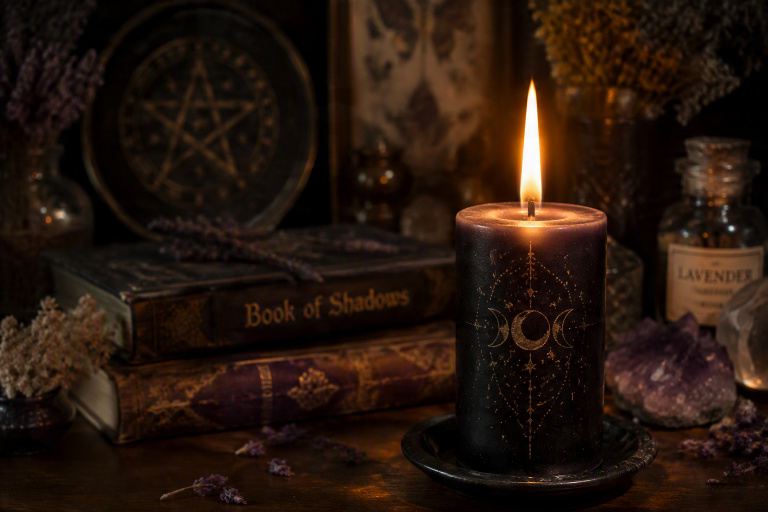
When your candle burns tall, bright, and steady, take that as a genuinely good sign. This is one of the clearest candle flame meanings out there — it means the energy around your working is strong, clean, and moving in your favor. Whatever intention you set, spirit or the universe (call it what you like) is meeting you with equal force. There’s no resistance here, no static in the line.
A flame like this usually shows up when your intention was clear going in. Vague wishes tend to produce vague flames — small, uncertain, easily disturbed. A tall steady flame tells you that you knew exactly what you wanted and said it plainly, out loud or in your head, and that clarity is being rewarded.
If you’re doing manifestation work, love work, prosperity work, anything where you’re asking for something to come toward you, this flame is basically a green light. It’s telling you to keep going, that the path is open, and that you don’t need to add more candles, more oils, or more anything. The work is already landing.
Some practitioners also read a tall flame as a sign of protection — that whatever spirit or ancestor you’re working with is standing firmly behind you. Either way, don’t overthink a flame like this. Let it burn, say your thanks, and trust that the message got through loud and clear.
2. The Flickering Flame
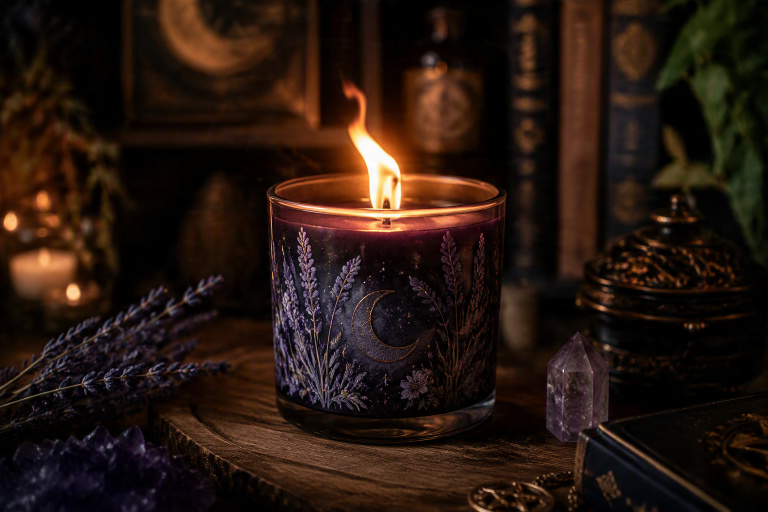
A flame that flickers without any obvious draft in the room is one of the most talked-about candle magic signs, and for good reason. Flickering almost always means presence. Something — a spirit, an ancestor, an energy you called in, or even just the emotional charge of the room — is close enough to touch the flame and is letting you know it’s there.
Context matters a lot here. If you’re doing ancestor work or communicating with someone who’s passed, a flicker right after you speak their name is often read as a direct response. It’s their way of saying “I hear you” without needing words. If you’re doing spellwork instead, a flicker can mean the energy you’re raising is actively being received and processed, almost like static clearing off a phone line as the call connects.
Flickering can also point to emotional turbulence, either yours or someone else’s who’s tied into the working. If your mind was scattered while you lit the candle, the flame will often mirror that scattered energy right back at you. That’s not a bad omen, just a nudge to center yourself before continuing.
The key with a flickering flame is to pay attention to timing. A flicker that happens the moment you ask a question is very different from one that happens randomly in the background. Learning to tell those apart is a big part of getting good at candle flame divination.
3. The Low, Dim Flame
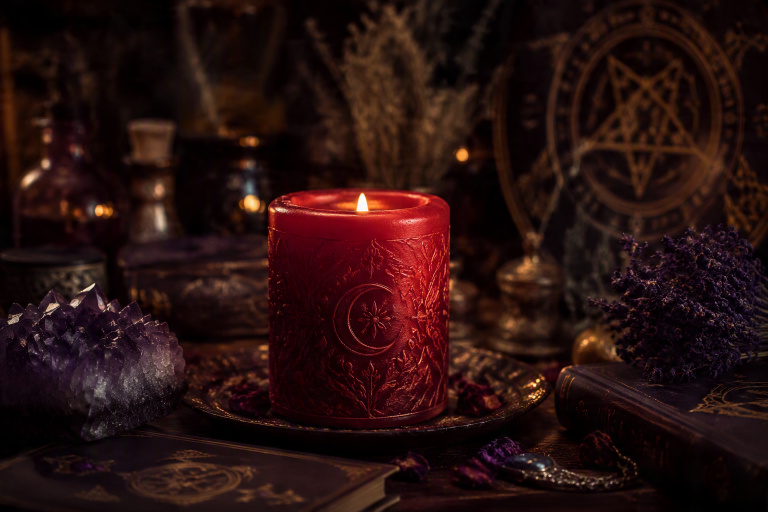
A flame that stays small, dim, or struggles to rise is telling you something is blocking the energy of your working. This doesn’t mean your intention is wrong, it usually means there’s resistance somewhere — stagnant energy in the space, doubt sitting in the back of your mind, or an outside influence pushing against what you’re trying to do.
This is one of those candle flame meanings that people love to panic about, but it’s really just information. Low flames are common when a room hasn’t been cleansed in a while, or when the person doing the working is exhausted, stressed, or not fully believing in their own request. Fire needs momentum to burn bright, and so does intention.
If you get a low flame, it’s usually worth pausing the work rather than pushing through it. Cleansing the space with smoke, sound, or fresh air, then resetting your intention out loud, often changes the flame’s behavior almost immediately. That shift itself is confirmation that the block was environmental or mental rather than something deeper.
Occasionally a persistently low flame across multiple attempts points to something more stubborn, like an old pattern or an entity that isn’t fully on board with your request. In that case, it’s less about forcing the flame higher and more about figuring out what needs to be addressed before the working can move freely again.
4. The Flame That Won’t Stay Lit
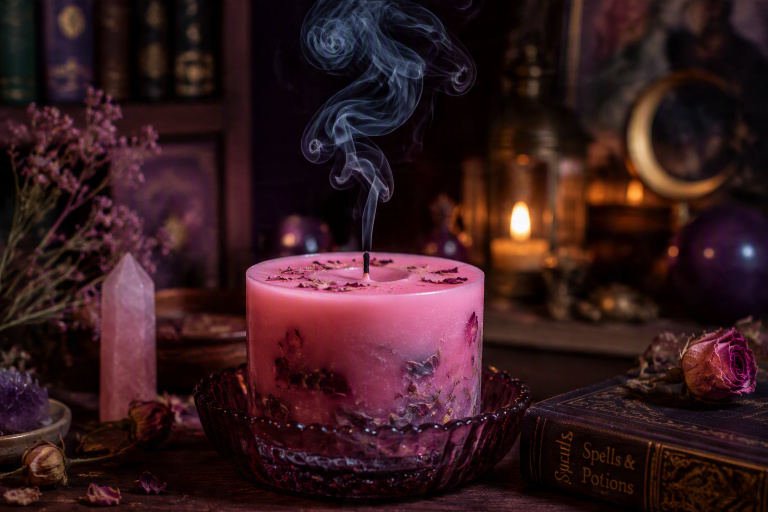
There’s nothing quite as unsettling as relighting a candle three or four times because it keeps going out on its own. In candle magic, this is read as a strong “no,” or at least a strong “not yet.” Something doesn’t want this particular working to happen right now, and it’s making that clear in the most direct way possible.
Sometimes the source is simple — a draft you didn’t notice, a wick that’s too short, wax pooling wrong. Rule those things out first, because not every extinguished flame is a message. But once you’ve ruled out the mundane explanations and the candle still won’t hold a flame, it’s time to actually listen.
This can mean the timing is off, that the working needs more preparation before it’s ready to be released, or that a protective energy around you is stepping in because the request itself carries some kind of risk you haven’t considered. It can also mean an entity you’re working with is refusing the terms as you’ve set them, and wants you to reconsider your approach.
Rather than fighting a candle that keeps going out, most experienced practitioners will simply stop, sit with it, and ask directly what’s being resisted. Sometimes the answer becomes obvious once you’re honest with yourself about whether the working was rushed or whether your intention was actually solid.
5. The Crackling or Popping Flame
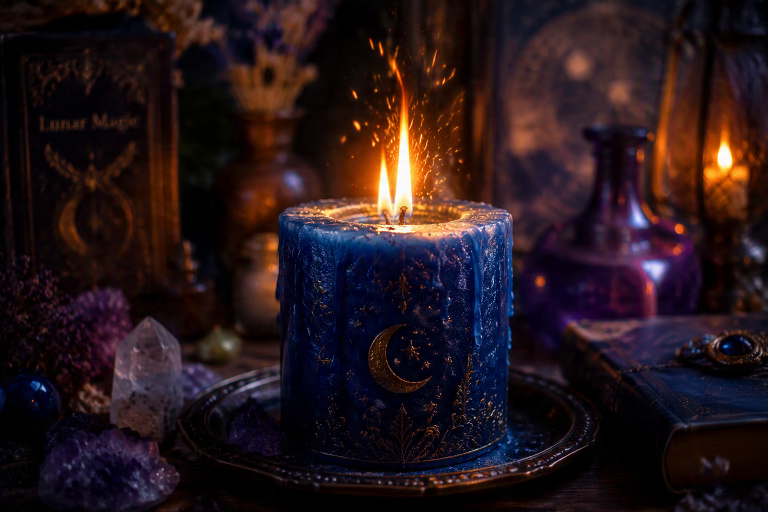
A flame that crackles, pops, or spits little sparks is almost universally read as a sign of communication trying to break through. This is one of the more dramatic candle flame meanings, and it tends to grab your attention immediately, which is kind of the point.
In a lot of folk traditions, popping is tied to messages from spirit or from someone thinking intensely about you at that exact moment. It’s less of a gentle nudge and more of a knock on the door. If you’re mid-working when it happens, that’s usually taken as confirmation that whatever you called on is actively engaged and responding to what you’re saying.
The intensity of the pop can matter too. A single soft crackle is often read as a small confirmation, almost a “yes, keep going.” Loud, repeated popping can mean something more urgent is trying to get your attention, and it might be worth stopping to ask what that urgency is about rather than plowing ahead with your original plan.
Some practitioners also connect popping sounds to news on the way, especially in older folk magic traditions where fire was treated as an early warning system. Whether you take it literally or symbolically, a crackling flame is rarely something to ignore.
6. The Split or Double Flame
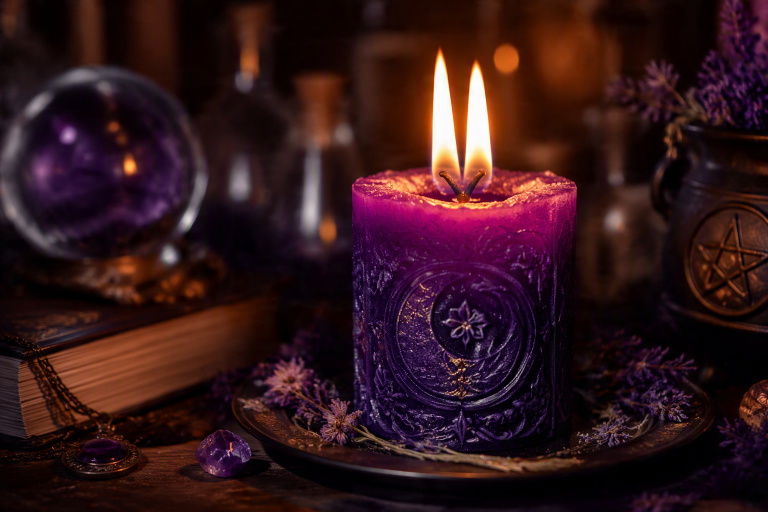
Every so often a single wick will produce what looks like two separate flame tips, almost like the fire split itself in half. This is one of the more unusual candle magic signs, and it tends to point toward duality — two paths, two outcomes, or two energies present in the same space.
If you’re doing a working around a decision, a split flame is often read as confirmation that you’re standing at a genuine fork in the road, and that both options carry real weight. It’s less a warning and more a mirror, showing you visually what you already feel internally: that this isn’t a simple choice.
In spirit work, a split flame can also suggest that more than one presence has shown up to your working, sometimes with different intentions from each other. This isn’t necessarily bad, but it’s worth pausing to sense whether both presences feel aligned with what you’re doing, or whether one feels like it doesn’t belong.
Because this flame shape is fairly rare, most practitioners treat it as a moment to slow way down and really tune in before continuing, rather than rushing past something that clearly wants your attention.
7. The Flame Leaning Toward You
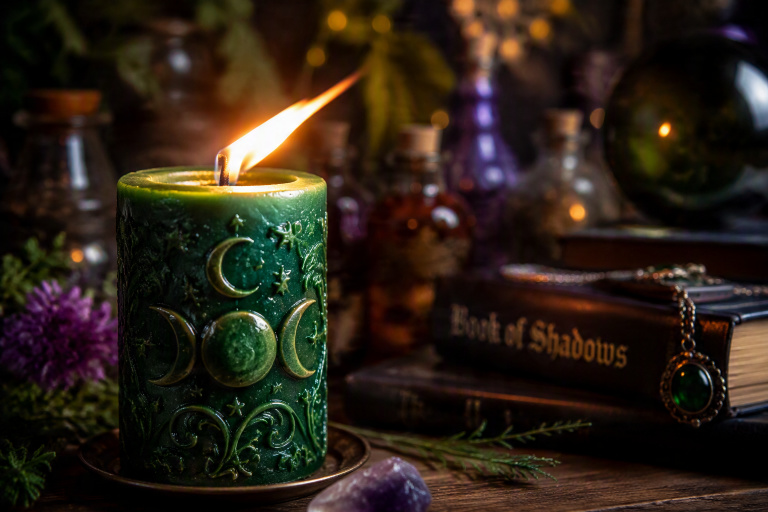
When a flame consistently bends or leans in your direction with no draft to explain it, that’s generally read as a good sign in candle flame divination. It suggests the energy of the working, or the presence you’ve called, is drawn toward you specifically and is trying to close the distance.
This lean is often interpreted as love, attention, or answered calling. If you’re doing love work, this is one of the flame behaviors people hope for most, since it visually mirrors exactly what you’re asking for: something moving closer instead of further away. It can also show up in ancestor work, where it’s read as a loved one drawing near to comfort or guide you.
A flame leaning your way during protection or blessing work is often taken as a sign that the protection is settling directly onto you rather than dispersing into the room. It’s the fire choosing you, essentially, out of everything else around it.
If this happens early in a working, many practitioners take it as encouragement to keep going exactly as planned, since the energy is already orienting itself favorably before you’ve even finished.
8. The Flame Leaning Away From You
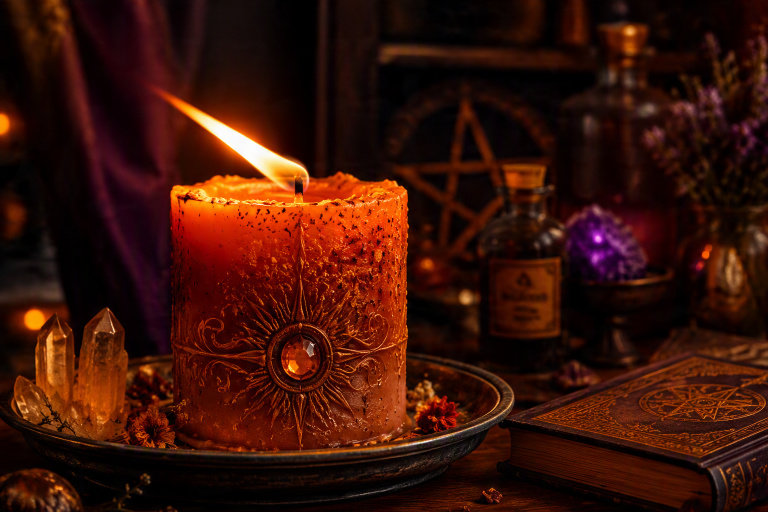
The opposite lean carries a very different message. A flame that consistently pulls away from you, again with no physical draft to explain it, usually points to energy being pushed out, released, or rejected rather than drawn in. This shows up a lot during banishing, cleansing, or cord-cutting work.
In that context, a flame leaning away is actually exactly what you want to see. It’s visual confirmation that whatever you’re trying to release is genuinely leaving, moving out of your space instead of lingering. This is one of those candle magic signs that flips meaning entirely depending on what kind of work you’re doing.
Outside of banishing work, though, a flame that leans away can suggest some kind of resistance or refusal, almost like the flame doesn’t want to engage with you directly. This might point to an energy in the room that isn’t friendly, or simply that the working needs to be approached differently.
Reading this flame correctly really comes down to intention. The same lean can mean “it’s working perfectly” or “something isn’t right here,” so always weigh it against what you were actually trying to accomplish before deciding which one applies.
9. The Blue-Tipped Flame
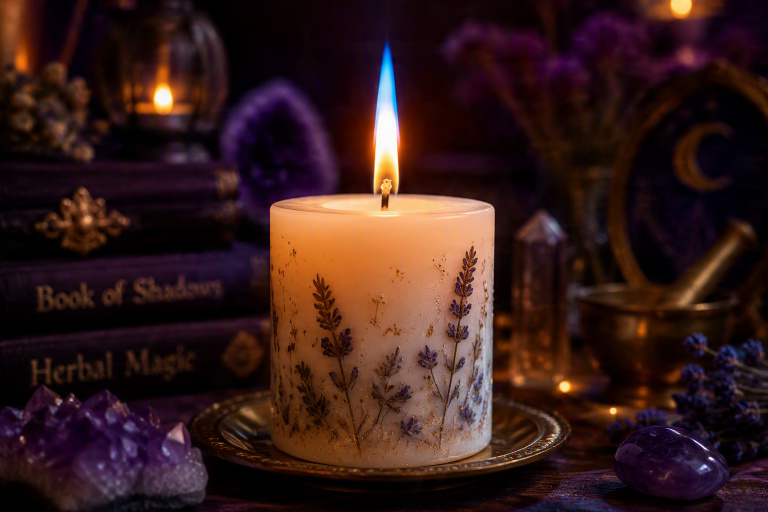
A flame that burns with a noticeable blue tip, especially at the very base near the wick, is one of the most talked-about signs in candle magic circles. Blue is very commonly associated with spirit presence, particularly the presence of someone who has passed on. This is one of those candle flame meanings that tends to give people chills the first time they notice it.
This coloring shows up often during ancestor work, memorial candles, or any working where you’re specifically inviting a spirit to draw close. Many practitioners take a blue flame as direct, unmistakable confirmation that the spirit has arrived and is present with you, rather than just being acknowledged from a distance.
It’s worth noting that blue tips can occasionally happen for mundane reasons, like the type of wax or wick being used. Experienced practitioners usually distinguish this by paying attention to when the blue appears — if it shows up right as you speak a name or ask a direct question, that timing carries far more weight than a blue tint that’s simply present the entire burn.
Either way, a blue flame is generally treated as a moment of real connection, and many people choose to sit quietly with it rather than continuing whatever ritual steps they had planned, just to stay present with whoever has shown up.
10. The Sooty, Smoking Flame
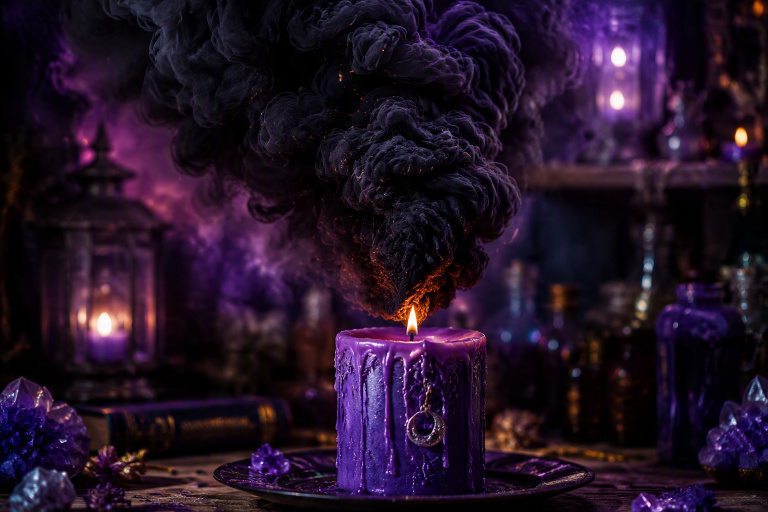
A flame that produces heavy black smoke or leaves soot climbing up the glass is telling you that something negative is actively being pulled out and burned off. This is one of the more visually intense candle flame meanings, but it’s rarely something to be afraid of — it usually means the working is doing exactly what it’s supposed to do.
This pattern shows up constantly in cleansing, protection, and banishing work. The heavier the soot, the more there was to clear, which is why practitioners doing deep energetic cleansing will often see far more smoke than someone doing a simple daily blessing candle. Think of it as evidence, not a warning.
That said, a smoking flame paired with other rough signs — repeated extinguishing, a foul smell, an unusually low flame — can suggest the negativity being released was fairly heavy or stubborn, and it might be worth repeating the working or following up with additional cleansing afterward.
Once the smoke clears and the flame settles into a cleaner, steadier burn, that’s your sign the release is complete. The transition from smoky and chaotic to clean and calm is often the clearest “before and after” you’ll get in any candle working.
Let the Flame Finish the Sentence
Candle flame meanings aren’t about memorizing a rulebook and applying it mechanically every single time. Fire responds to context, to intention, and to whatever energy happens to be in the room with you, so the same flicker can mean something slightly different depending on the working you’re doing. The more time you spend actually watching your candles instead of just lighting and leaving them, the more fluent you’ll become in reading what they’re telling you.
At the end of the day, candle magic signs are a conversation, not a monologue. You bring the intention, the flame brings the response, and somewhere in between the two of you is where the real magic actually happens.