
Every witch carries proof on her skin. Long before anyone writes a spell in a book or lights a candle on purpose, the mark is already there — a birthmark shaped like a crescent moon, a strange little patch of freckles, a line across the palm that doesn’t match anyone else in the family. Old-world witches didn’t see these as random. They saw them as signatures. A mark on the body was a message left by something bigger than you — the moon, a spirit, a fire, a fae — saying “this one is ours.”
That idea has never really gone away. In villages across Europe and beyond, healers and cunning folk would check a newborn baby for marks the same way you’d check a passport for a stamp. A mark meant the child had already been touched by something magical before they’d even opened their eyes. Some marks meant luck. Some meant sight. Some meant the child would grow up a little different — closer to the hearth, closer to the woods, closer to whatever waits just past the edge of an ordinary life.
This is the fun part: you probably have one. Maybe more than one. A birthmark on your shoulder blade, a triangle of moles on your wrist, freckles scattered like a tiny constellation across your nose. Most people walk around their whole lives never knowing their own skin is speaking a language. Witch marks aren’t rare. They’re just ignored.
So this list is your decoder ring. Ten classic witch marks, what old lore says they mean, and which “type” of witch each one tends to belong to. Check your arms, check your back, check the mirror. You might be more marked than you think.
1. The Third Nipple
Archetype: The Hedge Witch

Of all the witch marks, this one has the wildest reputation. An extra nipple — sometimes just a faint dot of extra pigment, sometimes something more defined — was considered, for centuries, the clearest possible sign that a person had a familiar. Not a pet. A partner. A little spirit creature, usually shaped like a cat, toad, or bird, that fed from that extra mark in secret and did the witch’s bidding in return.
Hedge witches were the in-between witches — the ones who lived on the edge of the village, half in the human world and half in the wild one. A third nipple marked someone built for that boundary life. It said: you were never meant to only live indoors.
If you’ve got one, old lore says you’re wired for a working partnership with something unseen. You don’t do magic alone — you do it in conversation, with a familiar spirit, an animal companion, or a guide who’s been quietly waiting for you to notice them.
Even without a physical familiar showing up on your doorstep, hedge witches with this mark tend to feel unusually close to animals, drawn to the wild edges of town, and comfortable working alone in nature. It’s less about summoning a spirit and more about already having one.
2. The Crescent Birthmark
Archetype: The Seer
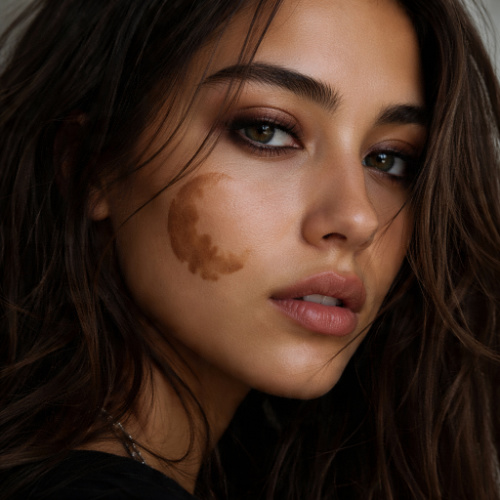
A birthmark shaped like a crescent — a soft curved shape, no matter the color — was read as a moon-mark. The moon has always been the witch’s clock, calendar, and compass, and a crescent on the body meant the moon had left its own thumbprint on you before you were even born.
Seers were the ones who could look sideways at reality and catch what others missed — dreams that came true, gut feelings that were never wrong, a pull toward certain nights of the month. The crescent mark was considered proof that this sight wasn’t learned. It was installed.
People with this mark were traditionally the ones villages went to for dream reading and weather prediction, because their intuition ran on lunar time whether they liked it or not. Full moons hit them harder. New moons made them quiet and inward. Their moods, their sleep, even their luck seemed to orbit something outside their control.
If this is your mark, don’t be surprised if you’ve always felt more “on” during certain phases of the month, or if your best ideas and strangest dreams cluster around the full moon. That’s not a coincidence old lore would recognize — that’s just the moon, doing what it does to the people it’s already claimed.
3. The Fire Mark
Archetype: The Flame Keeper

A bright red birthmark — a strawberry mark, a splash of red across the skin — was known in a lot of old traditions as a fire mark. The story went that the mother had been near something powerful during pregnancy — a bonfire, a hearth, a lightning storm — and a piece of that heat got passed on and left behind, permanently, on the child.
Flame Keepers were the witches in charge of the home fire, and in the old world, that job mattered more than almost anything else. Keeping a hearth alive meant keeping a family alive. A fire mark meant you were born already assigned to that role — protector of warmth, keeper of the flame, the one who makes sure the house never truly goes cold or dark.
This mark was also considered a sign of a hot temper paired with a warm heart — quick to flare, quick to forgive, impossible to ignore. Villages with a Flame Keeper among them believed their home fires burned longer and their kitchens were luckier.
If you’ve got a fire mark, chances are you’re the one who keeps everyone else fed, warm, and together. You might run hot emotionally, but you’re also the person people gravitate toward when things feel cold. That’s the fire mark doing exactly what it was born to do.
4. The Star Mark (Mole Triangle)
Archetype: The Star Walker

Three moles arranged in a rough triangle — anywhere on the body — was one of the most prized marks a person could carry. It was read as a tiny constellation, stamped onto the skin, connecting the person to the sky itself rather than just the earth below them.
Star Walkers were considered witches who didn’t belong fully to one place. They wandered — physically, mentally, spiritually — and were said to have one foot always pointed toward the stars. The triangle mark was their proof of citizenship in that bigger, wider world.
Old star lore claimed people with this mark had unusually vivid memories of places they’d never been, a pull toward travel, and dreams that felt more like visits than fantasies. They were the witches most likely to end up far from where they were born, chasing something they couldn’t quite name.
If three moles line up somewhere on your body, don’t be shocked if you’ve always felt a little too big for your hometown. Star Walkers aren’t restless by accident — they’re marked for the road, and the sky never really lets them forget it.
5. The Palm Cross
Archetype: The Oracle
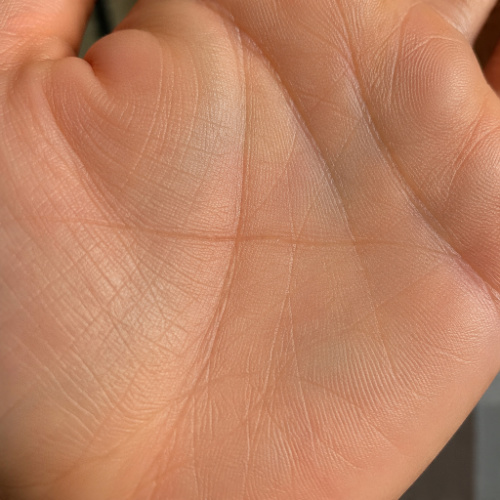
Deep in the lines of the palm, a clear cross shape — where two lines intersect cleanly instead of just crossing messily — was considered one of the rarest and most powerful witch marks of all, because it sat right in the tool the witch used most: her hands.
Oracles were the palm readers, the card readers, the ones whose hands seemed to know things before their minds caught up. A palm cross meant the hand itself had been marked as an instrument — something meant to touch, read, and interpret the world on contact.
This mark was said to make the bearer a natural at any hands-on form of divination: palmistry, tarot, tea leaves, bones. It wasn’t a mark that gave visions in dreams like the crescent — it gave knowing through touch, through contact, through the simple act of holding something in your hands and immediately understanding more about it than you should.
If you’ve got a distinct cross in your palm lines, pay attention to your hands. Oracles with this mark often say they “just know” things the moment they touch an object, shake a hand, or hold a deck of cards. That’s not guessing. That’s the mark, working exactly as intended.
6. The Pale Mark
Archetype: The Shadow Walker
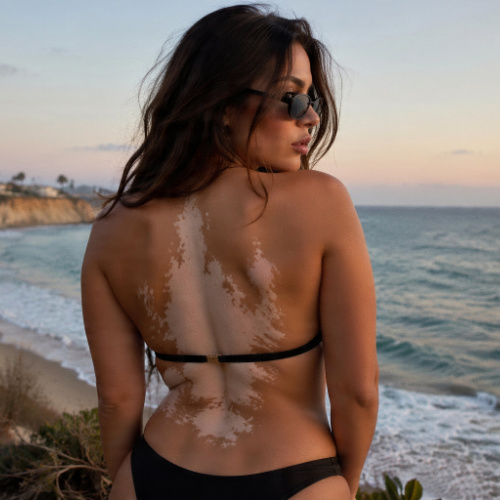
Patches of skin that are paler than the rest — sometimes called a “devil’s pinch” in older, less kind language, but read in witch lore as something else entirely — were considered a sign that a person had already crossed into the in-between world and come back changed.
Shadow Walkers were the witches comfortable with darkness, endings, and the spaces most people avoid. A pale mark meant a piece of the person had touched the other side — grief, death, the unseen — and instead of being harmed by it, they’d absorbed a little of its power.
This mark was linked to an unusual comfort with what scares everyone else: graveyards, storms, silence, the parts of the year when the veil feels thin. Shadow Walkers were the ones villages quietly relied on during funerals, hard winters, and dark nights — not because they weren’t afraid, but because they’d already been somewhere darker and made it back.
If you carry this mark, you probably already know you’re the calm one in a crisis, the person others call when things get heavy. That’s not toughness by accident. That’s a Shadow Walker’s mark, doing its job.
7. The Familiar's Print
Archetype: The Beast Whisperer

Every once in a while, a birthmark shows up looking uncannily like an animal — a paw print, a wing shape, a curled tail. Old lore didn’t call this a coincidence. It called it a print — proof that an animal spirit had pressed itself into the person before birth, leaving its shape behind like a signature.
Beast Whisperers were the witches animals simply trusted. Not tamed animals — wild ones. Birds that wouldn’t fly from them, dogs that calmed instantly in their presence, horses that let them close without a fight. The animal-shaped mark was considered the reason why: some part of them had already been claimed by the animal world before they ever spoke their first word.
This mark tends to come with a specific creature attached — the shape usually matches one type of animal, and that animal becomes something like a lifelong guide. Cats, birds, wolves, and horses show up most in the old stories, each pulling their marked witch toward a different kind of magic.
If your birthmark has ever made someone say “that looks just like a—”, finish the sentence and pay attention. Old lore says that animal isn’t random. It’s yours.
8. The Star-Seed Freckles
Archetype: The Cosmic Witch

Freckles that cluster into a shape — a rough constellation, a scatter that looks deliberate instead of random — were considered one of the most beautiful witch marks a person could have, because they turned the skin itself into a night sky.
Cosmic Witches were said to be born already tuned to something bigger than the village, the forest, even the moon. Star-seed freckles marked someone whose real home wasn’t fully of this earth — someone who arrived carrying a little bit of sky with them, scattered across their nose and cheeks like proof.
This mark was tied to unusually vivid imaginations, a pull toward the strange and unexplained, and a sense — often from very early childhood — of not quite belonging anywhere fully. Cosmic Witches were the daydreamers, the ones who saw shapes in clouds and patterns in stars long before anyone taught them to.
If your freckles have ever made a stranger stop and trace a shape across your face without meaning to, that’s not just genetics doing something pretty. Old lore would say that’s a map — and you’re the one it was drawn for.
9. The Otherworld Touch
Archetype: The Between-Walker
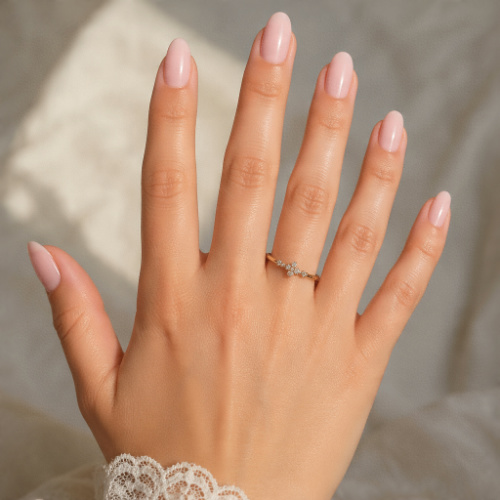
An extra finger or toe, webbed digits, or any small extra bit of the body was one of the oldest witch marks on record — and one of the most feared and respected at the same time. It was read as proof that the person didn’t fully belong to just one world. Part of them had a foothold somewhere else.
Between-Walkers were the witches who moved comfortably between opposites — life and death, dream and waking, this world and the fae world just behind it. An extra digit was considered physical evidence: a body that hadn’t fully finished becoming “only human,” because it wasn’t meant to be only human.
This mark carried serious weight in old stories. People who had it were often treated as natural mediators — the ones called on to speak with spirits, negotiate with fae, or walk into liminal spaces (crossroads, graveyards, the woods at dusk) that made everyone else’s skin crawl.
If this is your mark, it’s likely you’ve always felt like a bridge rather than a destination — the friend people bring their weirdest dreams and unexplainable feelings to, because some part of you seems to already understand.
10. The Kissed Mark
Archetype: The Hearth Witch
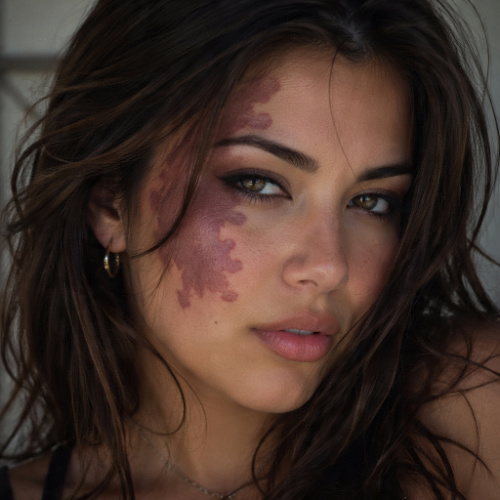
A port-wine stain or similar deep-colored birthmark, especially on the face or neck, was often called a “witch’s kiss” — a mark left by a spirit or fae who pressed their lips to the child as a blessing, claiming them as beloved rather than dangerous.
Hearth Witches were the heart of the home — the caretakers, the ones who made a house feel like a sanctuary instead of just a building. A kissed mark meant the child had already been chosen for that role, blessed before birth to be the emotional center of wherever they ended up living.
This mark was considered lucky rather than ominous in kinder traditions, a sign that the marked person would draw love and loyalty easily, and that their home — whichever one they built — would be protected. Hearth Witches with this mark were the neighborhood’s unofficial healers, the ones people showed up to without calling first.
If you’ve got a kissed mark, it likely shows in how naturally people trust you, confide in you, and feel calmer just being around you. That’s the mark doing its oldest job: making sure the people near you feel safe.
Hidden Marks You Might Not Realize Count

Not every witch mark is obvious. Some of the oldest, subtlest signs aren’t birthmarks at all — they’re the little quirks you’ve had your whole life and never once thought to question.
Hair Whorls
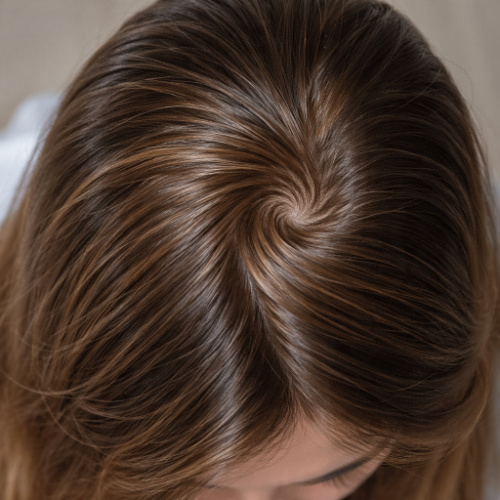
The swirl pattern where your hair grows from your scalp seems like the most boring detail in the world — until old lore gets involved. A hair whorl spinning clockwise was traditionally read as a sign of an outward-facing witch, someone whose magic moves toward the world: healing others, protecting a home, casting outward. A counter-clockwise whorl marked the opposite — someone whose power turns inward, toward dreams, intuition, and inner sight.
Double whorls — two spirals instead of one — were considered especially significant, marking someone with two distinct sides to their magic, often described as “two-headed” in old, half-joking, half-serious language. These people were said to carry both gifts at once: the outward healer and the inward seer, switching between the two depending on what the moment needed.
It sounds silly to check the top of your own head for magical meaning, but old cunning folk took it seriously enough to note it in the same breath as birthmarks. If you’ve got a stubborn cowlick or a whorl that never lies flat, that’s not just a bad hair day. That’s a direction your magic was always pointed.
Eye Flecks
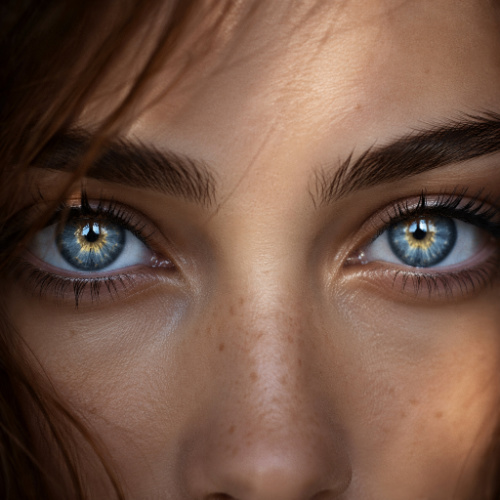
Eyes with a solid, single color were considered ordinary. Eyes with flecks — gold in brown, green in blue, a starburst pattern radiating from the pupil — were considered marked. The fleck was read as a tiny window where something extra had slipped in, usually associated with heightened perception: seeing more than others see, noticing what’s about to happen before it does.
Gold flecks specifically were tied to luck and charm — people who seemed to talk their way into good fortune without trying. Green flecks in otherwise different-colored eyes were linked to a pull toward growing things: gardens, herbs, healing plants. The fleck wasn’t just decoration in old lore — it was a hint about which flavor of magic ran strongest in someone.
If your eyes have ever made a stranger pause and say “wait, what color are your eyes exactly?” — that’s the fleck doing its job. It’s designed to be noticed, and once noticed, remembered.
Scar Patterns
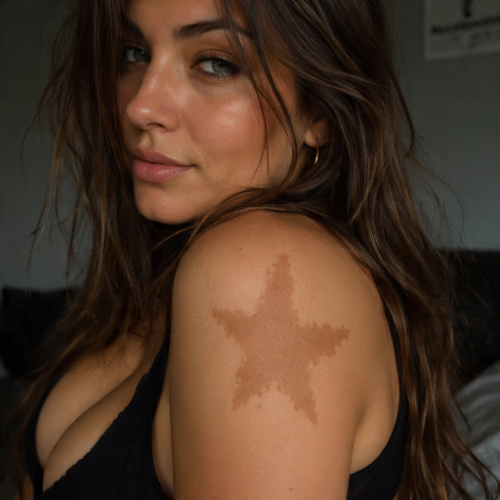
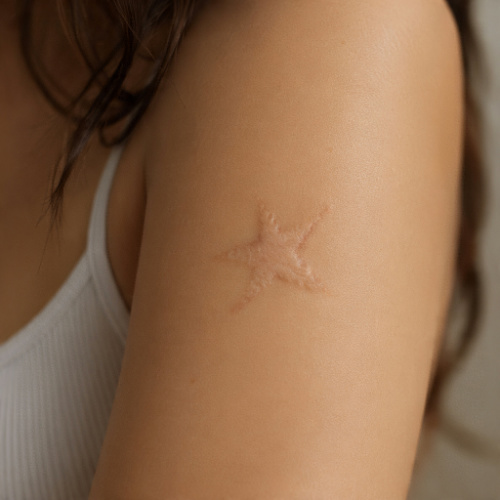
A scar in a shape that looks intentional — a rough star, a spiral, a clean line that seems almost drawn — was considered a “written” scar rather than an accidental one. The idea was simple: some injuries aren’t random. They’re carved, on purpose, by something using your body as a canvas to leave a message.
These scars were often tied to a turning point — a lesson, a protection, a warning that turned into a permanent mark once the danger passed. Unlike birthmarks, which show up from day one, a written scar arrives mid-life, which is exactly why old lore treated it as more urgent: it means something changed, and your body kept the receipt.
If you’ve got a scar that people have commented looks “like it was drawn on,” it’s worth thinking about what was happening in your life right before you got it. Old tradition says that story is the point — the scar is just the punctuation mark at the end of it.
Strange Childhood Injuries

Kids fall, kids scrape their knees — but old lore paid special attention to the injuries that made no sense. The child who got hurt in the exact same spot, over and over, for no clear reason. The fall that should have caused real damage but somehow didn’t. The wound that everyone in the family remembers as “the weird one,” even decades later.
These unexplained injuries were read as evidence of an early brush with something magical — a spirit testing the child, a fae encounter, an early and unsuccessful attempt by the ordinary world to make the child “normal.” The injury not sticking, or repeating in the same odd way, was the tell.
If your family still tells a story about the time you got hurt as a kid in a way nobody could ever quite explain, that story is doing more work than you think. Old lore would say that wasn’t bad luck. That was the first time the world tried, and failed, to make you forget what you already were.
Witch Marks in Ancient Cultures

The marks that different old-world cultures believed meant a person had already been chosen by something else.
Celtic fae-touched marks

Celtic fae-touched marks were the ones you got from getting a little too close to the fae world and not quite making it back unmarked. A birthmark, a strange streak of light-colored hair, a mole in an odd spot — all of it could be explained the same way in Celtic lore: you wandered somewhere you shouldn’t have, and something followed you home, leaving proof on your skin as a permanent souvenir. These marks made you fascinating and a little dangerous to be around — beautiful, unpredictable, and never entirely trusted by people who hadn’t been marked themselves.
Norse spirit-claim marks
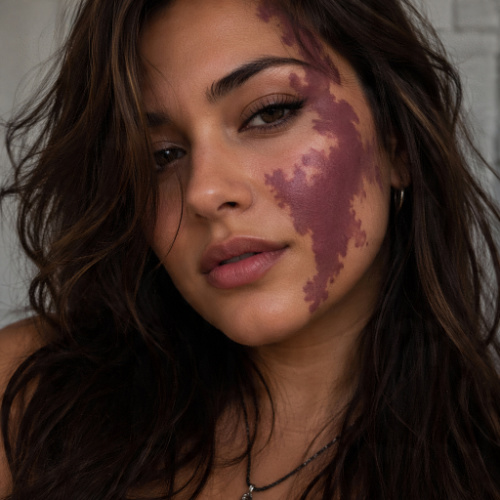
Norse spirit-claim marks worked less like an accident and more like a signature on a contract. In Norse belief, a spirit or wight could claim a person before birth, and the mark left behind — often something bold and unmistakable, a streak, a shape, a patch — meant that spirit expected loyalty in return for its protection. People with these marks were treated as walking under someone else’s watch, for better or worse, and were said to have unusually good luck in battle, travel, and any situation where they needed something bigger than themselves in their corner.
Egyptian star-seed markings
Egyptian star-seed markings connected the body directly to the night sky. Certain birthmarks and mole patterns were read as pieces of the cosmos that hadn’t fully detached — proof that the person carried something eternal, something that existed before they were born and would exist after. These marks were treated with real reverence, associated with priesthood, prophecy, and a closeness to the gods that ordinary people didn’t have. To have one meant your story didn’t start at birth. It started somewhere much older.
Slavic fire-born freckles

Slavic fire-born freckles told a warmer, wilder story. Freckles that appeared in unusual density or pattern, especially across the face, were said to come from being born a little too close to the old bonfires — the ones lit for festivals, for protection, for luck. The fire didn’t just warm the mother. It left a piece of itself in the child, scattered across the skin like sparks that never fully went out. People with fire-born freckles were considered lucky, warm-natured, and impossible to stay mad at for long — walking, living proof that they’d been kissed by flame before they’d even taken a breath.
Rituals to Activate or Understand Your Witch Marks
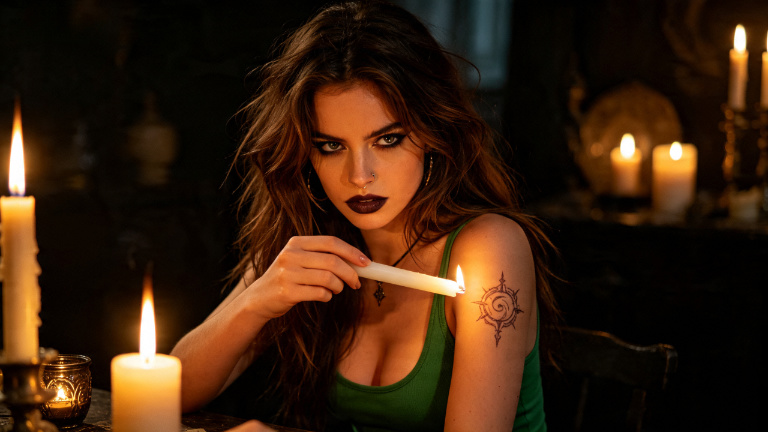
You don’t need much to work with your mark — just quiet, a little intention, and a willingness to actually look at yourself for once.
Moon-mirror scrying. On a full moon, sit somewhere the moonlight actually touches you — a window, a doorway, a spot outside. Hold a mirror so the moon reflects off it and onto your mark. Watch it, don’t stare through it. Old tradition says the moon “reads” the mark back to you in impressions, feelings, or flashes of memory. Give it a few quiet minutes before you decide nothing happened.
Salt-circle body tracing. Pour a small circle of salt on the floor and stand in the center. With one finger, trace the outline of your mark slowly, as if you’re re-drawing it in the air. This was believed to “wake up” a mark that’s gone quiet — birthmarks especially, which some lore says can dim in power if they’re ignored for too long. The salt keeps anything unwanted out while you do it.
Ink-sigil amplification. Draw a small sigil — any simple symbol that feels right to you — near your mark using safe, washable ink, and leave it overnight. This was a traditional way of “introducing” your intention to the mark directly, letting the two sit close together while you sleep. In the morning, wash it off and pay attention to what you dreamed.
Candle-shadow interpretation. In a dark room, hold a single lit candle near your mark and watch the shadow it casts on the wall. Let the shadow shift as your hand moves. Old cunning folk used this to “read” a mark the same way they’d read tea leaves — not through the mark itself, but through the shape it throws when fire hits it just right.
What If You Have More Than One Mark?

Here’s something a lot of lists like this skip — most people don’t have just one mark. You might have a crescent birthmark and freckle constellations and a hair whorl that spins the “wrong” way. Old tradition actually has an answer for that, and it’s a good one: you’re not confused, you’re layered.
Multiple marks were traditionally read less like a contradiction and more like a full sentence, where each mark is a word. A Seer with a Fire Mark isn’t torn between two paths — she’s a Seer who leads with warmth. A Hedge Witch with a Palm Cross isn’t choosing between the wild and the hands-on — he’s someone whose familiar helps him read the world through touch. The marks were never meant to lock you into one identity. They were meant to describe you, in full, the way a whole sentence describes something better than a single word ever could.
So if you’ve been reading this list checking off boxes — yes, yes, oh that’s me too — don’t panic. That’s not a mistake in the lore. That’s just what it looks like when someone was marked more than once.
Your Body Was Never Blank Paper

Here’s the thing about witch marks: they were never really about proving magic exists. They were about paying attention to something that was already true — that no one arrives into the world as blank paper. Every mark, every freckle, every strange scar and stubborn cowlick is a sentence someone else wrote on you before you had the chance to write anything yourself.
You don’t have to believe every word of the old lore to feel the pull of it. Go look at your own skin tonight. Find the mark you always assumed meant nothing. Old tradition says it was never nothing. It was the first thing that was ever truly, permanently yours.