

The moon has been pulling at us forever — not just the tides, but our moods, our bodies, and the way we reach for each other in the dark. Most people don’t think twice about how a full moon makes them feel restless, or why some nights everything feels electric between partners while other nights fall completely flat. The truth is, the moon runs on a rhythm, and so do we. When those two rhythms line up, something shifts — intimacy stops feeling ordinary and starts feeling like it actually means something.
Sex magic isn’t about candles and chanting if you don’t want it to be. At its most basic, it’s the idea that physical and emotional energy generated between two people — or even solo — is real energy, and it can be directed with intention. The moon gives you a built-in calendar for that. Each phase carries its own quality of energy, its own emotional weather, and its own invitation. Learning to read that calendar is one of the simplest and most powerful things you can do to deepen your intimate life.
Across cultures and centuries, people mapped desire to the moon without even calling it magic. They just knew. Farmers planted by the moon, healers harvested herbs by it, and lovers paid attention to when the pull between them was strongest. That knowledge didn’t disappear — it got quiet. This article is about bringing it back into your bedroom, your rituals, and your relationship with your own body in a way that feels natural, not complicated.
You don’t need to be a witch or follow any specific spiritual path to use this. You just need to be willing to pay attention. Start watching how you feel at the new moon versus the full moon. Notice your energy, your desire, your need for closeness or space. The moon is already working on you — this is just about working with it on purpose.
Why the Moon Makes You Feel Everything More
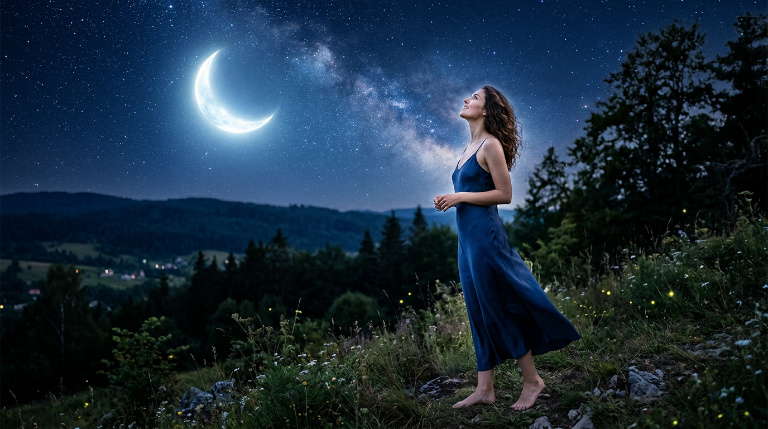
Long before anyone had a word for hormones or nervous systems, people noticed that human behavior tracked with the moon. Women’s cycles have long been linked to the lunar month — roughly 29.5 days each, a match too consistent to ignore. But it isn’t just people who menstruate who feel the shift. Everyone carries water in their bodies, and the same gravitational force that moves the ocean moves us too, subtly, steadily, all month long.
The moon regulates emotion the way a tide regulates a shoreline — it doesn’t force anything, but it shapes what’s possible. Around the new moon, energy tends to turn inward. People get quieter, more reflective, more aware of what they actually want versus what they’ve been performing. Around the full moon, that energy floods outward. Feelings get bigger. Attraction gets louder. Old wounds and deep desires both rise closer to the surface, which is why full moons have a reputation for being both romantic and chaotic.
This emotional patterning matters enormously for intimacy because real connection — the kind that actually satisfies — requires emotional availability. You can go through the motions on any night of the month. But if you’ve ever had an encounter that felt genuinely different, more present, more alive, chances are the timing was working in your favor whether you knew it or not. Moon phase sex magic is largely about learning to stack the odds like that deliberately, choosing nights when the energetic conditions already support the kind of intimacy you’re after.
Working with the moon as an emotional regulator also means giving yourself permission to not be “on” all the time. The moon wanes. It goes dark. It rests before it rebuilds. Building that same permission into your intimate life — rest, withdrawal, renewal, then expansion — creates a rhythm that’s sustainable and deeply nourishing rather than one that’s always pushing for more.
Full Moon Connection Rituals
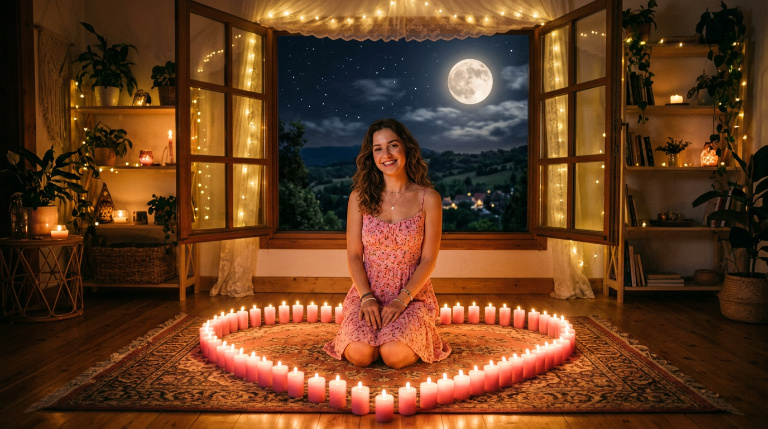
1. The Mirror Bath
Run a warm bath by candlelight — use rose water, a few drops of jasmine or ylang-ylang oil, and a handful of pink or red rose petals. Before your partner joins you or before you step in alone, stand in front of a mirror and speak one true thing about what you want from love right now. Not what you think you should want — what you actually want. The full moon amplifies honesty. This ritual opens you up before you open up to someone else.
2. Charged Touch Exchange
Sit facing your partner in a quiet space with a white or gold candle burning between you. Set a timer for five minutes. No kissing, no rushing — just take turns placing hands on each other’s face, shoulders, heart. Breathe together. The full moon is at peak power for about three days around its apex, and during this window, touch carries an unusual charge. This practice lets you feel that before things get heated, grounding the energy so it goes deep instead of just fast.
3. Full Moon Intention Setting Before Intimacy
Before being intimate on or around the full moon, each person writes one thing they want to release from the relationship and one thing they want to call in. You don’t have to share what you wrote. Fold the papers, hold them together, then burn them safely in a fireproof dish or simply tuck them under the mattress for the night. This isn’t about fixing problems — it’s about bringing your whole self to the moment with awareness, not just your body.
4. Moonlight Skin Ritual
If you have access to direct moonlight — a window, a balcony, a backyard — spend a few minutes letting it fall on your skin before intimacy. Moonlight during the full phase is energetically associated with illumination, magnetic pull, and heightened sensory awareness. Stand in it quietly, breathe, and set a simple intention: I am fully present tonight. This clears the mental noise from the day and lands you back in your body, which is exactly where you want to be.
5. The Gratitude Body Map
This one is for partners and it’s quietly powerful. Lie down together in candlelight — white or silver candles work best under the full moon. One person lies still while the other moves slowly across their body, speaking one genuine gratitude for each place they touch. Not compliments about appearance — real gratitude. I’m grateful for these hands that held me when I was falling apart. I’m grateful for this chest I’ve fallen asleep on a hundred times. Then switch. By the time you’re done, the emotional field between you will be completely different. The full moon amplifies everything you’re genuinely feeling — this ritual makes sure what gets amplified is love.
6. Moonwater Anointing
The night before the full moon, set a small bowl or jar of clean water on a windowsill where moonlight can fall on it overnight. By morning you have moon-charged water. On the night of the full moon, use it to anoint yourself and your partner — fingertips to forehead, throat, heart, wrists. Speak a simple blessing as you do it, something true and from the heart. Water holds intention remarkably well, and this act of deliberate blessing before intimacy consecrates the experience without making it heavy. It stays tender, not ceremonial.
7. The Honest Desire Circle
Sit together cross-legged, knees touching, eyes open. Light a candle. Take turns completing this sentence out loud, without editing: “Something I’ve been wanting to tell you is…” You go back and forth until each person has spoken three times. There are no rules about what gets said — it can be desire, it can be fear, it can be something small and sweet. The full moon is the great revealer, and this ritual works with that by creating a safe container for truth before you come together physically. What gets spoken in the circle stays in the circle — no bringing it up later as ammunition. Just honesty, held with care.
8. Sacred Undressing
This one slows everything way down, which is exactly what the full moon deserves. Instead of undressing quickly out of habit, make it a ritual. Candlelight only. One person undresses the other slowly, and with each piece of clothing removed they say something they love or appreciate about that part of the person — not their body necessarily, but who they are. “I’m taking this off because I want you to feel free.” Then switch. It sounds simple, and it is — but it completely changes the quality of presence in the room. The full moon responds to that kind of deliberate attention. You’re not just getting undressed. You’re arriving.
9. The Shared Breath Practice
Stand facing each other, close enough that you can feel each other’s warmth but not quite touching. Close your eyes. Breathe normally for a minute. Then, without forcing it, begin to match each other’s breath — in together, out together. Don’t count or control it. Just listen and follow. Within a few minutes something extraordinary tends to happen: the nervous systems begin to sync. Heart rates move toward each other. The sense of where you end and your partner begins gets softer. This is the full moon’s gift — the dissolution of the ordinary separateness between people. From this place, whatever comes next is already magic.
10. The Moon Letter
Write a letter to your partner — or to yourself if you’re practicing solo — that you only write on the full moon, once a month. In it, say the things you mean but don’t usually say out loud. What you’ve noticed. What you’ve felt. What you’re grateful for. What you’re hoping for. Seal it. If you’re with a partner, you can exchange and read them together by candlelight before intimacy, or save them unread in a box and open them all at the end of a year. The practice of writing it matters as much as anything else — the full moon will draw out truths from you that ordinary Tuesday evenings tend to keep buried. Let them come. Put them somewhere real.
11. Crystal Grid for Two
Gather a few stones associated with the full moon and love — moonstone, rose quartz, selenite, rhodonite. Arrange them in a simple circle on the bed or floor between you. You don’t need to know anything about crystal grids — the arrangement itself is the act of intention. Sit inside the circle together, or lay within it. Set one shared intention out loud: what you want to call into this night, this relationship, this body. Leave the stones in place while you’re intimate. In many traditions, crystals act as amplifiers of whatever energy is present — the full moon charges them further, and your intention gives that charge a direction.
12. The Full Moon Feast
Prepare food together before intimacy — not a complicated meal, just something deliberate. Choose foods associated with love, pleasure, and the senses: strawberries, dark chocolate, honey, figs, wine or pomegranate juice, anything that feels luxurious and sensory. Feed each other at least some of it. Eat by candlelight, slowly, talking about things that actually matter to you rather than running through the day’s to-do list. The full moon rewards full sensory presence, and there’s no faster route to that presence than pleasure that involves taste, touch, smell, and genuine conversation all at once. By the time you move toward each other, you’ll already be lit up.
The Eight Moon Phases for Intimacy
New Moon — Planting Seeds of Desire
The new moon is the beginning of everything, but it doesn’t look like much from the outside. The sky is dark, the energy is quiet, and most people mistake this phase for a dead zone. It isn’t. It’s a womb. Whatever you plant here — intentionally, with full attention — has the entire lunar cycle to grow. For intimacy, the new moon is the perfect time to get honest with yourself about what you actually want. Not just physically, but emotionally. What kind of connection are you hungry for? What have you been afraid to ask for?
In terms of energy, the new moon asks for stillness before movement. This isn’t the night for wild, expansive lovemaking — it’s better suited for slow, intentional touch, whispered wants, quiet presence. If you’re in a relationship, this is a good time for a conversation you’ve been putting off, approached gently and with curiosity rather than urgency. If you’re solo, new moon energy supports deep self-pleasure practice focused on feeling rather than achieving — getting acquainted with your own body as if for the first time.
From a magical standpoint, desire set on the new moon is desire with a direction. When you combine physical energy with a clear intention during this phase, you’re essentially giving that desire a seed form — something that can root and grow. Couples who practice moon phase sex magic often find that what they intentionally focused on during the new moon becomes a natural theme of the full moon two weeks later, sometimes in ways they didn’t expect.
The new moon is also a powerful reset. If you and a partner have been disconnected, stressed, or going through a rough patch, the new moon offers a clean slate. It doesn’t ask you to pretend everything is fine — it asks you to begin again with honesty. Starting a new cycle of intimacy from that place, with gentleness and intention, can shift something that’s been stuck for a while.
New Moon Correspondences:
| Element | Correspondence |
|---|---|
| Lighting | Complete darkness or a single black or deep navy candle |
| Colors | Black, midnight blue, silver |
| Scents | Myrrh, cedarwood, vetiver, frankincense |
| Symbolic Elements | Seeds, blank journal pages, obsidian or black tourmaline, empty vessels |
Waxing Crescent — Awakening Curiosity and Invitation
The crescent sliver appears and suddenly there’s something to look at again. Energy is waking up but it’s still delicate, still new. This phase carries the feeling of early attraction — that moment when you’ve just met someone interesting, or when you’ve just remembered what you love about someone you’ve known for years. It’s tentative, curious, lit from within. For intimacy, the waxing crescent supports flirtation, play, and gentle pursuit. It’s an excellent time to try something new — a different kind of touch, a different setting, a conversation about fantasy that you approach with lightness rather than pressure.
This phase is energetically supportive of building anticipation. In a culture that tends to rush toward the finish line, waxing crescent energy teaches the value of the approach. Sending a note to your partner during the day. Lighting a candle at dinner with no agenda. Paying attention to your partner in ways you might have stopped noticing. This is the phase of small gestures that carry real weight because they’re made with awareness.
For solo practitioners, the waxing crescent is a good time to begin a practice — a new self-care ritual, a journaling habit around desire, or simply spending more time noticing what genuinely attracts and interests you. The crescent phase rewards curiosity. The more honest questions you ask yourself now, the richer your full moon experience will be.
There’s also something beautiful about honoring this phase as an invitation rather than a demand. The crescent moon doesn’t blaze — it suggests. Bringing that quality into your intimate life, extending an invitation rather than an expectation, can completely change the atmosphere between you and a partner, and between you and yourself.
Waxing Crescent Correspondences:
| Element | Correspondence |
|---|---|
| Lighting | Soft candlelight, a single flame, beeswax or pale yellow candles |
| Colors | Pale yellow, cream, soft gold, light pink |
| Scents | Neroli, sweet orange, bergamot, light florals |
| Symbolic Elements | Feathers, new buds, clear quartz, a handwritten note, a thin crescent drawn in silver |
First Quarter — Building Heat and Momentum
The first quarter moon is where things get interesting. You’re halfway to the full moon, and the energy is building fast. This is the phase of action, momentum, and — if we’re honest — a little bit of friction. First quarter energy pushes. It’s ambitious and a little restless. For intimacy, this translates to passion with an edge, the kind of desire that has heat and direction. This is a good night for things to be a little more intense, a little more physical, a little more bold.
This phase also highlights where things need to be worked through. If there’s been tension between you and a partner, the first quarter will bring it up. That’s not a bad thing — unresolved tension that surfaces now has two weeks before the full moon to be transformed. Some of the most honest, clearing conversations happen under first quarter energy, and honest conversation followed by genuine intimacy can be incredibly powerful.
The first quarter is also supportive of taking an initiative you’ve been hesitating on — asking for what you want in bed, introducing a new element to your intimate life, or finally saying the thing you’ve been holding back. The energy of this phase supports courage. It won’t do the brave thing for you, but it makes the leap feel slightly more possible.
In magical practice, the first quarter is often associated with overcoming obstacles, which is useful to hold in mind. Anything blocking deeper intimacy — fear, old story, habit — can be consciously addressed during this phase. Work with it rather than around it, and you’ll arrive at the full moon with your energy clear and ready.
First Quarter Correspondences:
| Element | Correspondence |
|---|---|
| Lighting | Bright candlelight, several flames, firelight if possible |
| Colors | Red, orange, deep gold |
| Scents | Cinnamon, ginger, black pepper, clove |
| Symbolic Elements | Carnelian, iron or copper objects, matches, a warrior or fire imagery, drums |
Waxing Gibbous — Refinement and Deepening
The gibbous moon is almost full but not quite — and that almost is everything. This phase carries a quality of refinement, of honing something that’s close to its peak. The energy isn’t as raw as the first quarter; it’s more focused, more intentional. For intimacy, the waxing gibbous is ideal for depth over intensity — taking what’s already been built between you and going deeper into it rather than adding something new. It’s the phase for slow evenings, long conversation, real presence.
This is a beautiful phase for couples to focus on emotional intimacy as a foundation for physical intimacy. Not that physical intimacy requires an emotional preamble — but under gibbous energy, the two tend to reinforce each other particularly well. Sharing something real about your inner world with a partner, then being physically close, creates a loop of trust and connection that amplifies both experiences.
For solo practice, the waxing gibbous supports fine-tuning. If you’ve been developing a self-pleasure ritual or a new way of relating to your body, this is the phase where you refine it — where you learn more specifically what you need, what feels genuinely good versus what you’ve been doing on autopilot. The gibbous moon rewards attention to detail in the most pleasurable way.
Magically, this phase is associated with adjustment and preparation. Whatever you set in motion at the new moon is nearly at its peak expression. Check in with it. Is the intimacy you’ve been building aligned with what you actually wanted? If anything needs adjusting, do it now — gently, without judgment — before the full moon brings everything into full light.
Waxing Gibbous Correspondences:
| Element | Correspondence |
|---|---|
| Lighting | Warm amber light, multiple soft candles, golden lamplight |
| Colors | Deep rose, amber, burnished gold, violet |
| Scents | Sandalwood, rose, patchouli, cardamom |
| Symbolic Elements | Garnet, rose quartz, silk fabric, a half-written love letter, overflowing vessels |
Full Moon — Peak Power and Full Presence
This is the one everyone feels, even people who don’t track the moon at all. The full moon is maximum amplification. Everything is turned up — emotion, attraction, awareness, desire. It’s the most energetically potent night of the lunar cycle for intimacy, and also the most emotionally complex. What’s unresolved tends to surface. What’s real tends to become undeniable. If you’ve been pretending everything is fine when it isn’t, the full moon will make that uncomfortable. If you’ve been sitting on genuine love and desire, it will make that undeniable too.
The full moon is when sex magic reaches its highest potential because the energy available is at its peak. Physical energy generated under a full moon — especially when paired with clear intention — carries enormous charge. This is the night for rituals, for conscious connection, for lovemaking that you approach with full awareness rather than habit. It’s also the night where, even without any formal ritual, simply being fully present with yourself or a partner carries unusual power.
Full moon energy supports surrender — the kind where you stop managing the experience and let yourself actually be in it. This is harder than it sounds for most people. We’re trained to stay a little bit behind our own experience, narrating and managing. The full moon loosens that habit if you let it. Deep breath, soft gaze, no agenda beyond presence — that’s the full moon invitation.
In terms of magical intention, the full moon is a night for gratitude and peak expression, not new asking. You planted seeds at the new moon, you built through the quarters — now you harvest. Give thanks for what’s alive between you and your partner, or within yourself. Let yourself feel it fully. The energy you generate in that state of full, grateful presence is extraordinary, and it sets the tone for what you’ll carry through the waning half of the cycle.
Full Moon Correspondences:
| Element | Correspondence |
|---|---|
| Lighting | Moonlight itself, white pillar candles, silver candleholders |
| Colors | White, silver, luminous gold, pearl |
| Scents | Jasmine, ylang-ylang, neroli, white rose |
| Symbolic Elements | Moonstone, selenite, mirrors, pearl, full vessels of water left in moonlight, white flowers |
Waning Gibbous — Integration and Gratitude
After the peak, the moon begins to give back what it gathered. The waning gibbous carries the full moon’s richness but softens it — this is the exhale after the big breath, the warm morning after the electric night. For intimacy, this phase is beautifully suited for integration: lying together, talking, processing. If the full moon was intense or revealing, the waning gibbous is where you make sense of what came up and weave it into the fabric of your relationship.
This is also a phase of genuine gratitude, which is arguably one of the most underused tools in intimate life. Taking time to tell your partner specifically what you appreciate about them — not in a greeting card way, but in a real, detailed, personal way — lands differently under waning gibbous energy. The moon is giving back; match that energy by giving your appreciation freely and without expecting anything in return.
For solo practitioners, this phase supports self-reflection on what the full moon revealed. Did anything surprise you about your own desires? Did you feel more open than usual, or did something old come up that needs attention? Journaling under the waning gibbous often produces unusually clear insights because the energy supports honest retrospection without the urgency of the peak.
Sexually, this phase leans toward the slow and sensory — less about intensity, more about savoring. If the full moon was a feast, the waning gibbous is the long, leisurely conversation afterward. Don’t rush through it to get back to something more dramatic. This quiet is part of the magic.
Waning Gibbous Correspondences:
| Element | Correspondence |
|---|---|
| Lighting | Dimming candlelight, lanterns, twilight ambiance |
| Colors | Peach, burnt sienna, dusty mauve, warm copper |
| Scents | Lavender, chamomile, amber resin, vanilla |
| Symbolic Elements | Citrine, journals, honey, dried flowers, a half-burned candle, woven textiles |
Last Quarter — Release and Honest Reckoning
The last quarter moon is the mirror image of the first quarter, but instead of building, it’s clearing. This phase brings a particular kind of clarity — the kind that helps you see what’s no longer working, what you’ve been carrying that isn’t yours, and what needs to be released before the cycle ends. It’s not always comfortable, but it’s deeply useful. For intimacy, the last quarter is a phase of honest reckoning — a good time for conversations that need to happen, patterns that need to be named, and burdens that need to be set down.
This isn’t the most glamorous phase for intimacy, but it might be one of the most necessary. Couples who skip the waning and releasing phases of the moon — always chasing the high of the full moon — often find their connection building up a kind of static. Unexpressed feelings, unmet needs, accumulated small resentments. The last quarter is the energetic housecleaning that makes the next new moon genuinely new.
In practice, last quarter intimacy often looks like vulnerability without an immediate payoff. Telling the truth about how you’ve been feeling, even when it’s not pretty. Asking for something you need even when you’re not sure it’ll be received well. There’s a kind of bravery to this phase that’s quieter than the first quarter’s boldness — it’s the courage to be honest when the chips aren’t especially high.
Sexually, the last quarter can be unexpectedly liberating. Releasing something emotionally before or during intimacy — consciously letting go of an old wound, a held grievance, a self-limiting story — can create a physical and emotional opening that’s completely unexpected. Sometimes the deepest pleasure lives just on the other side of genuine release.
Last Quarter Correspondences:
| Element | Correspondence |
|---|---|
| Lighting | Single candle burning down, moonlight through a curtain |
| Colors | Grey, slate blue, deep indigo, charcoal |
| Scents | Eucalyptus, cypress, clary sage, smoky incense |
| Symbolic Elements | Labradorite, black kyanite, scissors or thread (to cut what binds), salt bowls, burning herbs |
Waning Crescent — Surrender and Sacred Rest
The waning crescent is the oldest light in the lunar cycle — thin, tired, nearly spent. It asks for one thing above all others: rest. Not the performing of rest, not the idea of it, but genuine surrender to stillness. In a culture obsessed with productivity and peak performance, this phase is almost radical. For intimacy, the waning crescent is sacred rest — time to be held without having to be anything, to breathe together without agenda, to let the body be still and quiet and soft.
This is the phase where many people discover how much they’ve been holding, because the waning crescent asks you to put it down. You can’t be fully intimate — in the deepest sense of that word — while bracing yourself against the world. The waning crescent energy gently insists on softness. If that’s hard, that’s information. It’s pointing to something worth exploring.
Waning crescent intimacy is best served by the non-sexual dimensions of closeness — sleeping pressed together, long gentle touch with no destination, the kind of silence that’s comfortable rather than tense. If sexual energy arises naturally it can be honored, but this phase doesn’t push for it. It offers something rarer than climax: the feeling of being completely safe with another person or with yourself.
This phase is also powerfully supportive of dream work and intuitive intimacy. Just before sleep on waning crescent nights, ask yourself — or whisper to your partner — one question you’d like answered by morning. The thinning energy of this phase thins the veil between waking thought and dream knowledge. Pay attention to what comes up.
Waning Crescent Correspondences:
| Element | Correspondence |
|---|---|
| Lighting | No candles, starlight, the faintest glow |
| Colors | Silver-grey, white mist, pale lilac, moonstone tones |
| Scents | Mugwort, sleep blends, light sandalwood, vetiver |
| Symbolic Elements | Moonstone, amethyst, feathers, dream journal, loose white cloth, water in a silver bowl |
The Dark Moon and Restorative Intimacy
The dark moon — sometimes confused with the new moon but technically the one to three days just before it — is the deepest point of the lunar cycle. The moon is invisible. Her light is completely withheld. In ancient traditions, this was a time of silence and withdrawal, often considered too powerful and too tender for ordinary activity. For intimacy, the dark moon is not about doing — it’s about being, and more specifically, about being with the parts of yourself you usually don’t let anyone see.
Restorative intimacy under the dark moon looks different for everyone but usually shares certain qualities: extreme gentleness, minimal noise, no performance of any kind. This is the phase where being held is more nourishing than anything else — physically held, emotionally held, allowed to take up space without justification. If you’ve been going hard through life, through relationships, through your own internal demands, the dark moon is the phase where that toll becomes impossible to ignore. Which is, oddly, a gift.
For couples, dark moon intimacy can be a surprisingly deepening experience if you approach it without expectations. Lying together in silence. Speaking only what’s genuinely true. Making contact that’s purely about presence rather than desire. The dark moon strips away the performance layer that sneaks into even the most loving relationships, and what’s left is usually quite tender and quite real. Many people find they feel closer to a partner after a genuine dark moon encounter than after any full moon peak.
This phase also holds space for grief and difficulty within intimate relationships. The dark moon doesn’t ask you to be okay. It’s the one phase that can hold the complicated truth — the love that coexists with frustration, the desire that coexists with fear, the closeness that coexists with loneliness. Letting those truths be present during the dark moon, without trying to fix or resolve them immediately, is its own form of intimacy and its own form of magic.
The Pink Moon and Intimacy
The Pink Moon is April’s full moon — named not for its color but for the wild pink phlox flowers that bloom across North America in early spring. It arrives at a particular moment in the seasonal wheel when the earth is actively, urgently growing, and that energy is unmistakable. Spring itself is already charged with desire — longer days, warmer skin, the whole biological machinery of renewal humming at full volume. The Pink Moon sits at the peak of that wave and amplifies it considerably.
For intimacy, the Pink Moon carries qualities that set it apart from other full moons: it’s warmer, sweeter, more overtly romantic. Where some full moons bring intensity or revelation, the Pink Moon tends toward joy. There’s a playfulness to it, a genuine delight in the physical world and in other people. If you’ve been wanting to invite more lightness into your intimate life — more laughter, more tenderness, less seriousness — the Pink Moon is your most powerful ally in the lunar calendar.
The Pink Moon is particularly supportive of new and growing relationships — the energy of spring and fresh beginning is woven into it. But it’s equally powerful for long-term partners who want to remember what it felt like at the beginning, who want to bring that quality of fresh attention back to each other. Under the Pink Moon, it’s genuinely easier to see the person in front of you with new eyes. Let that happen. Look at your partner like you’re meeting them for the first time, and mean it.
Ritually, the Pink Moon calls for flowers — fresh ones, scattered on a bed or floated in a bath, their scent doing half the work before you even begin. Rose quartz and strawberry quartz are particularly aligned with this moon’s energy. The colors are blush, coral, and tender green. The scents are floral and sweet — rose, peony, fresh hyacinth, light musk. If ever there was a moon for romance in its fullest, most unironic sense, it’s this one. Let yourself have it without reservation.
Reading Your Body as a Lunar Instrument
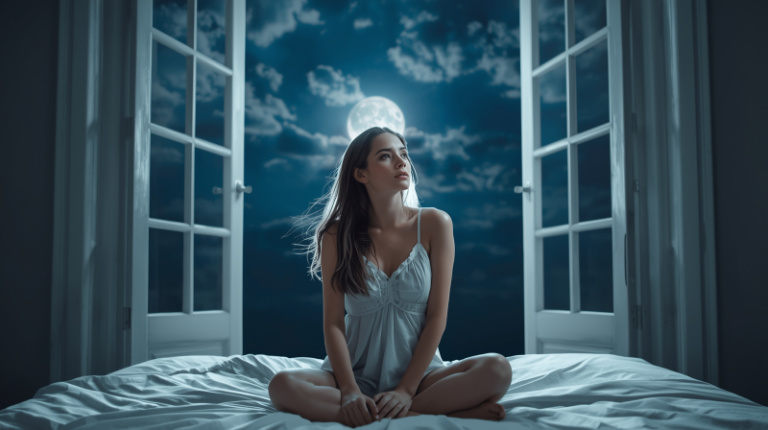
One of the most overlooked dimensions of moon phase sex magic is the body itself as a receiver of lunar energy. The moon doesn’t just set a mood — it physically affects the water in your tissues, your hormonal rhythms, and even your nervous system’s baseline tone. Learning to read your own body through the lens of the lunar cycle is one of the most practical and intimate skills you can develop, and it costs nothing.
Start by keeping a simple moon journal for one full cycle — 29 days. Each day, note your energy level, your desire, your emotional weather, and how connected you feel to your body. Don’t try to make the observations fit a template; just record what’s actually happening. By the end of the cycle, patterns will emerge that are specific to you. You’ll start to see which phases bring your desire alive, which drain you, which make you want deep connection, and which make you need space. That map is more useful than any general guide.
Once you have your own pattern, you can begin to work with it intentionally. If you consistently feel depleted during the waning crescent, protect that time — don’t schedule socially demanding events or expect yourself to show up in ways you don’t have capacity for. If you reliably feel expansive and magnetic around the waxing gibbous, that’s a natural window to initiate deeper connection. The lunar cycle gives you a rhythm; your body tells you what that rhythm means for you specifically.
The erotic body is a particularly sensitive instrument in this regard. Sexual energy — arousal, desire, the impulse toward connection — is one of the most honest signals the body produces. Under different lunar phases, that signal changes in quality, not just intensity. Desire at the new moon tends to feel inward and meditative; desire at the full moon tends to feel magnetic and outward; desire during the waning phases tends to feel tender, nostalgic, sometimes bittersweet. None of these is better than the others. All of them are information, and all of them are worth listening to.
Building a Lunar Intimacy Practice
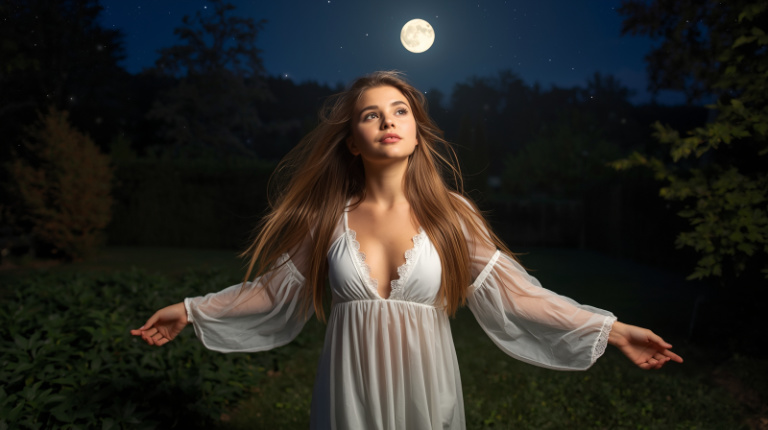
You don’t have to do everything in this article to feel the difference the moon makes. The simplest version of a lunar intimacy practice is just this: know what phase the moon is in, and let that awareness gently inform your choices. That’s it. No rituals required, no special tools, no memorized correspondences. Just paying attention.
If you want to go deeper, start with the two poles of the cycle — the new moon and the full moon. On the new moon, light a candle, get quiet, and ask yourself what you want from your intimate life this cycle. Write it down somewhere. On the full moon, return to what you wrote. Acknowledge what’s grown. Add a small ritual — a bath, a moment of moonlight, a deliberate act of presence with your partner or yourself — and let the cycle be complete.
Over time, you can expand that practice to include the quarters, then the in-between phases, then the Pink Moon and Dark Moon as special occasions in the annual wheel. But the practice builds more meaningfully when it grows from genuine engagement rather than obligation. If one phase speaks to you more than others, start there. The moon will meet you wherever you are and work with whatever you bring.
The goal isn’t perfection or consistency. The goal is awareness — the slow, deepening awareness of yourself as a being in rhythm with something larger, and of intimacy as a practice that’s sacred not because you perform it perfectly, but because you show up to it with intention. The moon has been doing this work forever. You’re just joining in.