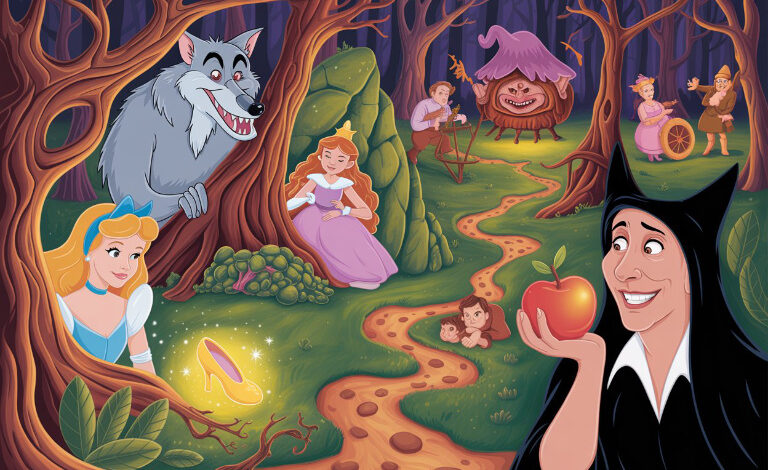
There’s something about fairy tales that never quite lets you go. You heard them as a kid, tucked into bed, lights low, and even now — decades later — certain images still live rent-free in your head. The spinning wheel. The glass slipper. The old woman in the woods. You probably wrote them off as “just stories” a long time ago. But here’s the thing: they were never just stories.
The people who first told these tales weren’t making stuff up for entertainment. They were passing down real knowledge — encoded, hidden, wrapped in metaphor so it could survive witch trials, church crackdowns, and centuries of people who very much did not want this information getting around. Fairy tales were a delivery system. And what they were delivering was witchcraft.
Every culture on earth has its version. The wise woman in the forest. The magical transformation. The deal struck at the crossroads. The curse that has to be broken just right, with just the right words, or it doesn’t break at all. These weren’t fantasy. These were folk magic traditions — real practices, real beliefs — wearing the costume of a bedtime story so they could travel safely through time and land, eventually, in your ears.
So the next time someone tells you fairy tales are for children, you can smile and let them have that. Because what you’re about to read is the stuff that got slipped past every censor, every book burning, every “enlightened” era that tried to scrub magic out of the world. It didn’t get scrubbed. It got disguised. And it’s been hiding in plain sight your whole life.
The Witch in the Woods Was Never the Villain
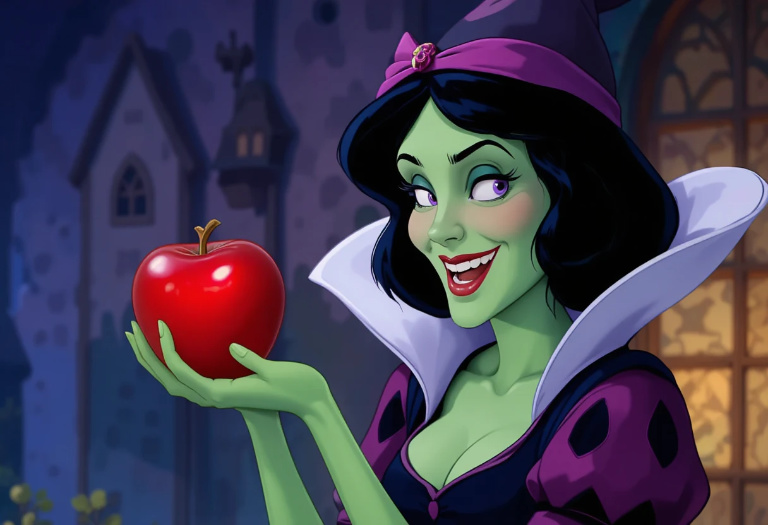
Every culture has her — the old woman living alone at the edge of the forest, feared by the village, visited in secret. In the stories you grew up with, she’s usually the threat. She wants to eat children. She poisons apples. She puts curses on babies at christenings.
But strip away the centuries of bad PR and what you actually have is the village wise woman — the herbalist, the midwife, the healer. She lived outside the village because folk witchcraft existed outside the church’s reach. She knew which plants cured fever, which eased childbirth, which ended a pregnancy, which made someone fall in love or lose their mind. That kind of knowledge made her powerful, which made her dangerous to people who didn’t want competition.
The Baba Yaga of Slavic tradition is the clearest version of this. She lives in a hut on chicken legs, deep in the forest. She’s terrifying. She tests heroes who come to her door, and she either helps them or eats them, depending entirely on how they treat her and whether they follow the correct ritual behavior — speaking the right words, eating what they’re offered, completing tasks without complaint.
That’s not a monster. That’s an initiated witch with a very specific magical protocol. The stories themselves are instructions for how to approach a powerful magical practitioner.
Spinning, Weaving and the Magic Nobody Talks About
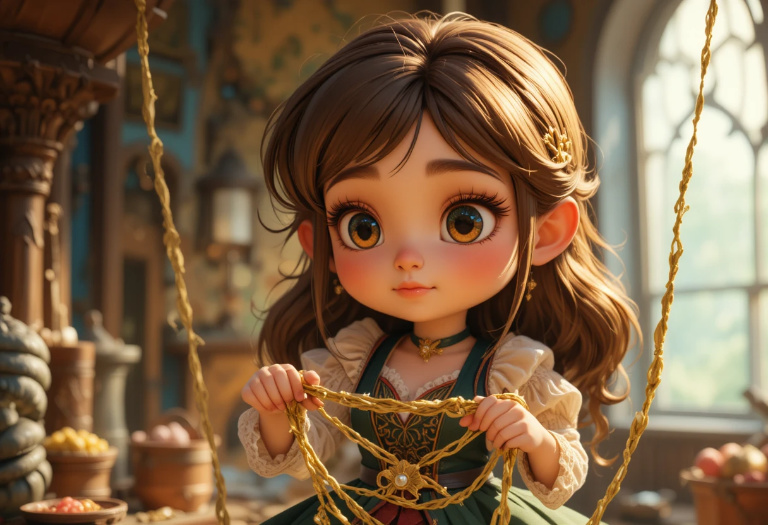
You’ve heard the stories: a girl spins straw into gold, a prince falls asleep at the touch of a spindle, a woman weaves shirts from nettles to break a curse. Spinning and weaving show up in witchcraft fairy tales so often that it stopped being a coincidence a long time ago.
In pre-Christian Europe, spinning was women’s magic. Full stop. The Fates spun human destiny. Norse völva — female seers — carried a staff that echoed the distaff used in spinning. Spinning thread was understood as spinning fate. When a woman sat down to spin, she wasn’t just making cloth. She was doing something that rhymed, on a deep level, with the forces that governed life and death.
Sleeping Beauty isn’t just a story about a girl who pricks her finger. It’s a story about the dangerous power of the spindle — the same object used to spin fate — and what happens when someone touches it without the preparation or permission to do so. The hundred-year sleep is a death and rebirth. The thorns that grow up around the castle are the same kind of protective barrier that shows up in actual folk magic to seal off a sacred or cursed space.
Rumpelstiltskin makes you guess a creature’s true name to break its power over you. True name magic is one of the oldest forms of witchcraft on record. Knowing what something is truly called gives you control over it. That’s not fairy tale logic — that’s the same principle behind magical seals, bindings, and protection spells that go back thousands of years.
Transformation Spells Hidden as Fairy Tale Plot Twists
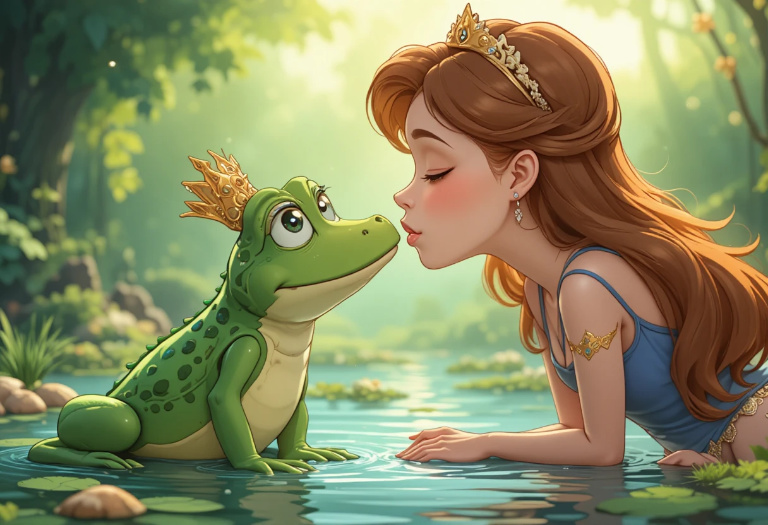
Frogs into princes. Beasts into men. Swans into women who slip out of feathered cloaks at the water’s edge. Transformation is the engine that drives half the fairy tales ever told, and it maps almost perfectly onto the actual magical tradition of shapeshifting and the fetch — the idea that a spirit or soul can take animal form and move through the world separately from the body.
The swan maiden stories — where a man hides a woman’s feathered skin to trap her — appear in Ireland, Iceland, Scandinavia, Siberia, Japan and Korea. That kind of geographic spread doesn’t happen by accident. It happens because the story is carrying something true underneath it. The swan skin is the magical self, the part of a witch or seer that could travel. Hide it, and you’ve taken her power.
In hidden witchcraft in fairy tales, the transformation curse works according to completely real folk magic logic. A curse needs a caster, a trigger, a duration, and a specific condition for breaking. “Until he learns to love” isn’t vague sentimentality — it’s a precisely worded magical condition, the kind that shows up in actual charm work and binding spells. The Beast can’t just want to be free. The specific condition has to be met. That’s how curses work.
The frog prince follows the same structure. The transformation was done by a witch. It can only be reversed by a very specific act — and the original German versions are significantly more violent and correct about this than the sanitized ones you probably know. In some versions, you have to throw the frog against a wall. Forceful reversal. Shock to break the enchantment. That’s folk magic, not whimsy.
The Deals, the Crossroads and the Price of Magic
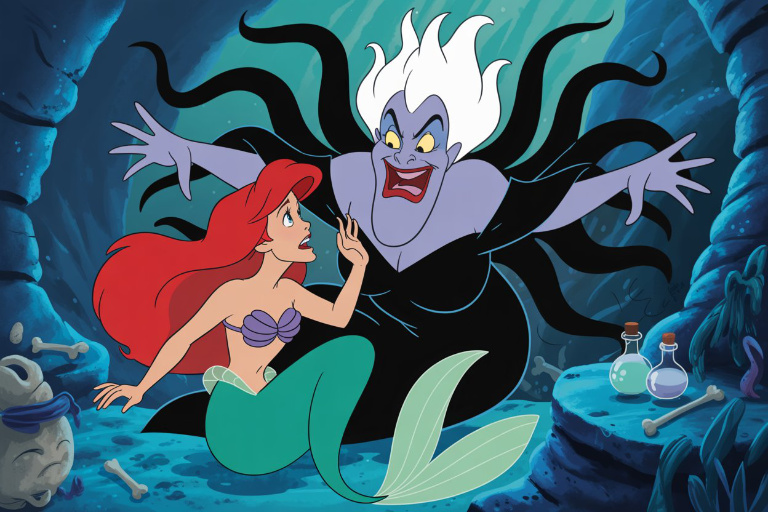
Here’s something nobody puts in the children’s version: in the real, older fairy tales, magic always costs something. Always. You don’t get three wishes for free. You don’t get help from the wise woman in the woods without giving something in return. The bargain is the whole point.
The little mermaid — the real one, not the cartoon — trades her voice for legs and walks on what feels like knives every single step. She pays with pain, with silence, and ultimately with her life. That story is a warning about magical contracts, specifically about what happens when you don’t read the fine print and you trade something essential about yourself for something you want.
Deals at boundaries — thresholds, crossroads, riverbanks — appear everywhere in witchcraft fairy tales because boundaries are where magic lives. Crossroads are where spirits gather, where choices get made, where the worlds of the living and the dead press up against each other. Making a deal at a crossroads is one of the oldest magical acts in the world. It shows up in West African tradition, in European folk magic, in American blues mythology, in fairy tales.
The rule that you can’t say thank you to a fairy, or invite them in, or give them your real name — that’s contract law for the magical world. The same instinct that keeps a careful witch from casually handing over personal items. Once you give a true name or a genuine debt of thanks, you’ve entered into a binding agreement. The tales were teaching people, very seriously, how to navigate a world full of non-human intelligences without accidentally signing your life away.
What the Glass Slipper Was Really Measuring
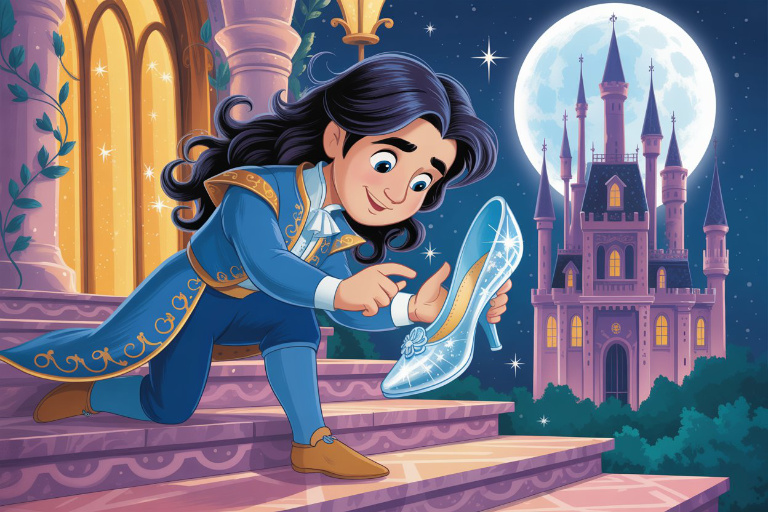
The glass slipper is one of the most analyzed objects in all of storytelling, and most of the analysis misses it. It’s not about being delicate or feminine or fragile. The slipper fits one person and no one else. That’s sympathetic magic — the object has been attuned to a specific individual, the way a witch might attune a charm, a tool, or a working to herself so it can only be used by her.
The prince using it to find Cinderella isn’t romantic in the original sense — it’s a magical tracking method. The object still carries her magical signature. It will only fit her because it’s already hers in a way that goes beyond shoe size.
The midnight rule — the magic breaks at midnight — is a time boundary, and time boundaries in magic are not arbitrary. Midnight is a threshold, the crossroads of the day. Magic that exists between sunset and midnight operates under different rules than daylight magic. The pumpkin goes back to being a pumpkin because the working was never meant to hold past that hour.
Even the fairy godmother herself maps directly onto an older figure — the spirit helper, the familiar, the ancestor who appears to give aid during crisis. She shows up when Cinderella has fulfilled a condition (ritual weeping at the mother’s grave in the older versions), responds to a genuine call, and provides assistance within clearly defined limits. She’s not a cartoon character. She’s a magical practitioner’s assistant who follows very specific rules.
The Breadcrumb Trail That Never Disappeared
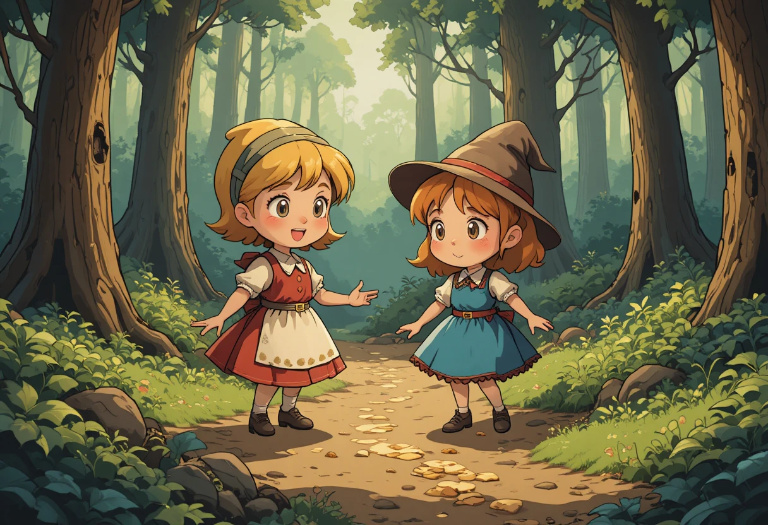
The grimness of the original Brothers Grimm, the darkness in Perrault, the blood in the Scandinavian versions — that stuff wasn’t cruelty for cruelty’s sake. It was accuracy. Magic in folk tradition was serious. It had consequences. It could go wrong. It could be used to harm. The stories held all of that.
When modern retellings soften the edges, they often accidentally remove the actual magical content — the precise conditions, the specific costs, the protocols that made these stories function as folk knowledge. The cute version of Sleeping Beauty doesn’t teach you anything about spindle magic or the power of a death-and-rebirth cycle. The cute version of Rumpelstiltskin is just a weird little man’s obsession with a baby. The real version is about true name magic and what it costs to bargain with something you don’t understand.
These stories traveled because they worked. They kept the knowledge alive through every era that tried to stamp it out, tucked inside entertainment, wrapped in enough “once upon a time” to get past the gatekeepers. Every child who ever fell asleep to one of these stories had the old magic pass through them, quiet as breath, real as anything.
It’s still there. It’s been there the whole time.