
There’s something about dark witches that pulls at people — a mix of fear, fascination, and something older that’s hard to name. They show up in folklore, fairy tales, ancient history, and modern practice, and no matter how many times the story gets told, it never gets old. Whether you picture a hunched figure stirring a cauldron in the woods or a quietly powerful woman who knows things she shouldn’t, the image sticks. Dark witches have been woven into human culture for so long that at this point, they’re basically part of us.
But what does “dark” actually mean when we’re talking about witches? It doesn’t always mean evil — not even close. In a lot of traditions, darkness just means the other side of things. The shadow. The parts of life that aren’t pretty but are completely real — death, grief, endings, transformation. Dark witches work with those forces instead of looking away from them. That takes a certain kind of courage, and honestly, a certain kind of honesty too.
Across cultures and centuries, dark witches have gone by different names and worn different faces. Some were healers who dealt with poison and cure in the same breath. Some were cursed women, cast out of their communities for knowing too much. Some chose the dark path deliberately, trading ordinary life for something rawer and more powerful. The stories don’t all agree on who they are or what they want, but they agree on one thing — you don’t mess with them lightly.
This article is going to take a real look at dark witches — where they come from, what they actually practice, the most famous ones in history and legend, and why, in a world full of distractions, people are still deeply drawn to them. Whether you’re a curious newcomer or someone who’s already walking a darker path, there’s something here worth knowing.
What Makes a Witch “Dark”
Not every witch who works with shadows chose that label. A lot of it comes down to what kind of magic they use and what they’re willing to touch. Dark witchcraft traditionally involves things like banishing, binding, hexing, working with spirits of the dead, and calling on deities or forces that most people would rather avoid. It’s not about being cruel — it’s about being willing to go where the work takes you, even when that place isn’t comfortable.
There’s a long-standing debate in witchcraft communities about the difference between “dark magic” and just… magic. Because nature itself isn’t all flowers and sunshine. Storms destroy. Animals kill. Seasons die. Dark witches simply acknowledge that side of things and work with it rather than pretending it doesn’t exist.
Famous Dark Witches Through History and Legend
Hecate — perhaps the most important name in dark witchcraft. She’s a Greek goddess associated with magic, crossroads, the moon, and the underworld. She carried torches through the dark so the dead could find their way. Witches have called on her for thousands of years.
Baba Yaga — the bone-legged witch of Slavic folklore who lives in a hut on chicken legs deep in the forest. She eats the foolish and helps the brave. She’s terrifying and wise in equal measure, and she doesn’t care which one you need more.
Morgan le Fay — the powerful enchantress of Arthurian legend, half-fairy, half-woman, fully dangerous. Often called a villain, she’s better understood as someone who played by different rules.
The Weird Sisters (Macbeth) — Shakespeare’s three witches didn’t just predict the future. They shaped it. They represent the kind of dark feminine power that society has always found deeply unsettling.
Circe — the Greek sorceress from Homer’s Odyssey who turned Odysseus’s men into pigs without blinking. She lived alone on an island, answered to no one, and had more raw magical power than almost anyone in Greek mythology. She’s had a major comeback lately, and honestly, she deserves it.
Lilith — depending on who you ask, she’s a demon, a dark goddess, or the first woman who simply refused to obey. In Jewish folklore she was cast out of Eden for wanting equality, and dark witches have claimed her as a symbol ever since. She’s one of the most called-upon figures in left-hand path practice today.
The Morrigan — the Irish goddess of war, fate, and death. She appeared on battlefields as a crow, she chose who lived and who died, and she didn’t soften any of it. She’s not a comforting figure — she’s a true one. Modern witches who work with her say she pushes you hard and doesn’t accept excuses.
Medea — another Greek figure who gets unfairly flattened into just “scorned woman.” She was a powerful sorceress long before she met Jason, trained in the darkest arts, capable of things most magic workers wouldn’t dare attempt. When she was betrayed, she used every bit of that power. Whether that makes her a villain depends entirely on your perspective.
The Witch of Endor — a real figure from the Bible, called upon by King Saul to summon the ghost of the prophet Samuel. She actually did it. That’s necromancy straight out of scripture, and it worked. She’s one of the oldest recorded examples of a dark magic practitioner in written history.
Dark Witchcraft in Practice
Modern practitioners who identify with dark witchcraft — sometimes called shadow witches or left-hand path workers — aren’t sitting around plotting chaos. Most of them are doing deeply personal work. Shadow work is a huge part of it: facing the parts of yourself you’ve buried, the anger, the grief, the things you’re ashamed of, and turning that into something useful.
Common practices include working with banishing spells to remove toxic people or situations, hex work for justice and protection, death magic like communicating with ancestors or working with spirits, and calling on darker deities like Hecate, Lilith, the Morrigan, or Kali. None of this is taken lightly. There’s real respect involved — a real understanding that if you’re going to work with powerful forces, you’d better know what you’re doing.
The Art of Shadowcraft
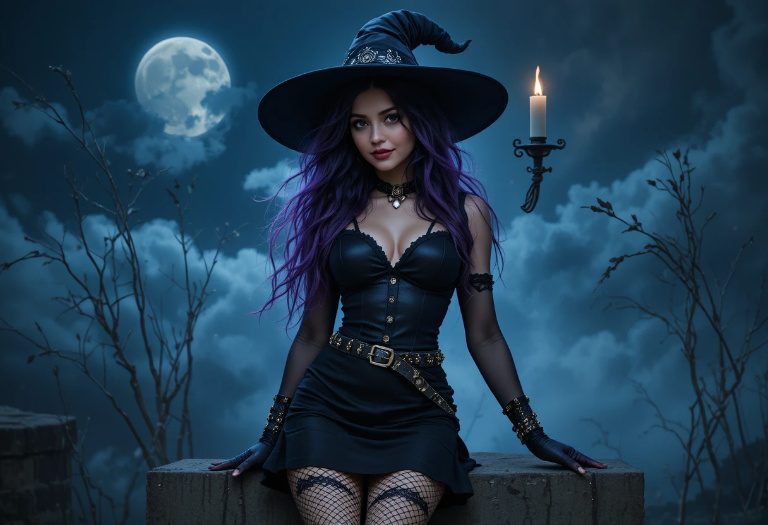
There’s a kind of magic that doesn’t announce itself. It doesn’t come with dramatic gestures or loud incantations. It moves quietly, the way shadows do — shifting at the edges of things, present everywhere but rarely looked at directly. This is shadowcraft, and it’s one of the oldest and most misunderstood branches of dark witchcraft. It’s not about destruction or malice. It’s about learning to work with the parts of reality that most people walk past without noticing — the spaces between, the things half-seen, the hours when the world goes thin and something else starts to show through.
Shadowcraft is subtle by nature. Where some magic is fire — immediate, visible, transformative in an obvious way — shadow magic is water finding its way through stone. It works slowly, deeply, and often in ways you don’t fully understand until later. Practitioners who are drawn to it tend to be the kind of people who notice things. Who sense the mood of a room before anyone speaks. Who dream vividly and wake up knowing something shifted overnight. The craft meets them where they already are and takes them further in.
Concealment
One of the first things a shadow worker learns is how to be unseen — not physically invisible, but energetically quiet. Concealment magic is about pulling your energy inward, drawing a kind of veil around yourself so that you move through spaces without drawing attention or interference. It’s practical magic in the truest sense. Sometimes you need to be overlooked. Sometimes you need to do your work without the world pushing back on it.
This isn’t the same as hiding out of fear. Concealment done with intention is actually a position of power. You’re choosing what to reveal and when. You’re controlling the flow of energy around you rather than letting it scatter in every direction. Traditional practices include visualisation work where you imagine yourself wrapped in shadow or smoke, becoming part of the background rather than standing out from it. Some practitioners use sigils stitched or drawn into clothing, objects carried on the body, or smoke from specific herbs like mugwort or black copal to create that energetic quiet around them.
There’s also a broader kind of concealment — protecting spells, intentions, and sacred workings from outside interference. Shadow witches often work their most important magic in complete darkness for this reason. Not for atmosphere, but because darkness itself acts as a container. It keeps the work in and keeps interruption out.
Intuition and the Shadow Self
You can’t do shadowcraft without developing your intuition, and you can’t develop your intuition without doing shadow work first. These two things are completely tangled together. Shadow work — the psychological and spiritual practice of confronting the buried, rejected, or painful parts of yourself — isn’t just therapeutic. It directly sharpens your magical perception.
Here’s why: intuition is essentially your ability to receive and trust information that doesn’t come through your logical mind. But most people have so much noise running — anxiety, self-doubt, unprocessed emotion, old stories — that genuine intuitive signals get drowned out. Shadow work clears that static. When you’ve sat with your own darkness long enough to stop being afraid of it, you get quieter inside. And in that quiet, you start to hear things.
Shadow witches often work with mirrors, dark water, or obsidian for intuitive development — practices sometimes called scrying. The idea is that by gazing into a dark reflective surface in a relaxed, unfocused state, you create a channel between your conscious mind and the deeper knowing underneath it. What comes through isn’t always clear or comfortable. Sometimes it’s symbolic. Sometimes it’s confronting. But practitioners who stick with it consistently report a sharpening of perception that bleeds into ordinary life — stronger gut feelings, clearer reads on people and situations, a sense of knowing things slightly before you should.
Dream-Walking
If there’s one practice that sits at the absolute heart of shadowcraft, it’s dream-walking. The night has always belonged to dark magic practitioners for a reason — sleep loosens the boundaries between the self and everything else. In dreams, the rules that govern waking life get soft. Time moves differently. The dead show up. Symbols speak plainly. Places exist that have no daytime address.
Dream-walking is the deliberate practice of using that altered state with intention. At its simplest level it involves setting a clear intention before sleep — asking a question, calling on a guide, requesting insight on a situation. More advanced practice involves learning to move through the dream state with some level of awareness and agency, sometimes called lucid dreaming in secular terms, but in magical practice it goes further than that. It’s not just about being aware that you’re dreaming. It’s about navigating the dream world as a real place with real information in it.
Some shadow witches work specifically with ancestors in dream space, using sleep as the easiest point of contact with those who have passed. Others use it for far-seeing — gathering impressions about distant people or situations. There are old folk traditions across dozens of cultures, from Norse seiðr practice to West African dream divination to the Celtic concept of the Otherworld, that describe essentially the same thing: sleep as a doorway, and certain practitioners knowing how to use it deliberately.
Preparation matters here. Many shadowcraft practitioners create a specific pre-sleep ritual — dim lighting, particular scents like vetiver, wormwood, or jasmine, a brief meditation to signal to the mind that this sleep is intentional. Dream journals kept by the bed, written in immediately upon waking, become one of the most valuable tools a shadow witch has over time. Patterns emerge. Symbols repeat. A personal dream language develops that becomes easier to read the more attention you give it.
Liminal Spaces and Liminal Time
Liminal means threshold — the in-between. The moment between sleeping and waking. The space between indoors and outdoors. The hour between night and day. Crossroads. Doorways. The edge of water where it meets land. These are the places where shadowcraft is strongest, because these are the places where the world is thinnest.
Every culture that has ever practiced magic has understood this. Hecate rules crossroads. In Hoodoo tradition, crossroads are where you go to make deals and leave offerings. In countless fairy traditions, dusk and dawn are the hours when the veil between worlds goes gauzy and unreliable. The liminal isn’t a poetic idea — it’s a real energetic phenomenon that practitioners learn to feel and work with.
In practical terms, working in liminal spaces means timing matters. The hours of 3am, dusk, and dawn are all considered especially potent for shadow magic. New moons — the true dark of the moon, not the crescent — are liminal time on a monthly scale. Samhain and Beltane sit at the liminal points of the yearly wheel. Shadow witches pay attention to these windows and do their deepest work inside them.
Physical thresholds carry power too. Doorways, staircases, the banks of rivers, the edge of a forest — these places hold a particular charge that an attuned practitioner can feel as something almost electrical. Workings done at genuine crossroads, even urban ones, carry a different quality than magic done in the middle of a room. The in-between amplifies. It opens things up. It makes the work land harder and travel further.
Learning to sit in liminal space without rushing to fill it or resolve it is actually one of the most important skills in all of shadowcraft. The modern world is allergic to in-between. Everything is supposed to be resolved, categorized, completed. Shadow witches learn to tolerate — and eventually love — the unresolved moment. The held breath. The space between the question and the answer. That’s where the real magic lives.
Blood, Bone, and the Body as a Tool
The body has always been part of dark magic — not in the sensationalized way horror movies love, but in a much more grounded and serious way. Shadowcraft recognizes that the physical self isn’t separate from magical work. It’s one of the most potent tools you have. Your blood carries your lineage. Your bones are the architecture of who you are. Your breath, your heartbeat, your pain — all of it holds energy, and shadow workers learn to use that deliberately.
Blood magic is probably the most misunderstood practice in all of witchcraft. At its core it’s simply the use of your own blood — usually just a small amount from a finger — to seal, charge, or personalize a working. The logic is straightforward: nothing on earth is more uniquely and completely you than your own blood. A spell sealed with blood carries your full energetic signature in a way that no herb or crystal can replicate. It’s used in binding work, in protective sigils, in pacts made with deities or ancestral spirits. It’s taken seriously, done carefully, and never treated as a performance.
Bone work sits in similar territory. Working with animal bones — ethically sourced, from animals that died naturally or as part of the food cycle — is a long-standing practice in multiple traditions. Bones hold the memory of a creature’s life force. They’re used in divination, in protective charms, in altars dedicated to death and ancestor work. A crow’s bone means something different from a deer’s leg bone, and shadow practitioners learn that vocabulary over time. This isn’t morbid for the sake of it. It’s a profound acknowledgment that death is not the end of usefulness, and that everything that lived still carries power.
The body itself becomes an instrument through practices like pain endurance, fasting, sensory deprivation, or prolonged sleeplessness — not as self-punishment but as a way of shifting consciousness deliberately. Many old initiation traditions across cultures used exactly these methods to move a practitioner into altered states where deeper magic becomes accessible. Modern shadow workers adapt these practices carefully, with full awareness of their own limits, using them as doorways rather than damage.
Working with Familiar Spirits
The idea of the witch’s familiar is old — much older than the black cat sleeping on a Halloween card. In genuine folk magic tradition, a familiar isn’t a pet with a cute name. It’s a spirit that has agreed to work alongside a practitioner in an ongoing relationship of exchange and mutual benefit. Familiars can take animal form, appear as shadowy presences, come through in dreams, or make themselves known in ways that are harder to categorize. What defines them is the relationship — consistent, reciprocal, and built over time.
Shadow witches are particularly drawn to familiar work because the spirits that tend to show up in this practice are not soft or decorative. They come from the same territory the witch operates in — liminal, uncanny, not entirely of this world. Common animal forms associated with dark familiar spirits include crows and ravens, black cats, serpents, owls, toads, and wolves. These aren’t chosen for aesthetic reasons. Each of these creatures has genuine associations with death, the night, the underworld, or the in-between in traditions stretching back thousands of years. When one of them starts showing up repeatedly — in dreams, in physical life, in visions — a shadow witch pays attention.
Building a relationship with a familiar spirit takes time and genuine offering. This isn’t a casual arrangement. You don’t summon a familiar the way you might light a candle for a quick intention. You make yourself known over time. You leave offerings consistently — food, drink, objects with personal energy, your own breath and attention. You listen more than you speak. And gradually, if the spirit is willing, a working bond forms that deepens your practice in ways that are difficult to explain until you’ve experienced it. The familiar brings information, amplifies workings, provides protection in dark spaces, and sometimes — if you’re paying attention — saves you from mistakes you didn’t know you were about to make.
The Language of Symbols and Dark Sigils
Every tradition of magic has a symbolic language, and shadowcraft has one of the richest. Symbols aren’t decoration in this context — they’re compressed energy. A sigil drawn with intention and charged properly is essentially a spell locked into a shape, capable of working quietly and continuously without ongoing attention from the practitioner. Shadow witches work extensively with sigils because they fit perfectly with the concealed, subtle nature of the craft. They can be hidden in plain sight. Drawn under a doormat, inside a piece of clothing, carved into a candle, scratched into the bottom of an object. Nobody needs to know it’s there. That’s part of the power.
Creating a personal sigil involves taking an intention and abstracting it down to a shape that bypasses the logical mind entirely. The most common method starts with writing out a desire as a clear statement, removing repeated letters, and then combining the remaining letters into a single abstract symbol. But shadow workers often go further — using automatic drawing in low light or trance states to let the symbol come through rather than constructing it consciously. These intuitively received sigils tend to carry a rawer charge, because they come from a deeper place than deliberate design.
Dark sigils specifically — those used for banishing, binding, hexing, or shadow work — often incorporate symbols associated with the underworld, death, or liminal transition. The crossroads symbol appears frequently. So do serpents, spirals, inverted shapes, and symbols drawn from older systems like the Elder Futhark runes — specifically runes like Hagalaz (disruption and transformation), Naudhiz (need and constraint), and Isa (stillness and paralysis) which shadow workers have long associated with darker magical work. Learning to read and work with these symbols fluently is a lifelong practice, and most serious shadow witches develop a personal symbolic vocabulary over years that becomes as natural and readable to them as written language.
Moonless Rituals
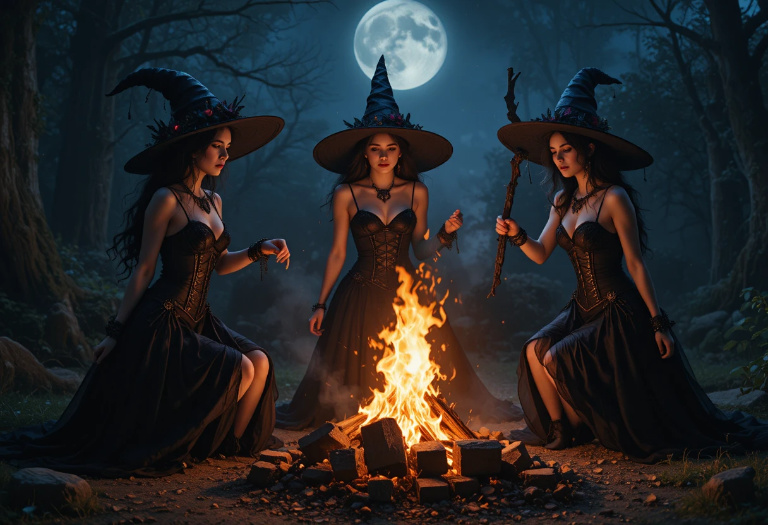
Most people who know anything about witchcraft know about the full moon. It’s the obvious one — bright, dramatic, impossible to ignore. But ask a serious dark witch which lunar phase they do their deepest work in, and most of them will say the same thing without hesitation. The dark moon. The three nights when the moon is completely absent from the sky, when the night is as dark as it gets, when the veil between ordinary reality and everything else goes thin in a way that has no daytime equivalent. This is when shadowcraft comes fully alive.
The dark moon is not the same as the new moon, though the terms get used interchangeably in casual witchcraft circles. The new moon is the first sliver of returning light — a time for beginnings, for planting intentions, for looking forward. The dark moon is what comes just before that, the true absence of the moon, the void phase. In astrological terms it’s the final days of the lunar cycle, when the moon is invisible. In magical terms it’s something older and harder to categorize — a hole in the usual order of things, a gap where something else can come through.
Dark witches have always known this. The rituals that get done in this window are different in character from anything done at other times. Heavier. More direct. More honest. The dark moon doesn’t support illusion or performance. It strips things down to what’s actually real, which is exactly what the deepest magical work requires.
What the Dark Moon Actually Does
Every lunar phase carries a specific energetic quality, and understanding that quality is what separates someone going through ritual motions from someone doing genuine magical work. The full moon amplifies — it’s expansive, emotionally charged, outward-facing. The waning moon releases — it’s the natural time for banishing, for letting go, for removing things. The dark moon does something different from both of these. It doesn’t amplify or release. It dissolves.
In that dissolution there’s a particular kind of freedom. The normal psychic noise of life — the projections, the social performances, the stories we tell about ourselves and each other — all of it gets quieter in the dark moon window. What remains is closer to the truth of things. Practitioners who sit in meditation during the dark moon consistently report a quality of clarity that’s different from what they experience at other lunar phases — less emotional charge, more raw perception. Things seen plainly, without the usual filters.
This makes it the ideal time for shadow work, for honest self-examination, for confronting things that have been avoided. It’s also the strongest window for banishing — not just energetically clearing a space or releasing an emotional pattern, but fully and permanently removing something from your life. Dark moon banishings are considered by most practitioners to be the most final and complete of any done in the lunar cycle. What you send away in genuine dark moon work tends to stay gone.
It’s also the primary window for spirit contact, for ancestor work, for calling on underworld deities. The thinness of the veil during this phase makes communication cleaner and more direct. Hecate is most strongly present at the dark moon. So is the Morrigan. So are the dead. If you’re going to do serious work with any of these forces, this is when you do it.
The Dark Moon Ritual Structure
There’s no single correct way to perform a dark moon ritual — tradition varies widely, and experienced practitioners develop their own approaches over time. But there are common elements that appear across most serious dark moon practice, and they reflect a shared understanding of what this phase requires.
Darkness is not optional. Dark moon rituals are performed with minimal light — ideally none at all, or only the light of black or deep purple candles. This isn’t mood-setting. Working in genuine darkness shifts your sensory experience in ways that directly support the work. Your other senses sharpen. The internal world becomes more present than the external one. The visual noise of the everyday environment disappears, and what remains is you, the work, and whatever you’ve called in.
Silence matters. Many dark moon practitioners begin with a period of complete silence — no music, no spoken words, just presence in the darkness. This allows the transition from ordinary consciousness to magical consciousness to happen fully rather than being rushed. The mind needs time to settle into the different quality of awareness that deep work requires.
The opening. Calling in the directions, casting a circle, invoking the presiding deity or spirit — whatever form this takes in a given tradition, it’s done deliberately and with full attention. In dark moon work the opening tends to feel different than at other phases. The response, when you’re attuned enough to feel it, is quicker. More immediate. Something is already close.
The working itself. This is where dark moon rituals diverge most widely depending on purpose. Banishing work might involve writing what needs to be removed on paper and burning it, or creating a cord and cutting it, or working a specific ritual directed at a person, situation, or pattern. Necromantic work might involve a darkened mirror, a bowl of black water, candlelight and calling. Shadow work might involve extended meditation, automatic writing, or trance work with a specific intention around self-confrontation. Whatever the working is, the dark moon amplifies its depth and finality in a way that other phases simply don’t match.
The closing. This matters more in dark moon work than almost any other time. What you open during this phase is genuinely open — the thinness of the veil that makes the work powerful also means that things can come through that you didn’t specifically invite. Closing deliberately, thanking and dismissing whatever you called in, grounding yourself fully before returning to ordinary consciousness — these aren’t formalities. They’re the difference between a complete working and one that leaves doors open that were meant to be shut.
Eclipse Magic
If the dark moon is the most powerful regular window in the shadow witch’s calendar, eclipses are the irregular ones — rare, dramatically intense, and carrying a quality of energy that most practitioners describe as genuinely different from anything else they work with. Solar eclipses in particular, when the moon passes between the earth and the sun and daylight simply stops, have been considered profoundly significant in virtually every magical and spiritual tradition in human history. There’s a reason for that.
The energy of a solar eclipse is disruptive in a very specific way. It interrupts the fundamental rhythm of day and night — the most basic, reliable cycle of earthly existence — and in that interruption creates a window of genuine temporal and energetic strangeness. Animals behave oddly. People feel off. The usual rules of how things flow seem to pause. For dark witches, that pause is a working space unlike any other.
Eclipse magic is traditionally used for the most significant and permanent workings — things you want to change at a foundational level rather than just a surface one. Major bindings. Permanent endings. Transformations that need to go all the way down to the root. The energy available during an eclipse doesn’t support half-measures. It’s all or nothing, which means you’d better be completely clear about what you’re asking for before you open your mouth.
Solar eclipse workings are also considered particularly powerful for shadow work that involves deep identity — who you fundamentally are, what you’ve been carrying that isn’t yours, what transformation you’re ready to commit to completely. The solar energy that gets interrupted during an eclipse is associated with the conscious self, the ego, the identity structure we present to the world. When it goes dark, even briefly, something underneath gets exposed that isn’t usually visible.
Lunar eclipses carry a different but equally intense quality. Where solar eclipses interrupt identity and consciousness, lunar eclipses disturb the emotional and intuitive body — the deeper self, the dream world, the ancestral and psychic layers. Lunar eclipse work is exceptionally powerful for emotional release, for breaking ancestral patterns, for finally letting go of something that has survived every previous attempt to release it. The moon going red and dark simultaneously creates a window of compressed liminal time that some practitioners consider the single most powerful working opportunity available to a dark witch.
Shadowed Nights and Seasonal Darkness
Beyond the lunar cycle, certain nights of the year carry a darkness that shadow witches have always recognized and worked with. These aren’t arbitrary dates on a calendar — they correspond to genuine shifts in the earth’s relationship with light and darkness, and they’ve been marked by magical practitioners across cultures for thousands of years.
Samhain — October 31st in the Northern Hemisphere — is the most universally recognized of these. The veil between the living and the dead is considered thinnest, ancestors are invited back, and the darkness of the approaching winter is fully acknowledged and welcomed. Dark moon rituals done on Samhain, particularly when the two coincide, are considered among the most potent workings of the entire year. When a solar or lunar eclipse also falls near Samhain — which happens rarely — practitioners describe an intensity that’s almost overwhelming.
The winter solstice — the longest night — is the other great dark working window. It’s the point at which darkness has reached its maximum and light begins its slow return. Working magic on the solstice night means working at the peak of the year’s darkness, which carries a weight and a completeness that no other seasonal working matches. It’s a night for the deepest shadow work, for workings related to death and rebirth, for calling in transformations that you want to take root in the returning light.
Nights of storm carry their own working energy — unpredictable, electrically charged, wild in a way that calm nights never are. Many dark witches do some of their most instinctive and powerful work during thunderstorms, letting the natural energy of the storm amplify and carry the working outward. There’s something about the combination of darkness, rain, and lightning that strips away hesitation and connects a practitioner directly to the rawer forces they work with.
Fog deserves its own mention. A dense fog night is a genuinely liminal event — the familiar world becomes unrecognizable, distances collapse, the usual visual landmarks disappear. Shadow workers who are attuned to liminal space feel this immediately. Fog nights are considered naturally potent for spirit work, for divination, for any working that benefits from the blurring of ordinary boundaries. The world in heavy fog feels like it’s halfway somewhere else already.
Why Darkness Amplifies
There’s a question worth addressing directly: why does darkness actually matter for this kind of work? Is it purely symbolic, or is something else happening?
The honest answer is probably both. On a purely neurological level, working in darkness shifts brain activity in measurable ways — sensory deprivation, even mild and voluntary, alters perception, increases internal awareness, and can induce altered states of consciousness that support the kind of deep intuitive and trance work that shadow magic requires. The brain deprived of visual input turns inward. The imagination and the intuitive faculties become more active. Things that are usually drowned out by sensory stimulation become audible.
But practitioners who work consistently in this space will tell you that there’s something beyond the neurological explanation. The darkness of the dark moon, of an eclipse, of Samhain night — it doesn’t just feel different, it is different. The spirit world is more present. Communication is cleaner. The work lands harder and reaches further. Whether that’s a matter of genuine metaphysical reality or of the practitioner’s own psychology creating conditions for deeper work is, ultimately, a question each person answers for themselves.
What dark witches have always known — what the whole tradition of moonless ritual is built on — is that darkness is not the absence of something. It’s a presence in its own right. It has weight and texture and intelligence. It responds to those who approach it with respect and genuine intent. And in the moments when the moon disappears and the night goes fully dark, it opens in ways that daylight never could.
That’s when the real work happens. That’s when it always has.
Dark Witches and the Dark Spirits They Work With
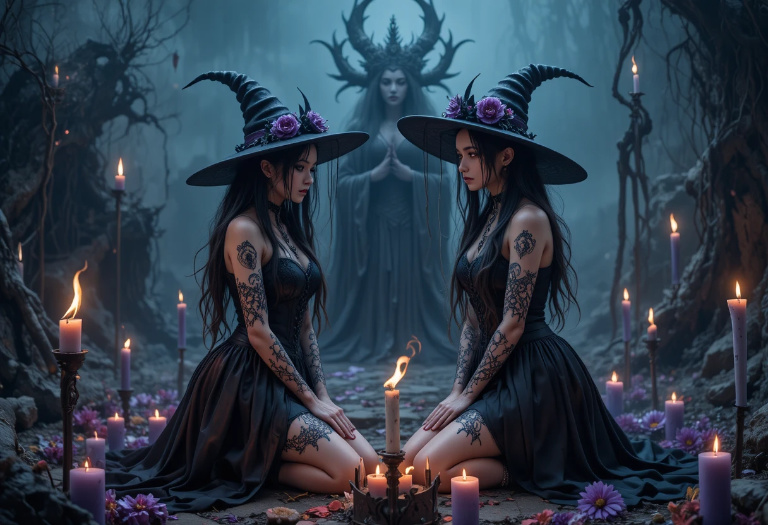
No serious discussion of dark witchcraft is complete without talking about the spirits. Not the soft, benevolent guides that populate the more comfortable corners of modern spirituality — though those have their place — but the older, stranger, more demanding presences that dark witches have worked with since the beginning. These are spirits that don’t comfort. They instruct. They test. They show you things you’d rather not see, and they don’t apologize for it. And for practitioners willing to meet them honestly, the relationship can become one of the most transformative forces in their entire practice.
Working with dark spirits isn’t about rebellion or shock value. It’s about completeness. The spiritual world, like the natural world, contains the full spectrum — not just light and warmth but cold, darkness, death, and the vast uncategorized territory in between. Dark witches work with the whole of it. They understand that a spirituality which only acknowledges comfortable forces is, at best, incomplete and, at worst, dangerously naive. The spirits in this territory have knowledge that simply isn’t available anywhere else. And they’ve been waiting, in some cases for a very long time, for someone willing to show up and ask.
Hecate — Queen of the Witches
If there’s one spirit who presides over all of dark witchcraft, it’s Hecate. She predates the classical Greek pantheon — her origins are older and murkier, possibly Anatolian, possibly even older than that — and she has survived every attempt by successive cultures to diminish or demonize her. She’s still here. She’s still being called on. And practitioners who work with her consistently describe her as one of the most present and demanding forces in the entire spirit world.
Hecate rules crossroads, darkness, the moon in its dark phase, magic, necromancy, herbalism, and the liminal spaces between worlds. She carries torches — not to frighten but to illuminate what others refuse to look at. She is accompanied by dogs, by the restless dead, by the Empusae and Lamiae of Greek tradition. She holds keys, because she opens doors between worlds that have no other lock.
Calling on Hecate is not a casual act. She responds to genuine practitioners and tends to ignore the merely curious. Her offerings are traditionally left at crossroads at night — garlic, eggs, fish, honey, black candles, red wine. You leave them and walk away without looking back. That last part matters. Looking back is a sign you don’t trust her to receive what you’ve given, and Hecate notices things like that.
Her lessons are almost always about facing truth. She will not let a practitioner she’s working with maintain comfortable illusions about themselves or their situation. That makes her difficult. It also makes her invaluable.
Lilith — The First Darkness
Lilith is one of the most contested and reclaimed figures in all of dark witchcraft. Her origins are genuinely ancient — there are possible references in Sumerian texts, firmer ones in early Jewish folklore, and a fully developed mythology by the medieval period in which she is Adam’s first wife, created equal, who refused to be subordinate and was cast out of Eden for it. Depending on the tradition, she then became a demon, a night spirit, a killer of infants, a seducer of men in their sleep — all the things a powerful woman who refused to comply got turned into throughout history.
Dark witches, particularly those working in feminist or left-hand path traditions, have reclaimed Lilith as something more complicated and more honest than the demonized version. She represents sovereignty — the absolute refusal to diminish yourself to make others comfortable. She represents the power that survives exile. She represents sexuality and darkness and wildness that refuses to be domesticated. For a lot of practitioners, especially women who have been told to make themselves smaller, working with Lilith is profoundly liberating in a way that’s hard to explain to anyone who hasn’t felt it.
She’s not gentle about it, though. Lilith’s energy tends to surface everything that a practitioner has been suppressing — the anger, the desire, the parts of the self that were deemed unacceptable. That process can be destabilizing before it becomes freeing. Practitioners who rush into working with her without being prepared for genuine upheaval often find themselves overwhelmed. She’s not a spirit you call on for a quick confidence boost. She’s a force that will fundamentally reorganize your relationship with your own power if you let her.
The Morrigan — She Who Makes Kings and Unmakes Them
The Morrigan is an Irish goddess — though “goddess” feels almost too tidy a word for what she is. She’s a shape-shifter, a prophetess, a washer at the ford. She appears before battles as a crow or raven, washing the armor of those who are about to die. She doesn’t cause the death — she simply already knows. Her presence is a fact, not a threat, which somehow makes it more unsettling.
She is typically understood as a triple goddess — most often named as Badb, Macha, and either Nemain or Anand depending on the source — representing the full cycle of sovereignty, battle, and death. She’s fiercely associated with the land of Ireland itself, with fate, with the truth of things whether you want to hear it or not. She tested the hero Cú Chulainn repeatedly, sometimes helping him, sometimes hindering him, always watching how he responded. She offered him alliance and he rejected her, and she made his life considerably harder for it. That story is essentially a manual for how not to approach her.
Working with the Morrigan is serious business. She calls practitioners she wants — they don’t typically choose her, she chooses them — and the calling often comes through repeated crow encounters, through dreams that feel more like messages than stories, through a sense of being watched from somewhere just out of sight. Her lessons involve courage, specifically the courage to see clearly and act decisively even when the outcome is uncertain. She has no patience for hesitation born of self-pity. She respects those who get up and keep moving even when things are hard, and she’s been known to make things considerably harder to test whether you will.
Demons and the Goetic Spirits
The grimoire tradition — the body of magical textbooks that emerged primarily in medieval and early modern Europe — contains detailed systems for working with demonic or infernal spirits. The most famous of these texts is the Ars Goetia, part of the Lesser Key of Solomon, which lists 72 spirits with their sigils, their ranks, their appearances, and their areas of influence. These range from spirits of knowledge and hidden treasure to those associated with war, destruction, love, and the darkest forms of magic.
Whether these spirits are literal entities, psychological archetypes, forces of nature given symbolic form, or something else entirely is a debate that serious practitioners have been having for centuries and aren’t close to resolving. What most practitioners who work with them do agree on is that they are real in the sense that matters — they respond, they provide results, they have distinct personalities, and they are not to be approached carelessly.
Some of the most commonly worked-with Goetic spirits in dark witchcraft include Bune, a duchess of the dead associated with necromancy and wealth; Andromalius, who returns stolen things and punishes thieves; Glasya-Labolas, associated with sudden violence but also with the understanding of all arts and sciences; and Dantalion, who can read and change the thoughts of others and is one of the most called-upon spirits in workings involving influence and persuasion.
Traditional Goetic work involves elaborate ritual structures — protective circles, specific invocations, sigils drawn precisely, offerings prepared carefully. Modern practitioners vary widely in how strictly they follow these protocols, but the underlying principle — that these spirits require respect, clear communication, and genuine reciprocity — holds across most serious approaches to the work.
The Restless Dead
Not all dark spirits are ancient deities or named demonic entities. Some of the most significant spirit work in dark witchcraft involves the dead — specifically those who haven’t fully moved on. Every culture in human history has had a concept of the restless dead: spirits who remain in the world of the living because of unfinished business, violent or sudden death, improper burial, or simply a refusal to leave. Dark witches, particularly those with necromantic inclinations, work with these spirits deliberately and carefully.
This isn’t about summoning random ghosts for entertainment. It’s purposeful. The restless dead have a specific quality of knowledge — they exist in that liminal space between worlds and can provide information, protection, and magical assistance that’s different in character from what living practitioners or fully transitioned ancestral spirits can offer. They’re rawer. More immediate. Sometimes more desperate. Working with them requires clear boundaries, consistent offerings, and an honest understanding of what you’re getting into.
Graveyard work is a significant part of this practice in several traditions — particularly in Hoodoo, Palo Mayombe, and various European folk magic systems. Dirt from specific graves carries the energy of whoever lies there. A soldier’s grave for protection and strength. A judge’s grave for justice workings. A crossroads grave — someone buried at or near a crossroads — for particularly potent general magic. Offerings are left, permission is asked, and the relationship is treated with the same reciprocal respect that any serious spirit work requires.
Ancestor Spirits
Distinct from the restless dead, ancestor spirits are those who have fully passed on and exist in a settled relationship with the living members of their line. Every dark witch — every witch of any tradition, really — has access to ancestral power, and shadow workers consider it foundational. Your ancestors have a vested interest in your survival and success that no other spirit can claim. They are, quite literally, part of what you’re made of.
Building an ancestor altar is usually one of the first practical steps in any serious dark magic practice. A surface dedicated to photographs, objects, and offerings for those who have passed — candles, water, food and drink they enjoyed in life, flowers. Talking to them. Reporting in, asking for guidance, expressing gratitude. It sounds simple because it is simple, in the way that the most powerful things often are.
The ancestors can provide protection, guidance, healing of generational wounds, and a sense of being held by something older and larger than the individual self. They also, in shadow work, represent a line of inquiry into patterns — the family wounds, the repeated stories, the things passed down through blood that no one talked about. Working with ancestors in dark witchcraft often means being willing to look at the full history of your line, including the parts that are painful or shameful, and doing the work to heal or transform what you find there.
Working Safely in Dark Spirit Territory
None of this work is without risk, and any practitioner who tells you otherwise is either inexperienced or not being straight with you. Dark spirits operate in territory where the normal rules of polite spiritual interaction don’t fully apply. That doesn’t mean it’s inherently dangerous — it means it requires preparation, clarity, and genuine respect.
A few principles hold across virtually all serious dark spirit work. Know why you’re there — vague curiosity is not a sufficient reason to open contact with powerful entities, and they know the difference. Maintain clear boundaries from the beginning and hold them — a spirit that pushes against your boundaries early is showing you something important about the relationship. Never work from a place of desperation — dark spirits can sense emotional vulnerability and some will exploit it. And always close what you open — ritually and deliberately ending a working, dismissing what you’ve called, and grounding yourself fully before returning to ordinary life.
The spirits in this territory are real. They have their own agendas, their own preferences, their own sense of what a fair exchange looks like. Approaching them with arrogance is dangerous. Approaching them with fear is counterproductive. The stance that works — the one that dark witches have been cultivating for centuries — is something closer to clear-eyed respect. You know what you are. You know what they are. You meet in the middle, honestly, and you see what becomes possible.
That’s the work. It’s not easy. It was never supposed to be.
The Shadow Coven
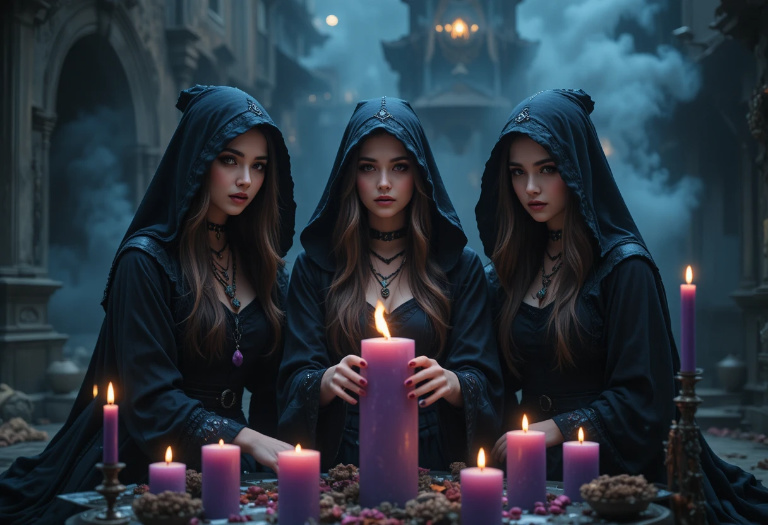
There’s a particular kind of power that happens when dark witches gather together. It’s different from solitary practice in the way that a river is different from rain — the same essential substance, but moving with a force and a direction that the individual drops never quite achieve alone. Covens have existed as long as witchcraft has existed, which is to say as long as humans have existed, and the shadow coven — the deliberately hidden, carefully composed circle of dark practitioners — represents something specific within that tradition. Something older and more demanding than a casual gathering of like-minded people. Something that requires, and creates, a particular kind of person.
Most people’s image of a witches’ coven comes from outside the tradition — from sensationalized accounts, from witch trial testimonies extracted under torture, from horror films and folklore designed to frighten rather than inform. The reality is at once more mundane and more genuinely mysterious than any of those sources suggest. A shadow coven isn’t a group of people in matching robes performing theatrical rituals for effect. It’s a working unit. A closed circle of practitioners who have chosen each other deliberately, who share a magical current, who hold each other’s secrets absolutely, and who together can do things that none of them could do alone.
How Shadow Covens Form
Shadow covens don’t advertise. That’s the first and most fundamental thing about them. They don’t have social media pages or public meeting schedules or open invitations. They form through the slow accumulation of trust between practitioners who have already found each other through practice, through shared tradition, through the kind of gradual recognition that happens between people who are operating in similar magical territory.
The formation of a genuine shadow coven typically begins with two or three practitioners who have worked together long enough to trust each other at a level that goes beyond ordinary friendship. Magical trust is a specific thing — it means knowing that the people in your circle won’t misuse what they know about you, won’t break the seal on workings you’ve done together, won’t bring unstable energy into shared ritual space, and won’t flinch when the work gets dark. Finding even one person you trust at that level is genuinely rare. Finding three or four is remarkable. Finding the seven to thirteen that traditional coven structure calls for takes years, sometimes decades.
New members are not recruited — they’re recognized. Someone in the existing circle encounters a practitioner whose energy and approach align with the coven’s current, whose ethics and commitment are demonstrable, whose magical development has reached a point where they have something real to contribute. A period of observation happens — often quite long — before any approach is made. And when an approach is made, it’s careful and indirect. Shadow covens don’t extend invitations that can be gossiped about. Everything moves slowly, quietly, and by feel.
Traditional Structure and Roles
The classic coven number of thirteen — twelve members plus a leader — appears across European witchcraft tradition with enough consistency to suggest it reflects something real about how these groups have historically organized themselves. Whether the number has genuine magical significance or simply represents a practical working group size is debated, but most experienced coven practitioners report that there is something qualitatively different about a circle of that size compared to smaller or larger gatherings.
Within a shadow coven, roles tend to emerge organically rather than being assigned administratively. The High Priestess — or in some traditions simply the elder or the first — is not necessarily the most powerful practitioner in the circle, but the most experienced, the most stable, and the most trusted to hold the energetic container for the group as a whole. This role carries significant responsibility. The person holding it is accountable for the safety and integrity of every working the coven does together.
Beyond that central role, covens typically develop a natural division of function based on individual strengths and affinities. Someone with strong necromantic ability takes a leading role in death work and ancestor rituals. Someone particularly skilled in herbalism and plant spirit work handles the botanical elements of workings. Someone with the clearest divinatory ability reads for the group at key decision points. This specialization isn’t rigid, and all members participate fully in all workings, but it reflects the genuine differences in magical gift and interest that any group of serious practitioners will contain.
Some shadow covens maintain a designated guardian — a member whose primary function is protective, whose energy and attention during workings is focused outward rather than inward, monitoring the ritual space for unwanted intrusion, energetic or otherwise. This role is considered unglamorous by some and absolutely essential by others. In covens doing serious dark work — deep necromancy, heavy bindings, work that involves calling on powerful and not entirely predictable spirits — the guardian is arguably the most important person in the circle.
The Oath of Silence
Every shadow coven worth the name has an oath of silence, and it is absolute. What happens in the circle stays in the circle — not as a social convention but as a magical and ethical commitment that members take with full understanding of what it means. This oath covers not just the specific workings performed but the identities of members, the location and timing of gatherings, the nature of the group’s magical current, and anything shared in circle about individual members’ lives and vulnerabilities.
The reason for this isn’t paranoia, though historical context gives it a deeply serious edge — women gathering secretly at night to perform rituals has been a death sentence in various times and places, and the cultural memory of that is embedded in the tradition even where the immediate physical danger no longer exists. The deeper reason is magical. A circle whose workings are discussed freely outside it loses integrity. The energy disperses. The container that makes collective magic work is made of, among other things, secrecy. Not shame — secrecy. There’s a significant difference. Shame implies something wrong is being hidden. Secrecy in this context means that certain things are sacred, and sacred things are not spread around casually.
Violation of the oath of silence is the most serious breach possible within coven structure. It’s grounds for immediate and permanent removal, and in many traditions, for a formal severance ritual that removes the person’s energetic connection to the group’s work. This isn’t punishment exactly — it’s a necessary protection for everyone remaining in the circle, and for the integrity of any work that was done while the person was a member.
Nocturnal Rites and Gathering Places
Shadow covens gather at night. This is not negotiable and not primarily about atmosphere — nighttime gathering is a practical magical decision as much as a traditional one. The reasons discussed in the moonless rituals section apply here collectively: darkness thins the veil, quiets the psychic noise of ordinary life, and creates conditions where the work lands differently. A circle of practitioners working together in genuine darkness achieves a depth of collective altered state that daytime working simply doesn’t produce.
Gathering places are chosen with care. Historically, witches gathered in wild places — forests, hilltops, crossroads, the edges of water. These weren’t random locations. Wild places sit outside the energetic imprint of ordinary human life, which is dominated by mundane concerns and the psychic residue of daily routine. A forest at midnight carries a different quality than a suburban living room, and dark practitioners who have worked in both know the difference viscerally.
Modern shadow covens adapt this where geography and circumstance require it. Urban practitioners work with what they have — rooftops, parks at the edge of cities, basements cleared and consecrated for purpose, private land where the group can work without interruption. The physical location matters less than the energetic preparation of the space — the thorough cleansing before use, the casting of the circle that transforms whatever space it encompasses into something temporarily separate from ordinary reality, the careful closing and restoration afterward.
The timing of gatherings follows the magical calendar with precision. Dark moon nights are the primary regular working dates for most shadow covens. The eight seasonal festivals — particularly Samhain, the winter solstice, and Beltane — are major collective working events. Eclipses, when they fall at workable hours, draw the full circle together regardless of what else might be happening in members’ lives. And occasionally, when something urgent arises — a member under serious attack, a working of significant collective importance, a spirit contact that requires the full circle’s energy — an emergency gathering is called outside the regular schedule.
Power Dynamics in Hidden Circles
It would be dishonest to write about shadow covens without addressing the thing that goes wrong in them, because it does go wrong, and in a specific and predictable way. Any closed group with a hierarchical structure, a culture of secrecy, and access to practices that genuinely affect people’s psychology and spiritual experience is vulnerable to the same failure mode: the abuse of power by those at the center of the circle.
Charismatic leaders who use magical authority to maintain control over members, who use the oath of silence to cover up their own misconduct, who exploit the vulnerability that genuine shadow work creates — these figures exist in the tradition and have caused real harm to real people. This isn’t a minor footnote. It’s something anyone approaching coven practice needs to understand clearly before they commit to any closed circle.
The markers of a healthy shadow coven are not complicated, though they require honesty to apply. Power in a genuine working circle should be distributed, not concentrated. The elder or high priestess holds responsibility, not authority over members’ personal lives. Questioning and disagreement should be possible without social or magical consequences. No member should ever feel that leaving would put them at risk — spiritually, energetically, or practically. Information about workings should flow freely within the circle. Isolation of individual members from outside relationships is a red flag, not a sign of deepened magical commitment.
The tradition of the shadow coven is genuinely powerful and genuinely valuable. The closed circle of trusted practitioners working in darkness toward shared magical goals is one of the oldest and most effective working structures in the entire history of witchcraft. The answer to the ways it can go wrong isn’t to avoid coven practice — it’s to go in with open eyes, to trust what you observe over what you’re told, and to remember that no level of magical authority gives another person the right to diminish your autonomy or override your judgment about your own life.
The Bond Between Members
Beyond structure and practice and potential pitfalls, there’s something about genuine shadow coven membership that’s difficult to fully explain to anyone who hasn’t experienced it. The people you do this work with — who have seen you in full darkness, literally and otherwise, who have been in the circle when something real came through, who know what you’ve faced in your own shadow work because they’ve faced similar things in theirs — these relationships have a quality that ordinary friendship rarely achieves.
It’s not always comfortable. Close proximity in magical work means you see each other clearly, and clarity isn’t always flattering. Conflicts happen. Workings bring up difficult material. The oath of silence that protects the circle also means you can’t always process what you’re going through with people outside it, which places real weight on the relationships within it. Coven membership at the shadow level is, genuinely, one of the most demanding interpersonal commitments a practitioner can make.
What it offers in return is a kind of belonging that goes deeper than most social bonds manage. Shared experience of genuine mystery creates a connection that’s hard to explain and harder to replicate. When you have stood in a circle in absolute darkness, when you have called on forces older than civilization alongside people you trust completely, when you have collectively reached into the shadow and come back changed — something forms between those people that doesn’t have a better name than sisterhood, even when the circle includes people of other genders, even when the word feels insufficient for what it’s actually describing.
The shadow coven endures because that bond is real. It always has been. And in a world that increasingly offers connection without depth and community without commitment, it turns out there are still people willing to do the harder thing — to gather in the dark, to take the oath, to do the work together, and to keep the silence.
That’s what makes it sacred. And that’s what makes it last.
Baneful Botanicals & Poison Pathways
There’s a garden that doesn’t get talked about in polite company. It grows in the shade, along forgotten fence lines, at the edges of graveyards and old forest paths. The plants there are beautiful in a particular way — dramatic, strange-looking, often with an almost unnatural lushness to them. They’ve been used by witches, healers, poisoners, and shamans for thousands of years. They can heal or kill depending entirely on the hand that uses them. And for shadow workers and dark witchcraft practitioners, they represent one of the most serious and storied branches of the craft.
These are the baneful plants — the poisonous, the psychoactive, the ones that folklore has tangled up with witchcraft since before written history. Working with them isn’t reckless or edgy. The witches who truly know these plants treat them with deep respect, bordering on reverence. Because these plants don’t bluff. They don’t forgive carelessness. And in return for genuine respect and knowledge, they offer access to states of consciousness and magical depth that gentler plants simply can’t provide.
This isn’t a how-to guide for ingesting anything. It’s a honest look at the folklore, the history, and the magical tradition surrounding some of the most powerful plants the earth has ever grown.
Belladonna — The Beautiful Lady
The name itself is a warning dressed up as a compliment. Belladonna means “beautiful woman” in Italian, named for the Renaissance practice of women dropping its juice into their eyes to dilate their pupils — considered attractive at the time, and genuinely dangerous always. The plant is Atropa belladonna, and even the genus name is a message: Atropos was the Fate who cut the thread of life. Nobody names a plant after the death-bringer by accident.
Belladonna belongs to the nightshade family and every part of it is toxic — berries, leaves, roots, all of it. The active compounds are atropine and scopolamine, which in sufficient doses cause hallucinations, delirium, racing heart, and death. In smaller, carefully controlled amounts, they’ve been used medicinally for centuries as painkillers, anaesthetics, and to treat everything from asthma to motion sickness. The line between medicine and poison here is genuinely thin.
In witchcraft tradition, belladonna is one of the classic ingredients of the legendary flying ointment — a salve that witches supposedly rubbed on their bodies before sabbaths to achieve the sensation of flight. Modern pharmacology actually supports part of this: scopolamine absorbed through the skin can produce vivid hallucinations of flying, floating, and travelling to other places. Whether medieval witches were genuinely using belladonna-based ointments for ritual purposes or whether the confessions were extracted under torture is still debated, but the plant’s relationship with witchcraft is ancient and well-documented on both sides of that argument.
Magically, belladonna is associated with prophecy, astral travel, spirit contact, and hexwork. It’s a plant of Saturn and the underworld. Shadow witches who work with it do so carefully and usually without ingestion — using it as a presence on altars, in smoke, in oil preparations where small amounts can be used safely with proper knowledge. The plant itself carries an energy that’s unmistakable — heavy, ancient, watchful. Practitioners who grow it often report that it seems aware of them.
Mandrake — The Root That Screams
If belladonna is the most glamorous of the baneful plants, mandrake is the most mythologized. Mandragora officinarum has accumulated more folklore per inch of root than almost any other plant in existence. The stories go back to ancient Mesopotamia, run through the Bible, through medieval Europe, through Shakespeare, and right into modern witchcraft practice. And the stories are wild.
The most famous piece of mandrake folklore is the screaming root. According to tradition, mandrake grows beneath gallows where the body fluids of hanged men have fallen to earth, and when pulled from the ground it emits a shriek so terrible that anyone who hears it dies or goes mad. The prescribed method for harvesting it involved stopping your ears with wax, tying the root to a dog, and letting the dog pull it free — the dog dying in your place. This story appears in texts from ancient Rome all the way through the Renaissance and was taken seriously enough that people actually did use animals in harvesting.
The root itself looks disturbingly humanoid — a thick forked shape with something uncomfortably like a body in its proportions. This was taken as a sign of its magical power under the doctrine of signatures, the old herbal belief that a plant’s appearance indicates its use. A root shaped like a human body must work on human matters. And indeed, mandrake has one of the broadest magical applications of any plant in the tradition — love magic, fertility, protection, cursing, binding, wealth, and as a powerful protective spirit when treated as a living magical ally.
That last practice — keeping a mandrake root as a spirit companion — was widespread in medieval and early modern Europe. The root was bathed, dressed, fed with wine or milk, kept in a special container, and treated as a living household guardian. People passed them down through families. Owning one was both a significant asset and, if discovered by the wrong authorities, a death sentence. The plant is genuinely psychoactive — its compounds include scopolamine and hyoscyamine, similar to belladonna — but its deeper role in the craft has always been less about ingestion and more about relationship. The mandrake as a familiar. The mandrake as a dark ally with its own will and its own power.
Henbane — The Witch’s Plant
Hyoscyamus niger — black henbane — is arguably the most directly and consistently associated with witchcraft of all the baneful plants. It turns up in witch trial testimonies, in medieval herbals, in folk magic records from across Europe, and in archaeological digs at sites associated with ritual practice. A Viking völva — a Norse seeress — was buried with a pouch of henbane seeds, suggesting she used it in her prophetic work. That burial is over a thousand years old.
Henbane is a scrubby, unremarkable-looking plant with small pale flowers marked with dark veins — nothing like the dramatic beauty of belladonna. But it has a smell that most people find deeply unpleasant and an energy that practitioners describe as genuinely unsettling in a way that’s distinct from the other nightshades. Where belladonna feels watchful and mandrake feels ancient and powerful, henbane feels feral. Undomesticated. Like something that doesn’t particularly care whether you survive your encounter with it.
Its psychoactive compounds — again hyoscyamine and scopolamine — produce delirium, disorientation, a sense of heaviness, and in high doses vivid and often terrifying hallucinations. Historical accounts of henbane intoxication are not pleasant reading. This was not used for pleasant visionary experiences. It was used to go somewhere dark and come back with information — the kind of information that requires being willing to endure something difficult to access. That’s a very shadowcraft approach to a plant.
In magical practice, henbane has associations with the dead, with Saturn, with binding and banishment, and with necromantic work. It was burned in graveyards to call spirits. It was used in cursing work. It appears in more dark magic recipes from historical grimoires than almost any other plant. Shadow witches who work with it today do so primarily through smoke, through its presence on ancestor altars, or through deep meditative work with the plant’s spirit — which is generally described as willing to teach, but not warm about it.
Hemlock, Thornapple, and the Wider Poison Garden
The three nightshades get most of the attention, but the baneful botanical world is considerably larger.
Hemlock (Conium maculatum) is famous primarily for killing Socrates, but it has a long folk magic history as a plant of binding, freezing, and stopping things in their tracks. It belongs to Saturn and is associated with cursework designed to halt, paralyse, or end something permanently. It’s extremely toxic with no margin for error whatsoever — shadow workers who include it in their practice do so entirely through non-ingested means.
Thornapple (Datura stramonium), also called jimsonweed, is the New World cousin of the Old World nightshades and carries a similar but distinctly wilder energy. It features heavily in Indigenous American magical and ceremonial traditions, in Hoodoo practice, and has found its way into modern shadow work. Datura is considered by many practitioners to be genuinely dangerous on a spiritual level as well as a physical one — a plant that can mislead as easily as it can illuminate, and one that requires a specific kind of humility to approach.
Wormwood (Artemisia absinthium) sits at the less lethal end of the baneful spectrum but is no less serious in its magical applications. It’s associated with psychic opening, spirit communication, and liminal travel. It’s the primary herb of absinthe, with a long history of use in divination, dream work, and calling the dead. Many shadow witches use it regularly — in smoke, in dream pillows, in floor washes for spaces where spirit communication is practiced.
Deadly nightshade’s humbler cousin, woody nightshade (Solanum dulcamara), appears in European folk magic as a protective plant — hung in homes and around animals to ward off evil, break hexes, and protect against the evil eye. Not all baneful plants work offensively. Some of the darkest plants have the strongest protective applications, which makes a certain kind of sense. It takes darkness to know darkness.
Why People Are Still Drawn to Dark Witches
The world tries hard to keep things neat. Light is good, dark is bad, stay in your lane, don’t ask too many questions. Dark witches have always been the ones who refused that deal. They asked questions. They went into the woods alone. They knew things. And that energy, that refusal to be small, is exactly why people are still obsessed with them.
For a lot of people — especially women — connecting with the archetype of the dark witch is about reclaiming something. Power that was taken. Knowledge that was called dangerous. A self that was told to stay quiet. Dark witchcraft says: no. And that’s a message that’s never going to go out of style.