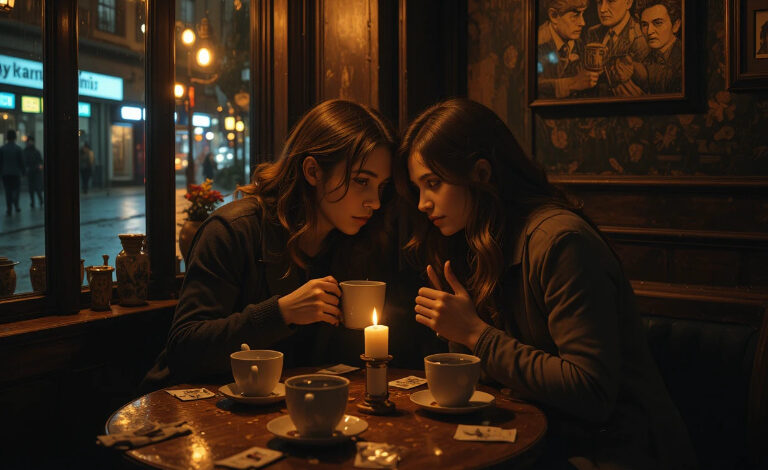


There’s a part of you that you don’t show at dinner tables. A place in your mind where things happen that you’d never say out loud — fantasies that feel too raw, too strange, too much. Maybe you’ve wondered what it means that those thoughts even exist inside you. Maybe you’ve felt a little guilt about it, or maybe just a quiet, burning curiosity. Either way, you’re not alone, and more importantly — you’re not broken.
Every single person alive has a shadow. That’s the term the psychologist Carl Jung gave to the part of us that lives in the dark — the urges, desires, and impulses we were taught to hide, suppress, or be ashamed of. And spiritually speaking, the shadow isn’t your enemy. It’s actually one of your greatest teachers. The things that live there, including your darkest fantasies, are carrying messages. Real ones.
What makes dark fantasies so spiritually loaded is the charge they carry. They don’t feel neutral — they feel electric, forbidden, alive. And in most spiritual traditions, that kind of energy doesn’t appear for no reason. The soul uses intensity to get your attention. When something lights you up in a way that scares you a little, that’s not a flaw in your wiring. That’s a signal. The question is: what is it pointing to?
This article is about learning to read that signal. Not to act on every dark desire, and not to shame yourself into silence either — but to actually look at what your shadow fantasies are made of and what they’re asking you to understand about yourself. Because real spiritual growth doesn’t happen by staying in the light all the time. It happens when you’re brave enough to go into the dark with a lantern and see what’s actually there.
What Is a Dark Fantasy?

Dark fantasies are thoughts or mental scenarios that feel forbidden, taboo, or morally charged. They might involve power, control, transgression, danger, or something you’d consider socially unacceptable. They can show up in dreams, in daydreams, in creative impulses, or in the quiet of a long drive when your mind wanders somewhere unexpected.
The important thing to understand is that having a thought is not the same as being that thought. Your mind generates thousands of mental images and scenarios every day — the shadow just tends to hold the ones that feel the most charged. Spiritually, these images are symbols, not instructions.
The Spiritual Meaning of Shadow Desires

Most spiritual paths — whether rooted in mysticism, indigenous wisdom, depth psychology, or ancient philosophy — agree on one thing: what you resist, persists. Shadow desires have a way of growing louder the more they’re ignored. That’s because they aren’t random noise. They’re the soul’s way of surfacing something unintegrated.
Here’s what dark fantasies often reveal spiritually:
1. A need for power you’ve been denied Fantasies involving control, dominance, or rebellion often emerge when someone has spent a long time feeling powerless — in relationships, at work, in their family of origin. The soul craves balance. If you’ve been suppressing your own authority for years, the shadow starts dreaming it up in exaggerated form.
2. A hunger for the forbidden = a hunger for freedom When something feels taboo, it often carries the energy of liberation. Dark desires rooted in transgression can point to places where you’ve internalized rules that don’t actually belong to you — where someone else’s “thou shalt not” has become a cage you forgot you were standing in.
3. Unprocessed emotion looking for an exit Rage, grief, shame, and fear don’t disappear when you push them down. They go into the shadow and come back dressed in fantasy. Violent or intense dark fantasies are frequently the soul’s theater for emotions that never got a safe place to land.
4. The call of the wild self Some dark desires are simply about aliveness. The civilized world asks a lot of us — be polite, be predictable, be manageable. The shadow keeps a version of you that is none of those things. Fantasies rooted in primal energy might just be the soul saying: I still exist. Don’t forget me.
5. A desire for wholeness disguised as destruction Fantasies involving tearing things down — relationships, systems, your own life — aren’t always about nihilism. Sometimes the soul knows that something needs to die before something new can be born. Destruction fantasies can be the psyche rehearsing a transformation it hasn’t found the courage to make real yet. In many spiritual traditions, the destroyer is also the creator. Shiva tears down so new life can grow. Your shadow might be doing the same thing.
6. The parts of you that were shamed into hiding Some dark desires aren’t dark at all — they just got labeled that way by people who were uncomfortable with them. Sexuality, ambition, anger, joy that takes up too much space — all of these get pushed into the shadow when someone early on communicated that they were too much, too strange, or simply wrong. What feels forbidden might just be what’s authentically yours, wearing a costume of shame that was never really its own.
7. An unmet longing for depth and intensity A lot of people live in a world that feels relentlessly shallow — same routines, same conversations, same surface-level everything. The soul craves depth. It craves real. Dark fantasies often spike when life feels too sanitized or controlled. They’re the psyche’s rebellion against numbness, a refusal to go completely flat. Spiritually, this is the soul insisting that it still wants to feel something true.
8. A reflection of collective shadow, not just personal Not every dark fantasy is purely yours. Humans are porous — we absorb the emotions, fears, and unprocessed energy of the groups we belong to: families, communities, cultures, generations. Some of what shows up in your shadow is ancestral. It belonged to someone before you, was never resolved, and passed down through the bloodline looking for someone to finally face it. What feels personal might actually be a much older wound asking to be healed at last.
9. The soul’s hunger for initiation Many ancient cultures built rituals around deliberately facing darkness — because they understood that you cannot become who you’re meant to be without passing through something difficult and real. Dark fantasies involving danger, death, or radical transformation often carry initiatory energy. The shadow is staging a ritual the modern world forgot to provide. It’s asking: are you ready to go deeper? Are you ready to become more?
10. A map to your unlived life Jung spoke about the unlived life — all the roads not taken, the identities left behind, the selves that got sacrificed at the altar of practicality or approval. Dark fantasies very often feature a version of you that is freer, wilder, more powerful, or radically different from who you show the world. That figure isn’t a threat. That figure is a map. The shadow is showing you something you left behind — or something you haven’t yet had the courage to become.
Shadow Work: How to Face Dark Fantasies Without Fear

Shadow work is the spiritual practice of turning toward what you’ve been turning away from. It doesn’t mean indulging every dark impulse — it means getting honest about what’s living in the basement of your psyche and asking it what it needs.
A few ways to start:
Write without editing. Let the fantasy exist on paper without judgment. Then ask: what feeling is underneath this? What does the person in this scenario have that I feel I’m missing in real life?
Look for the core need. Every shadow desire, no matter how strange, is covering a legitimate human need. Power, connection, freedom, safety, recognition, expression — these are real. The fantasy is just the soul’s first draft of how to get there.
Talk to the figure. In many spiritual traditions, you can treat shadow figures as inner characters and have an actual dialogue with them. Ask: What are you trying to show me? What do you want me to know? The answers are usually surprisingly straightforward.
Stop making it about morality first. The instinct is to immediately judge whether the thought is “good” or “bad.” Shadow work asks you to pause that judgment long enough to actually understand what you’re looking at. Meaning comes before morality when you’re doing this work honestly.
Dark Fantasies in Spiritual Traditions
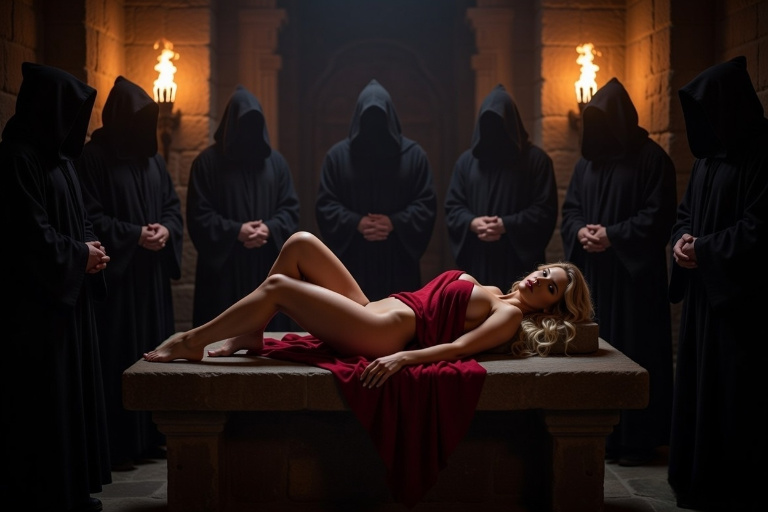
Across cultures and centuries, the idea that darkness holds wisdom has never gone away.
In Jungian psychology — which has deep spiritual roots — the shadow self is not a mistake of personality but an essential part of the psyche. Integration, not elimination, is the goal. A person who has done real shadow work is considered more whole, not more dangerous.
In Tantric traditions, the forbidden and the sacred aren’t opposites — they’re in conversation. Tantra deliberately works with transgressive energy as a path to liberation, understanding that what carries the most charge often carries the most transformative potential.
In shamanic traditions worldwide, the dark spirits and the difficult visions aren’t avoided — they’re engaged, because they’re understood to carry medicine. The things that frighten you in the spirit world are often the ones that have the most to teach.
In Kabbalah, the concept of the klipot — shells or husks — describes the spiritual husks that surround divine light. Shadow and ego structures exist as part of the cosmic design, not as flaws to be annihilated.
The thread running through all of them: darkness is not the absence of the sacred. It’s often where the sacred is hiding.
The Gift Inside the Dark

Here’s what nobody tells you about shadow desires: they often hold your most authentic self.
The parts of you that got pushed into the dark didn’t go there because they were evil. They went there because, at some point, it wasn’t safe for them to exist in the light. The fierceness. The hunger. The wildness. The parts that wanted too much, felt too deeply, or didn’t fit neatly into what was expected.
Your dark fantasies are breadcrumbs. They lead back to a version of you that is less performed, less edited, more real. Following them inward — not outward into reckless action, but inward into honest self-inquiry — is one of the most genuinely spiritual things you can do.
The shadow isn’t trying to destroy you. It’s trying to complete you.