
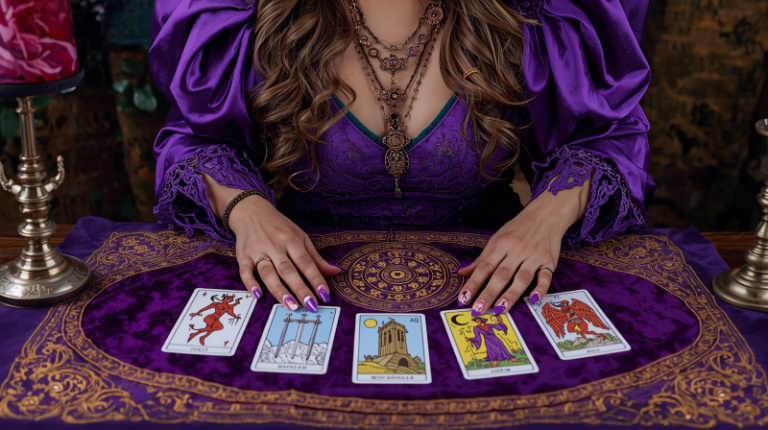
Some relationships feel off before you can even put words to it. There’s a tension you can’t name, a weight that follows you around, a quiet voice in the back of your head saying something isn’t right here. Tarot has been picking up on that kind of energy for centuries. These cards don’t predict the future like a script — they reflect what’s already moving beneath the surface, the patterns, the power plays, the emotional weather that most people are too close to see clearly.
Toxic relationships don’t always start with red flags waving in your face. More often, they begin with something that feels like intensity, passion, or even deep connection. It’s only later — sometimes much later — that the cracks show. The controlling behavior. The emotional withdrawal. The way you always end up apologizing for things that weren’t your fault. Tarot can catch the early signals of all of this, long before your mind is ready to admit what your gut already knows.
The Rider-Waite-Smith deck is one of the most widely read decks in the world, and for good reason. Its imagery is rich, layered, and deeply human. Every card tells a story you can feel in your body, not just your head. When certain cards show up in a reading about love or relationships, they carry weight. Not because they’re cursed or scary, but because they’re honest — and honesty is exactly what a toxic relationship tries to take from you.
These five cards are the ones readers consistently watch for when the question is about love, partnership, or connection. Each one carries a warning, but not a death sentence. The cards show what could be — and more importantly, they give you something a toxic relationship never will: the truth, laid out plainly, so you can decide what to do with it.
1. The Devil (XV)
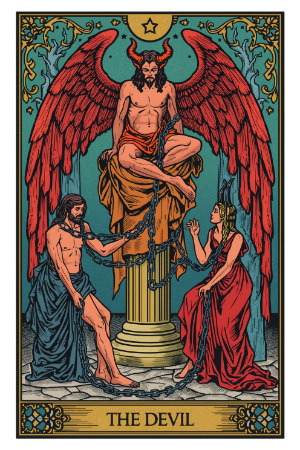
The Devil card in the Rider-Waite-Smith deck shows two figures — a man and a woman — chained to a pedestal where a horned, winged figure sits above them. Here’s the thing most people miss though: the chains around their necks are loose. They could slip free. They’re staying by choice, or at least by the belief that they have no choice. That belief is exactly what makes this card one of the clearest predictors of a toxic relationship in the entire deck.
When The Devil appears in a love reading, it most often signals a relationship built on obsession and unhealthy attachment. This is the kind of dynamic where you know, deep down, that the relationship isn’t good for you — but leaving feels impossible. There’s a magnetic pull that overrides logic. You might find yourself canceling plans with friends, shrinking your world smaller and smaller, until that one person becomes your entire universe. That’s not love. That’s a trap that feels like love.
This card also speaks to relationships driven by control through pleasure — where physical chemistry or excitement is used as a substitute for genuine emotional intimacy. One partner may use desire, jealousy, or validation as tools to keep the other hooked. It keeps both people stuck in a loop: the high, the crash, the desperate reach back. The Devil doesn’t show up in easy, healthy relationships. He shows up when something is binding you that you haven’t fully looked at yet.
There’s a third layer too — addiction dynamics within a relationship, where the toxic person themselves may be struggling with substance abuse, compulsive behavior, or patterns that pull destruction into everything they touch. You’re not just in a relationship with them. You’re in a relationship with whatever has its hooks in them. The Devil asks you to look at what you’re actually chained to — and whether those chains are as unbreakable as they feel.
2. The Tower (XVI)
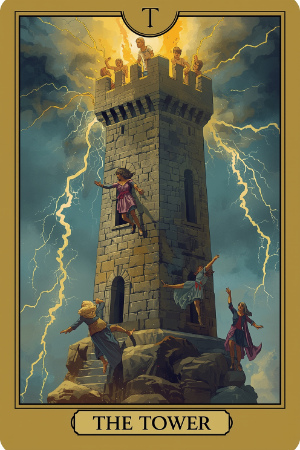
The Tower is probably the most dramatic card in the deck, and it earns that reputation. It shows a stone tower being struck by lightning, people falling from the windows, a crown blown clean off the top. Everything built on a false foundation is coming down — fast, loud, and without warning. In a relationship reading, few cards carry this kind of voltage.
In the context of toxic relationships, The Tower most commonly signals a relationship built on lies. Someone isn’t who they presented themselves to be. A secret is about to surface. The version of the relationship you believed in — the image you built in your head of who this person was — is the tower. And the lightning is truth. The collapse, as painful as it is, is the real thing finally showing up. Betrayal, deception, a hidden life — The Tower predicts the moment when you can’t unknow what you now know.
This card also describes the explosive, volatile relationship — the one defined by dramatic fights, tearful reconciliations, and cycles that feel like weather. Blow up, make up. Blow up, make up. There’s an intensity to it that can feel like passion, but The Tower isn’t passion. It’s instability wearing passion’s clothes. The foundation was never solid. Each fight is another crack. Eventually, the whole structure gives.
The third kind of toxic dynamic The Tower points to is sudden abandonment or emotional detonation — the partner who one day simply disappears, goes cold, or blows up the relationship without warning or explanation. No closure. No conversation. Just rubble where something used to stand. The Tower predicts that kind of ending, and it also describes the relationship leading up to it — one where deep down, neither person felt truly safe.
3. The Three of Swords
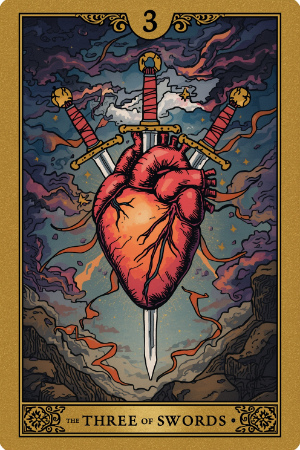
The Three of Swords doesn’t try to dress anything up. It’s a heart, pierced by three swords, hanging in a stormy sky. No people. No context. Just the wound, front and center. It’s one of the most honest cards in the entire Rider-Waite-Smith deck, and in a relationship reading, its honesty cuts clean.
The most direct thing this card predicts is heartbreak through betrayal — specifically the kind that involves a third party. Infidelity, emotional affairs, divided loyalties. The three swords represent three people in a situation that only has room for two. This isn’t always a physical affair. Sometimes it’s an ex who never really left the picture, a family member whose opinion controls one partner’s every move, or a secret the person was keeping that always had them half-absent from the relationship.
The Three of Swords also speaks to relationships saturated in grief and pain — where hurt has become the main language spoken between two people. Every conversation has an edge. Old wounds get reopened regularly. There’s a sadness that sits at the center of the relationship, and instead of healing, it keeps getting restabbed. Some people stay in relationships like this because the pain feels familiar, or because leaving feels like admitting the whole thing was a mistake.
There’s a quieter, slower toxic dynamic this card also describes: emotional cruelty disguised as honesty. The partner who says cutting things and calls it “just being real.” The one whose criticism never quite stops, who finds the tender spots and presses them under the guise of communication. The swords aren’t random — they’re deliberate. And a relationship where your heart feels like that image, consistently, is one that deserves a serious look.
4. The Moon (XVIII)
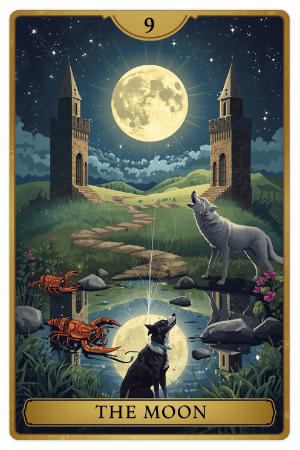
The Moon card is dreamlike and disorienting — a full moon between two towers, a path winding into the distance, a crayfish crawling out of a pool, a dog and a wolf howling at the sky. Everything is lit by reflected light, which means nothing is quite what it looks like. Shadows everywhere. That atmosphere is the toxic dynamic this card describes.
The Moon is the card of deception and hidden reality in relationships — but specifically the kind where you’re not even sure what’s real anymore. This is the territory of gaslighting. Your partner tells you something didn’t happen the way you remember. They question your feelings, your memory, your perception. After a while, you start to doubt yourself. The Moon shows a world where the truth exists but is deliberately kept in shadow, and you’re left navigating by dim, distorted light.
This card also predicts relationships built on fantasy rather than reality — where you fell in love with who you imagined the person to be, and the real version of them has been carefully hidden or hasn’t shown up yet. The Moon rules illusion. Sometimes the illusion is maintained intentionally by a manipulative partner. Other times, it’s something both people constructed together because the truth felt too harsh. Either way, the relationship isn’t standing on solid ground — it’s standing on reflected light.
The Moon also speaks to relationships that breed anxiety and paranoia — where you’re constantly unsettled, reading between lines, trying to decode what your partner actually means or feels. Your nervous system never quite relaxes. You’re always waiting for the other shoe to drop. That low-level dread, that constant second-guessing — that’s the howling in the dark the card depicts. The Moon doesn’t bring peace. It brings the kind of confusion that slowly erodes your sense of self.
5. The Five of Pentacles
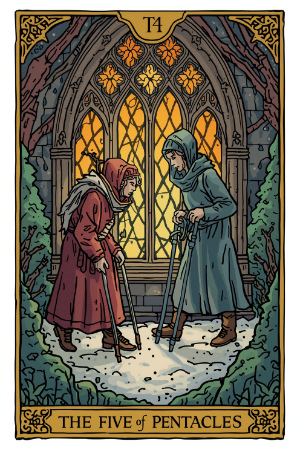
The Five of Pentacles shows two figures out in the cold — ragged, struggling, one on crutches — walking past a warm, stained-glass window. Help is available. Light exists. But they’re looking down, not up. In a relationship reading, this card carries a particular kind of sadness, because it’s not about drama or betrayal. It’s about quiet suffering — the slow drain of a relationship that leaves you poorer than it found you.
The most common toxic dynamic this card predicts is financial control and economic abuse — one of the least-discussed but most damaging relationship patterns. One partner controls the money. The other is left dependent, unable to leave even when they want to, because they have no resources of their own. It happens gradually. First, it’s “I’ll handle the finances.” Then your name isn’t on anything, your income disappears into a shared account you can’t access freely, and the power imbalance is built right into the foundation of daily life.
The Five of Pentacles also describes the emotionally withholding relationship — where you’re left out in the cold in a much more invisible way. Your partner is there in body, but the warmth never quite reaches you. Affection is scarce. Emotional support is scarce. You keep reaching for something and coming up short. The stained-glass window in the card represents what’s available — connection, warmth, care — but something keeps both people from accessing it. In a toxic relationship, that something is often one partner’s deliberate withdrawal, used as punishment or control.
The third dynamic here is the relationship that isolates and diminishes — where over time, you notice you have less. Less confidence. Less connection to friends and family. Less sense of your own worth. The Five of Pentacles describes the relational poverty that sets in when a toxic dynamic has been running long enough. You didn’t notice it happening, because it was gradual. But one day you look up and you’re out in the cold, and you can’t quite remember how you got there, or what you used to feel like before.