


There’s a reason your grandmother paused when a crow landed on the fence post. A reason old houses have mirrors covered after someone dies. A reason certain people walk into a room and just know something is wrong before a single word is spoken. The world has always been speaking — in shadows and feathers, in broken glass and sudden chills — and for thousands of years, witches were simply the ones paying attention.
Omens aren’t superstition dressed up in a black hat. They’re one of the oldest forms of communication between the seen and unseen worlds, a language written in everyday things that most people have learned to ignore. A red sky at morning. A dog howling at nothing. An owl calling your name in the dark. These aren’t coincidences. They’re signals — and the tradition of reading them runs through every culture on earth, from ancient Rome to the Scottish Highlands to the villages of West Africa.
Witches have always understood that the natural world and the spirit world aren’t two separate places. They bleed into each other constantly, and sometimes that bleed shows up as a sign you can’t shake. You see it, and something deep in your gut recognizes it before your brain catches up. That feeling isn’t imagination. That’s your intuition doing exactly what it was built to do — reading the message before your conscious mind gets in the way.
What follows are 13 of the most powerful, most documented witch’s omens in the Western tradition. Some of them will feel familiar. Some might stop you cold. But all 13 have one thing in common — they’ve been observed, recorded, and respected for centuries by people who knew that when the world whispers, you listen.
The 13 Witch’s Omens
1. The Crow
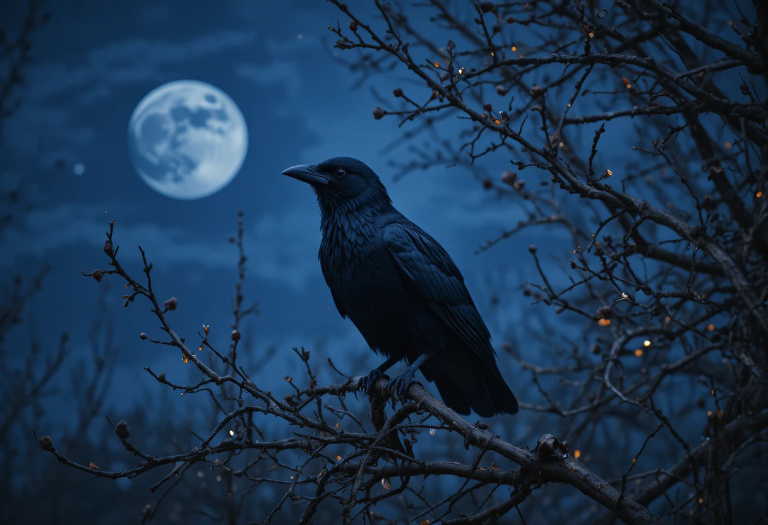
A single crow watching you — not passing through, not scavenging, but watching — has been considered one of the most powerful prophetic signs in witch tradition since before written history. Crows are not random visitors. They are intelligent beyond most animals, they recognize individual human faces, and in nearly every folk magic system from Celtic to Slavic to Native American tradition, they sit at the crossroads between the living and the dead.
The number of crows matters enormously, and witches have always known this. One crow brings warning. Two bring good news. Three signal a birth. Four mean wealth is coming. But a single crow, silent and still, eyes locked on yours — that’s the omen that makes experienced practitioners stop what they’re doing and pay attention. The message isn’t always dark. It’s always significant.
Crows are also deeply associated with Hecate, the goddess of witchcraft and the crossroads, and with the Morrigan of Celtic mythology — a goddess who appeared on battlefields as a crow to signal fate in motion. When a crow appears in your life with unusual persistence, old witch wisdom says the veil between worlds is thin near you, and something on the other side wants to be acknowledged.
What do you do when the crow comes? You don’t shoo it away. You don’t look down. You hold the gaze, you acknowledge what’s happening, and you pay close attention to what follows in the next three days. Whatever the crow came to signal, it will make itself known. The world is rarely subtle once it’s already sent the messenger.
2. The Broken Mirror
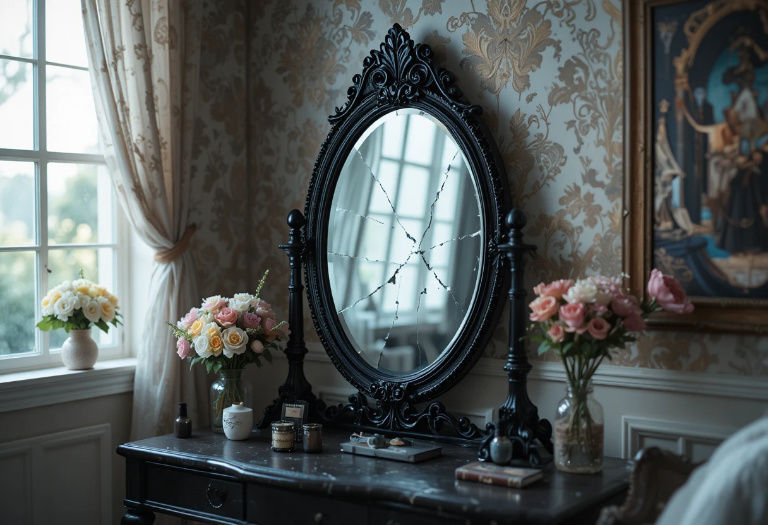
Seven years bad luck is the watered-down version of something much older and much stranger. Mirrors, in witch tradition, are not decorations. They are portals — surfaces that hold reflections of what is, what was, and sometimes what is coming. Shattering one doesn’t just break glass. It fractures the protective boundary the mirror was holding.
The Roman origin of the seven-year rule came from the belief that the soul renews itself every seven years. Break a mirror, break the soul’s reflection, and you disrupt that cycle. But in older folk magic, particularly in European witch traditions, a mirror breaking on its own — with no one touching it — was considered one of the gravest omens a household could receive. It meant a protective force had been shattered, and something had gotten through.
Mirrors were historically used for scrying, for spirit communication, and for warding off evil — many cultures hung mirrors near doors specifically to repel malevolent energies that would be frightened off by their own reflection. A mirror breaking in that position wasn’t just bad luck. It meant the thing the mirror was there to stop had arrived anyway, and the mirror had sacrificed itself in the confrontation.
If a mirror breaks in your home without clear cause, traditional witch practice says you don’t leave the pieces sitting. You gather them immediately, ideally before sunset. Some traditions call for burying the pieces in earth to neutralize the disruption. Others say to wrap them in dark cloth and dispose of them away from your home. What you don’t do is leave broken mirror energy sitting in your living room for a week because you haven’t gotten around to it.
3. Cold Spots

You walk into a room that was warm a minute ago, and there’s a pocket of cold that makes no logical sense. No window open, no vent nearby, no explanation — just a sudden, specific, bone-deep chill in one precise location. In witch tradition, that cold spot is not a drafting problem. That’s a presence.
The connection between cold and spirit activity is one of the most consistently reported phenomena across cultures and centuries. The explanation that shows up in everything from Appalachian folk magic to Northern European witch tradition is the same — spirits draw energy from their environment to manifest, and heat is energy. A cold spot is the physical signature of something pulling warmth out of the air to make itself present.
What matters with cold spots is the feeling that accompanies them. A cold spot left by a passing spirit — something moving through rather than staying — tends to feel neutral, almost clinical. But a cold spot with emotional weight attached to it, a feeling of heaviness or urgency or sadness, is a different thing entirely. That’s not something passing through. That’s something that needs attention, that has unfinished business with the space or with you.
Witch tradition says you don’t ignore a persistent cold spot. You speak to it. You acknowledge what’s there, ask what it needs, and if it’s a troubled energy you want moved on, you use smoke — traditionally sage, cedar, or mugwort — to gently encourage it toward the door. Cold spots that return repeatedly in the same location after cleansing are considered a more serious omen and historically called for a more experienced practitioner to intervene.
4. The Red Sky

Red sky at morning, sailor take warning — this saying is so old it appears in the Bible, and it existed in oral tradition long before that. But the witch’s understanding of a red sky goes much further than weather prediction. A blood-red sky, particularly at dawn, has been considered a prophetic omen of upheaval, war, or great change since antiquity — and the red doesn’t just belong to the morning.
In European witch tradition, a red sky at dusk could signal something coming to a close — not necessarily in a gentle way. A red sky at night without the usual golden warmth of a normal sunset, something too vivid, too saturated, almost wrong in its redness, was read as a sign that power was moving in the land. Political upheaval. A death of consequence. A shift in the invisible currents that govern whole communities.
The sky is arguably the oldest omen-reading surface humanity has ever had. Before mirrors, before cards, before any divination tool, there was the sky — and every culture that practiced any form of magic or prophecy built systems for reading it. Witches were the primary keepers of that knowledge in their communities, the ones villagers came to when the sky looked strange and they needed someone to tell them what it meant.
When the sky turns the wrong color in a way you feel rather than just see, the tradition says to note the direction you’re facing, the time, and any animals that respond to it. Birds will often go quiet. Dogs may become uneasy. These accompanying signs help narrow down whether the omen is personal, communal, or something much larger rolling in on the horizon.
5. The Owl at Daylight

Owls are night creatures. Everyone knows that. Which is exactly why an owl seen in full daylight is one of the most unsettling omens in the witch’s catalogue — because an owl appearing when it has no business appearing means something has pulled it out of its natural order, and whatever that force is, it wanted to be seen.
Across cultures, the owl has been the bird of death, prophecy, and hidden truth. Athena carried one. Hecate was accompanied by one. Indigenous traditions across North America considered the owl a messenger from ancestors. In Mesoamerican mythology, the owl served the lord of the underworld. This isn’t coincidence — this is the collective wisdom of human beings, separated by oceans, all arriving at the same conclusion about the same bird independently.
An owl at night is simply an owl. An owl at your window at three in the afternoon, staring directly at you, sitting somewhere it has no ecological reason to be — that’s an omen. Traditional witch interpretation treats the daylight owl as a message from the dead, specifically from someone you knew who is trying to reach you, or as a warning that someone in your circle is approaching a major threshold — birth, death, or radical transformation.
The respectful response, in most traditions, is not to panic but to listen. Stand still. Let the owl hold your gaze if it chooses. Speak quietly if you feel moved to — ask what it’s come to say. Owls in omen tradition are not harbingers of punishment. They are carriers of truth, and truth is only frightening if you’ve been avoiding it.
6. The Howling Dog

Dogs have always lived closer to the spirit world than humans do. Every culture that has kept dogs has noted it — the way a dog stares at an empty corner, the way they back away from a doorway for no reason, the way a sleeping dog whimpers at something it seems to be seeing in a dream. Dogs perceive things we don’t. That’s not poetry. That’s observable reality.
A dog howling without cause — particularly at night, particularly when other dogs nearby begin to join in, building into that eerie, directionless chorus that raises every hair on your body — has been recorded as a death omen in traditions from ancient Egypt to medieval Europe to the American South. The Irish believed that when dogs howled in chorus at night, the Cú Sídhe, the spirit hounds of the faerie world, were passing through. You stayed inside. You did not look.
What makes the howling dog omen particularly striking is how specific it tends to be. It’s not the sound of a dog responding to a siren or another dog. The omen-howl is different — low, mournful, almost rhythmic, and directed at nothing visible. Dog owners who’ve heard it describe an immediate gut-level recognition that something is wrong, even before any rational thought kicks in. That recognition is the omen working exactly as intended.
In practical witch tradition, a howling dog omen calls for protective work — checking in on elderly or unwell family members, reinforcing the energetic protection around your home, and paying attention to your dreams in the nights that follow. The dog isn’t cursing you. It’s sounding an alarm, which is, after all, what dogs have always done best.
7. The Flame That Burns Wrong
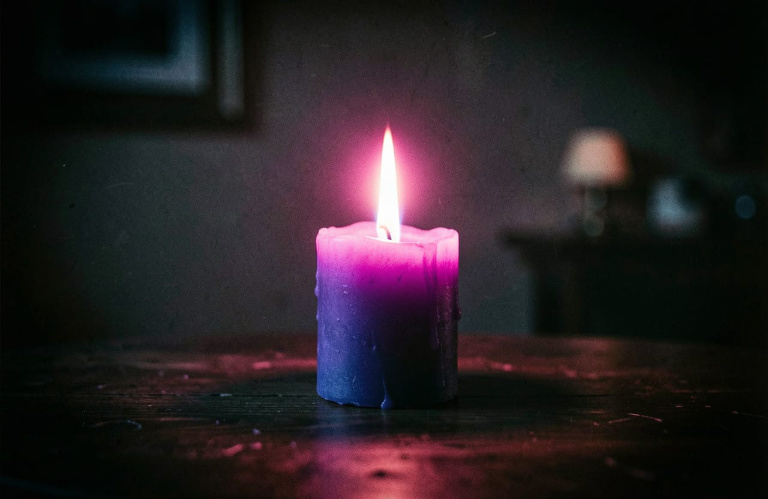
A candle flame that bends with no wind, splits into two, burns an unusual color, or goes out without explanation in a sealed room has been considered a significant prophetic sign across virtually every candle-using magical tradition on earth. In witch practice, flames are living things — and they respond to invisible presences the way animals respond to sounds outside human hearing.
A flame that leans persistently in one direction when the air is still is considered a signal that something is present in the room and coming from that direction. A flame that splits into two — forks at the tip and holds that shape — is read differently depending on tradition, but is most commonly interpreted as a sign of divided energies, a crossroads in the situation at hand, or two forces at work simultaneously. Neither is inherently good or bad. Both demand attention.
A candle that goes out on its own during a ritual or during a moment of significance — a prayer, a quiet thought, a conversation about someone who has passed — is one of the most widely documented omen experiences in folk magic. The traditional reading is almost universal: something heard you. Something responded. The extinguishing wasn’t failure. It was acknowledgment.
Witch practice around candle flames is built on the understanding that fire is a bridge between worlds. It burns in this world and reaches into the next, which is why candles appear in virtually every spiritual tradition humanity has ever developed. When your flame behaves strangely, the correct response is to pause, center yourself, and ask what’s present. Then watch — because the answer will usually come in the next few minutes, through a sound, a thought, or a feeling that lands with unusual clarity.
8. The Black Feather

Finding a black feather in your path — particularly when it appears somewhere unexpected, somewhere it has no logical reason to be — has a long history as one of the most personally significant omens in witch tradition. Not frightening. Significant. There’s a difference, and it matters.
Black feathers most commonly come from crows, ravens, blackbirds, and starlings — all birds with deep ties to the spirit world in Western magical tradition. Finding one on your doorstep, inside your home, or on a path you’ve walked a hundred times before without finding anything is considered a direct message from the spirit realm, often from an ancestor or guide who wants you to know they are near and watching. In many traditions, a black feather is specifically associated with protection — the feather of a guardian who has just done its job.
The context in which you find it matters enormously. A black feather found after a period of grief or uncertainty tends to carry a message of comfort — you are not alone in this, you are being watched over. A black feather found at the beginning of a new venture is considered a blessing, a sign that unseen forces are aligned with what you’re beginning. A black feather found after a conflict or confrontation is sometimes read as a warning that more turbulence is coming and protective measures are in order.
Witch tradition generally says to pick up a black feather when you find it, hold it for a moment with intention, and then make a conscious choice — keep it as a talisman, or return it to the earth with thanks. What you don’t do is dismiss it as trash. Whether you’re a dedicated practitioner or simply someone who felt something shift when you found it, that feeling is the omen’s whole point.
9. The Blood Moon

A Blood Moon — the deep red color of a total lunar eclipse — is one of the most visually dramatic natural omens, and it has never failed to stop people in their tracks regardless of how scientifically the phenomenon gets explained. The explanation doesn’t cancel the omen. The sky still runs red. Something is still happening.
In witch tradition, a Blood Moon signals that the veil between worlds is at its thinnest — even thinner than on Samhain. The moon rules cycles, emotions, and the tides of magical energy, and when it turns red, those energies don’t disappear. They intensify, and they shift into a frequency associated with transformation, endings, and the deep work of release. Spells cast under a Blood Moon are considered to carry unusual power, particularly those involving letting go of what no longer serves.
Historically, Blood Moons were treated as significant communal omens — events that affected not just individuals but whole peoples. Major historical and political shifts have been observed in proximity to Blood Moon events for as long as records have been kept. Whether or not you believe in causation, the correlation is striking enough that witches have always treated the Blood Moon as a moment of heightened cosmic attention — when what you do and what you intend carries extra weight.
The traditional witch’s practice during a Blood Moon is to go outside if at all possible, stand under it, and acknowledge what needs to change. Not wish for it. Not pray for it. Decide it. The Blood Moon is not gentle invitation. It’s a deadline. What have you been carrying that needs to be released? The red moon is the universe’s way of saying the time for deciding is now.
10. The Spider in the Morning

There’s an old saying — kill a spider in the morning, bad luck before evening — and while it sounds like a quirky rhyme, it carries the weight of a tradition that goes back to ancient Egypt, where spiders were sacred to Neith, goddess of weaving and fate. The spider is the original spinner of destiny, and encountering one, particularly in the morning and particularly in an unusual way, has always been taken seriously by those who know what they’re looking at.
A spider lowering itself directly in front of your face — dropping into your eye line from nowhere and stopping there — is considered one of the more direct omens in the catalogue. It’s uncomfortable by design. The spider isn’t attacking. It’s delivering. Old witch wisdom reads this as an urgent message about the web of your current circumstances — something in your life’s pattern is off, a thread has come loose, and you need to look at it now before it unravels further.
Money spiders — those tiny, almost invisible spiders that land in your hair or on your hand — are conversely one of the most positive omens in British and Irish folk magic tradition. Catching one and spinning it over your head three times before releasing it was said to bring financial luck. The omen works because the spider is the weaver — and it landing on you means the web of fate is actively being rewoven in your direction.
Finding a spider web intact and sparkling with morning dew across your doorway before you’ve left the house for the day is considered a protective sign — the spider has sealed your threshold against ill intent. Breaking that web doesn’t break the protection, but the tradition says to acknowledge the spider’s work before you walk through. Gratitude to the small things that guard your door costs nothing and means everything.
11. Water That Won’t Stay Still

Standing water that ripples without wind or visible cause — a bowl of water that moves on a still surface, a mirror-flat lake that suddenly churns in one spot, a glass of water on a table that trembles with no vibration source — is considered a spirit omen in witch traditions across the world, and it has a particular urgency attached to it that most other signs don’t carry.
Water is the element of emotion, intuition, and the subconscious, and in magical tradition it is considered the most sensitive surface for spirit contact. Scrying bowls — still water used for divination — work on exactly this principle: water responds to invisible energies before the practitioner’s conscious mind can. Spontaneous movement in still water means something is interacting with that surface from outside the visible world, and it wants to be noticed.
The traditional reading depends on the source of the water and the location. Water moving in a ritual space during intentional work is confirmation — something heard you and showed up. Water moving unexpectedly in a domestic space, particularly in a room associated with a person who has recently died, is almost universally read across traditions as a visit. Not a haunting. A visit. There is a meaningful difference in how these two things feel, and practitioners consistently describe the emotion of the room as the deciding factor.
If you witness water moving without cause and you feel moved to acknowledge it, the simplest witch practice is to speak aloud — name what you think might be present, say what you’re feeling, and then watch the water. Many people report that the rippling stills immediately after they speak, as though the message has been received and the presence is satisfied. It doesn’t need to be more complicated than that.
12. The Scent With No Source

You’re alone in a room. No candles burning, no diffuser running, no perfume on — and suddenly the air fills with a scent that has no origin. Roses. Tobacco. A particular perfume worn by someone who is gone. This is one of the most intimate and most frequently reported of all witch’s omens, and it is almost always connected to the dead.
Scent-without-source is documented across every spiritual and folk magic tradition that pays attention to spirit contact. The reason it’s so consistent is that smell is the most direct sense — it bypasses analytical thought and lands straight in memory and emotion. If a spirit wants to make itself known to someone who might otherwise rationalize away a cold spot or a strange sound, scent is the most efficient messenger. You can’t logic away the smell of your grandmother’s perfume in an empty room.
The omen is almost always one of two things: a visit, or a warning. When the scent is pleasant and recognizable — flowers, food associated with a loved one, a familiar perfume — the traditional reading is a visit from someone who has passed, checking in, expressing love, letting you know they’re nearby. When the scent is unpleasant, sulfurous, or deeply wrong in a way that makes your stomach turn, the omen shifts into warning territory, and traditional protective practice is recommended.
What witch tradition says to do is simple: acknowledge it. Say the name of who you think it might be if a name comes to mind. Say thank you if the scent is welcome. Say, clearly and without aggression, that you do not welcome this if it is not — and mean it when you say it. The scent almost always fades immediately after acknowledgment, which tells you everything you need to know about what kind of omen this is.
13. The Withering Plant

Plants are extraordinarily sensitive environmental indicators — to air quality, to water, to temperature, to the emotional atmosphere of a space. Experienced plant keepers know this intuitively. A plant that was thriving suddenly declining for no discernible reason, particularly in a space where someone has recently been ill or where conflict has been frequent, is considered an omen in witch tradition — and also a gift.
The witch’s understanding is that plants absorb negative energy from their environment. They take it in and process it the way they process carbon dioxide — transforming something harmful into something the space can use. A plant that withers and dies in a space is sometimes called a sacrifice plant in folk magic: it took the hit so you didn’t have to. The death of the plant isn’t a failure. It’s evidence of protection that worked.
Where the omen aspect deepens is when a plant withers in proximity to a specific person. A healthy plant that begins to decline only when a particular visitor comes and reverses when that person leaves is a significant signal in witch tradition. It means the plant is responding to something in that person’s energy field — stress, illness, or less commonly, a more deliberate dark energy. The plant doesn’t lie. Plants are some of the most reliable omen-readers in the natural world precisely because they have no reason to be diplomatic.
When a plant withers without explanation, tradition says to first thank it — genuinely, out loud — for what it’s been doing on your behalf. Then clear the space: open windows, burn protective herbs, refresh the energy of the room. Replace the plant with a new one and pay attention to how the new plant responds to the space over the following weeks. Its behavior will tell you whether the omen has passed or whether there’s still work to be done.