

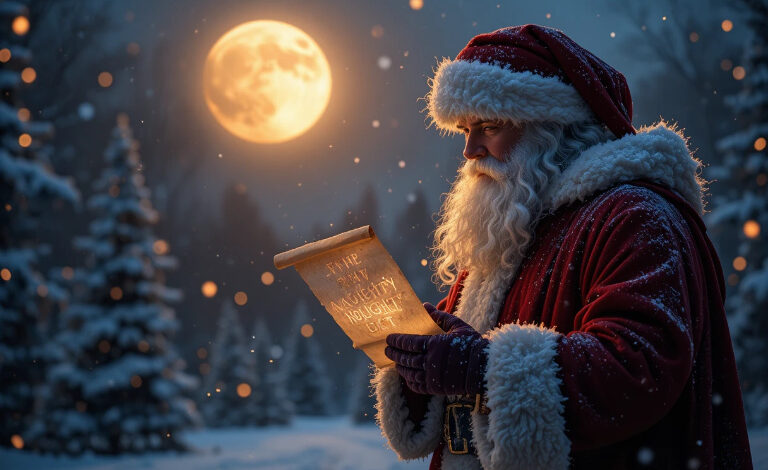
We grow up with a very clean version of Santa. Red suit, warm laugh, endless patience, and a list that somehow always forgives us by Christmas morning. But old magic is never that simple. Any system that watches, weighs, and judges carries a shadow, and Santa’s magic is ancient—far older than shopping malls and tinsel.
The Naughty List isn’t just a joke meant to scare children into behaving. It’s a living thing, shaped by belief, intention, and winter magic. Long before Santa became a cheerful brand, winter spirits were serious about balance. Good deeds fed the light. Harmful choices fed something darker, something that needed to be addressed—not punished, but understood.
This is where the story changes tone. The Naughty List was never about coal. It was about reflection. It was about facing the parts of ourselves we’d rather hide, especially during a season that demands cheer whether we feel it or not. Santa didn’t create the shadow side—he agreed to tend it.
So tonight, we pull back the velvet curtain and talk about what really happens to the Naughty List. Not the bedtime version. The old one. The one whispered by snowstorms and candle flames when winter is watching closely.
The Shadow Side of Santa: What Happens to the Naughty List
Santa’s Magic Isn’t Soft—It’s Balanced
Santa’s power comes from belief, but belief doesn’t only create joy. It creates responsibility. Every wish, every promise, every whispered prayer adds weight to the magic he carries. To hold that much light, there must be a place for shadow to go.
The Naughty List exists to hold imbalance. Not mistakes—everyone makes those. It records moments when someone knowingly chose harm, cruelty, or selfishness without care. Winter magic doesn’t judge emotion. It watches intent. That’s why the list feels unsettling. It’s honest in a way humans rarely are.
Santa doesn’t smile when he reads it. He becomes quiet.
The List Is Not Written in Ink
Contrary to popular belief, the Naughty List isn’t permanent. It shifts, breathes, and rewrites itself constantly. Names fade. New ones appear. Some hover in between, neither fully marked nor fully cleared.
The list responds to change. Genuine remorse weakens its grip. Repeated harm deepens it. This is why some people feel an inexplicable heaviness during December—it’s the season when the list becomes loud, and unresolved energy rises to the surface.
Winter doesn’t hide things. It freezes them so they can be seen clearly.
Who Actually Ends Up on the Naughty List?
Not the child who lies once. Not the adult who snaps under stress. The Naughty List records patterns, not moments. It watches what someone does when they think no one is looking. It notes how power is used, how kindness is withheld, how harm is justified.
That’s why the list is shorter than people imagine—and far heavier. Some names appear year after year, not because they’re evil, but because they refuse to change.
Santa doesn’t hate them. He worries about them.
The Purpose Was Never Punishment
Coal was symbolic. It represented compressed energy—pressure, heat, and time. A reminder that transformation is possible, but uncomfortable. The real consequence of the Naughty List isn’t material. It’s energetic.
Those marked feel blocked. Joy feels muted. Celebration feels hollow. Gifts don’t land the way they should. This isn’t Santa being cruel—it’s winter magic forcing a pause. A moment of reckoning wrapped in silence.
The shadow exists to slow us down, not to destroy us.
Where the Naughty List Energy Goes
Nothing in magic disappears. It moves. The energy from the Naughty List is stored in what old folklore calls the Winter Vault—a spiritual space tied to long nights, bare trees, and deep rest. This is where unresolved actions are held until they can be faced.
This is also why winter is linked to depression, reflection, and memory. The season pulls unfinished business to the surface. Santa is less a judge and more a keeper of that threshold.
He stands between denial and awareness.
The Creatures of the Shadow Season
Not all of Santa’s helpers wear bells. Some wear silence. Across folklore, darker winter beings appear alongside Santa—Krampus, Perchta, the Yule Cat. These weren’t villains. They were enforcers of balance.
They didn’t punish children. They hunted unchecked behavior, arrogance, and cruelty in adults. Over time, they were softened into stories because the truth was uncomfortable: winter doesn’t tolerate imbalance for long.
Santa didn’t banish these beings. He integrated them.
Why the Naughty List Feels Stronger as an Adult
As children, we’re mostly learning. As adults, we’re choosing. That’s why December hits harder later in life. The Naughty List responds to awareness. The more conscious you are, the more accountable you become.
This is also why many adults feel sudden urges to apologize, reconnect, or change during the holidays. That isn’t nostalgia. It’s the list loosening its grip as balance is restored.
Winter rewards honesty more than cheer.
Can Someone Be Removed from the Naughty List?
Yes—but not through performance. Apologies without change don’t work. Gifts don’t work. Public kindness without private integrity doesn’t work. The list responds to quiet shifts. Changed behavior. Boundaries respected. Harm stopped.
Sometimes removal happens years later. Sometimes it happens instantly. Time works differently in winter magic. What matters is truth.
Santa knows when someone is ready.
The Night Santa Reads the List
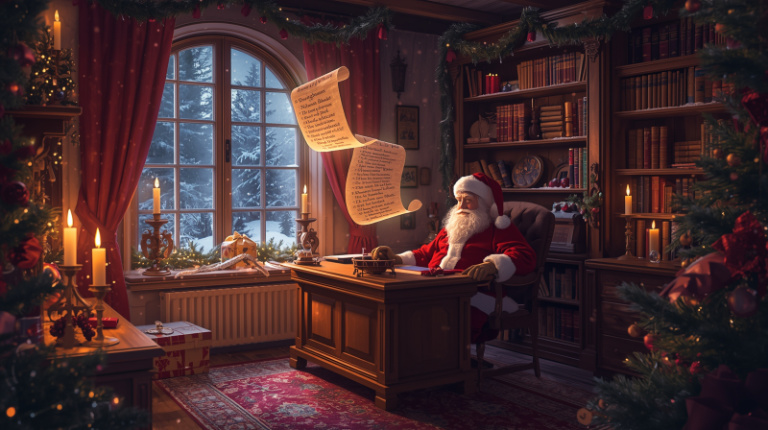
On Christmas Eve, Santa doesn’t rush. Before the sleigh moves, he sits alone. No elves. No songs. He reads the list one final time, not to decide who gets what, but to release what no longer belongs there.
Names fall away like melting frost. Others remain, held until the next cycle. This is the moment most people feel as “Christmas magic”—a sudden lightness, a quiet emotional release.
That’s the shadow lifting.
Why This Story Was Softened
Modern culture prefers comfort over truth. The Naughty List became a joke because the original meaning demanded self-reflection. It asked people to look at themselves honestly during a season built on excess and distraction.
But the magic never left. It just learned to whisper instead of roar.
And every winter, it still watches.
When Shadow Becomes a Gift
The shadow side of Santa isn’t dark because it’s cruel—it’s dark because it’s honest. The Naughty List exists to remind us that magic responds to who we are, not who we pretend to be. Winter doesn’t ask for perfection. It asks for truth, rest, and real change.
If something feels heavy during the holidays, it doesn’t mean you’re failing. It means something is ready to be released. Santa isn’t keeping score—he’s keeping balance. And balance, when embraced, is one of the greatest gifts magic offers.