


You know that feeling. The full moon rises, big and glowing, and instead of feeling magical and energized, you’re wiped out. Dragging yourself through the day, yawning by 3pm, craving your bed like it owes you money. If this happens to you every single month, you’re not broken and you’re not imagining it. There’s a real reason your body clocks out right when the moon is at its brightest.
For thousands of years, people across every culture have known the moon pulls at us the same way it pulls the ocean tides. We’re mostly water too, after all. When that full moon energy peaks, it stirs things up inside us on a level most of us were never taught to notice. Old emotions surface, buried thoughts creep in, and our whole system goes into a kind of deep-clean mode. That process takes energy. A lot of it.
So instead of fighting the tiredness or feeling guilty for needing an early night, it helps to understand what’s actually happening on a spiritual level. Below are ten reasons your energy dips so hard during full moons, and once you see yourself in a few of these, that exhaustion will make a lot more sense.
1. Your Body Is Absorbing Lunar Energy Overload

The full moon puts out the strongest energetic charge of the entire month. Think of it like standing directly under a spotlight instead of soft ambient lighting. Everything gets amplified, and your energetic body has to work overtime just to process it all. This is what a lot of people call energetic overload, and it’s one of the biggest culprits behind full moon exhaustion.
Your aura and your energy centers are constantly taking in information from the world around you, and the moon is no exception. When it’s full, it’s basically shouting instead of whispering. Sensitive people, empaths, and anyone who tends to pick up on energy easily will feel this the hardest. It’s not weakness, it’s actually a sign that your intuition and energetic awareness are switched on and working.
The tiredness you feel is your system’s way of saying “I’m processing a lot right now, please slow down.” Rather than pushing through with coffee and willpower, this is the moment to rest and let your energy field settle. Fighting it usually just drags the fatigue out longer.
2. Heightened Dreams Are Draining Your Nighttime Rest

Ever notice your dreams get wild and vivid around the full moon? Ex-boyfriends showing up, flying, weird symbolic messages that feel important even if you can’t explain why? That’s not a coincidence. Full moons crack open the veil between the waking world and the dream world, and your subconscious takes full advantage of it.
While this can be incredible for spiritual growth and insight, it also means your mind is working hard while your body is supposed to be resting. Instead of a quiet, restorative sleep, you’re essentially living a whole second life every night for a few nights around the full moon. That’s mentally and energetically exhausting, even if you don’t remember most of it by morning.
This is why so many people wake up around a full moon feeling like they never really slept, even after eight hours in bed. Your body got its rest, but your spirit was busy doing its own overnight work. Keeping a dream journal nearby can help you honor what’s coming through, and going to bed a little earlier during this time gives your subconscious the extra room it needs.
3. Moon-Charged Emotions Are Rising to the Surface

Full moons have a reputation for stirring up big feelings, and there’s a spiritual reason behind it. This phase of the moon acts like a mirror, reflecting back anything you’ve been avoiding, suppressing, or pushing down. Old wounds, unresolved arguments, random waves of sadness or anger, they all tend to bubble up right around this time.
Feeling these emotions, even the uncomfortable ones, takes a surprising amount of energy. It’s like carrying a bucket of water you didn’t know you were holding, and then suddenly noticing how heavy your arms are. Your body isn’t just tired physically, it’s tired from doing quiet emotional housekeeping you didn’t consciously sign up for.
The good news is that full moons are actually one of the best times for release. If you can let yourself feel whatever comes up instead of stuffing it back down, you’ll usually find the tiredness lifts faster. Crying, journaling, or just sitting quietly with your feelings can do more good here than trying to power through with a smile.
4. Your Energy Field Is Working Overtime to Stay Balanced

Every person has an energy field, sometimes called an aura, that surrounds and protects them. Full moons put pressure on that field because of how strong the lunar pull becomes. Your energy has to constantly recalibrate to stay steady, kind of like a boat adjusting to bigger waves out on open water.
This constant adjusting doesn’t feel like anything dramatic in the moment, but it adds up. By the time the moon is fully lit, your energetic system has been quietly working extra hours for days trying to keep you balanced. That invisible effort is a huge, often overlooked reason why full moon fatigue hits so many people so hard.
Grounding practices become extra important during this time. Walking barefoot on grass, spending time near trees, or simply placing your palms flat on the earth can help your energy field settle faster. Give it a few extra days around the full moon and you’ll likely notice the heaviness ease up on its own.
5. You’re Releasing What No Longer Serves You

Full moons are traditionally known as a time of release. Whatever you’ve been holding onto, habits, relationships, mindsets, old versions of yourself, the full moon energy encourages it to loosen its grip so you can let it go. This release process, while good for you in the long run, is not exactly a light lift.
Letting go of something, even something small, requires energy. Your spirit is essentially doing a deep spring clean, sorting through what to keep and what to release, and that kind of internal work will always show up as physical tiredness. It’s similar to how emotionally draining moving out of an old apartment can be, even when you’re excited for the new place.
If you’ve been feeling extra sluggish, it might be worth asking yourself what you’ve been ready to release lately. Writing it down, or even saying it out loud, can help speed the process along and lighten the load your energy is carrying. The sooner you consciously let go, the sooner your energy tends to bounce back.
6. Your Intuition Is Working in Overdrive

The full moon is known for cranking up intuitive abilities. Gut feelings get stronger, synchronicities show up everywhere, and that little inner voice gets a lot louder than usual. While this heightened awareness is a gift, it also means your mind and spirit are working harder than they normally do.
Being more intuitively switched on is a bit like having extra tabs open on your phone in the background. Everything still works, but the battery drains faster. You’re picking up on more, sensing more, and processing more information from the world around you, and all of that takes energy your body has to supply.
This is a great time to lean into practices like meditation, tarot, or simply sitting quietly and listening to what comes through. Rather than fighting the overdrive, work with it. Once the moon starts to wane, you’ll likely notice this intuitive intensity fade and your energy levels return to normal.
7. Your Sleep Cycle Is Being Disrupted by Moonlight and Moon Energy
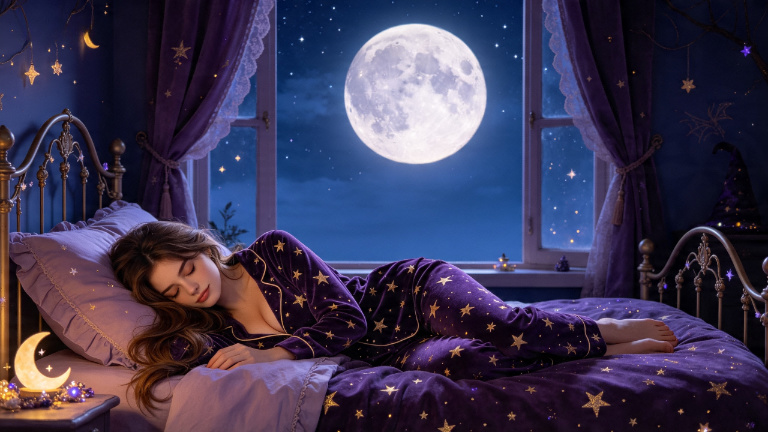
Even setting aside anything mystical, the full moon is simply brighter than any other phase, and that brightness affects your natural sleep rhythm. Add in the extra energetic activity happening on a spiritual level, and you’ve got a recipe for restless, lower-quality sleep during the days surrounding the full moon.
Spiritually, the full moon is considered a high-energy time, which can make it harder for your body to fully power down and enter deep rest. Your spirit stays a little more alert, a little more tuned in, even while your body is lying in bed trying to sleep. That mismatch between spiritual alertness and physical exhaustion is part of what leaves you feeling so drained the next day.
Blackout curtains, calming rituals before bed, and setting an intention to rest deeply can all help smooth this disruption out. Some people also find it helpful to do a quick energy clearing before sleep, like a simple visualization of white light surrounding them, to signal to their spirit that it’s safe to power down.
8. You’re Carrying Collective Energy, Not Just Your Own

Full moons don’t just affect you individually, they affect everyone at the same time. That means the entire collective is releasing, feeling, and processing all at once, and sensitive people often end up absorbing a share of that collective energy without even realizing it. It’s like being in a room where everyone is having a big emotional moment, and your own feelings get tangled up with theirs.
This is especially true for empaths and highly sensitive people, who naturally soak up the emotional and energetic atmosphere around them. During a full moon, that atmosphere is turned all the way up, everywhere, all at once. Carrying even a small piece of that collective weight can leave you feeling inexplicably tired, heavy, or emotionally foggy.
Protective practices like visualizing a bubble of light around yourself, carrying a grounding crystal like black tourmaline, or simply setting the intention “I release what isn’t mine” before bed can make a real difference. You don’t have to carry the world’s energy just because you’re sensitive to it.
9. Your Body Is Detoxing on a Spiritual Level

Full moons are widely considered a natural detox period, not just physically but spiritually. Old energy, stagnant thought patterns, and lingering emotional residue all get stirred up so they can be cleared out. This spiritual detox works a bit like a physical one: it can leave you feeling foggy, heavy, and low on energy while it’s happening.
Just like a physical cleanse can leave you tired as your body works through toxins, a spiritual cleanse pulls energy toward clearing out what’s built up over the past month. Your system is busy behind the scenes, and that internal effort doesn’t always feel productive from the outside, it often just feels exhausting.
Supporting this natural detox with extra water, gentle movement, and quiet downtime helps it move through more smoothly. Think of the tiredness as a sign that real clearing work is happening, not a sign that something is wrong. Trust the process and give your body the rest it’s asking for.
10. You’re Being Called to Slow Down and Reflect

Sometimes the simplest explanation is the truest one: the full moon is asking you to pause. In a world that praises hustle and constant motion, full moon fatigue can be your spirit’s way of forcing a stop, whether you were planning on it or not. It’s an invitation to reflect on the month behind you and get quiet enough to hear what comes next.
This kind of tiredness often shows up as a heavy pull toward rest rather than plain physical exhaustion. You might feel completely fine physically and still find yourself wanting nothing more than to curl up and do nothing. That’s less about your body needing sleep and more about your spirit needing stillness.
Honoring this pull instead of resisting it tends to make the whole cycle easier. Light a candle, sit somewhere quiet, and simply ask yourself what the past month has taught you. Full moons come around every month for a reason, and each one is a fresh chance to pause, reflect, and reset before the next cycle begins.
A Few Extra Tips to Support Yourself During Full Moons

If full moon fatigue tends to hit you hard, a few small habits can make a big difference. Try clearing your space with sage, palo santo, or simply opening a window to let stagnant energy out. Keep a grounding crystal like black tourmaline or hematite nearby, drink extra water, and give yourself permission to go to bed earlier than usual for a few nights. None of this needs to be complicated, small consistent rituals tend to work better than anything elaborate.
It also helps to track your own personal pattern. Keep a simple journal of how you feel in the days leading up to, during, and after each full moon. Over time you’ll start to notice your own unique rhythm, which symptoms show up for you specifically, and which practices help you the most. The moon has been doing this for a very long time, and the more you pay attention, the easier it gets to move with it instead of against it.
Working With the Moon Instead of Against It
Full moon fatigue isn’t a flaw in your system, it’s proof that your system is deeply connected to something much bigger than yourself. Every wave of tiredness, every vivid dream, every unexpected wave of emotion is a sign that you’re tuned in, sensitive, and alive to the rhythms of the world around you. That’s not something to fix, it’s something to honor.
The next time a full moon leaves you needing an early night or a quiet afternoon, try not to fight it. Rest, reflect, and let the moon do what it’s always done, pulling the tides, and pulling a little something out of you too. You’ll come out the other side lighter, clearer, and ready for whatever the next cycle brings.