


Have you ever felt like you were born in the wrong era? Like the world around you moves too fast, too loud, too shallow — and somewhere deep inside, you carry a quiet knowing that doesn’t quite match your age? That feeling isn’t random. It’s not anxiety, and it’s not you being antisocial. It might be something much more interesting. It might be that your soul has simply been here before.
Old souls are real. They walk among us in every generation — people who seem to have skipped a few steps in the growing-up process, who feel deeply, think slowly and carefully, and find more comfort in a rainy afternoon with a good book than in a crowded room full of noise. They’re not better than anyone else. They’re just… different. Seasoned. Like they arrived already knowing things most people spend a lifetime figuring out.
The thing is, most old souls don’t go around announcing themselves. They’re usually the quiet ones in the corner, the ones who listen more than they talk, the ones you walk away from feeling strangely understood. They don’t always know what they are. They just know they’ve always felt a little out of place — not in a sad way, but in a “I’m watching all of this from a slight distance” kind of way. Sound familiar?
If you’ve ever been told you’re an old soul, or if you’ve quietly wondered it yourself, this list is for you. These aren’t dramatic, mystical signs. They’re the everyday things — the small, ordinary habits and tendencies that quietly reveal a soul that has seen more than one lifetime. Read through them slowly. You might recognize yourself more than once.
1. You Prefer Deep Conversations Over Small Talk

Small talk feels like wearing shoes on the wrong feet. You can do it — you’ve learned how — but it never feels natural, and you’re always relieved when it’s over. You don’t particularly care about the weather, what someone does for work, or the latest gossip making its rounds. What you actually want to know is what keeps someone up at night. What they believe in. What broke them open and how they put themselves back together. That’s where you come alive.
This isn’t snobbery. It’s not that you think you’re above casual conversation. It’s that surface-level exchange genuinely exhausts you in a way that deep, honest conversation never does. You’d rather have one long, winding talk with someone about life and meaning and loss than spend an entire evening bouncing through pleasantries with a dozen people. Quality over quantity — in conversations, in friendships, in everything.
Old souls tend to be naturally curious about the interior life of others. They’re drawn to the real stuff — the stuff people usually hide. And because they’re willing to go there themselves, people often open up to them in ways they don’t expect to. Strangers tell old souls things they’ve never told anyone. It’s almost like people can sense they’re in a safe place, with someone who actually wants to hear it.
If you’ve ever left a party feeling more drained than when you arrived, but could talk to one good friend until three in the morning without running out of things to say — that’s your old soul talking. You’re not antisocial. You’re just selective. And deep down, you’ve always known the difference between connection and performance.
2. You Feel a Strong Pull Toward the Past

There’s something about old things that gets to you. Old music, old buildings, old letters written in careful cursive by people who are long gone. You walk into an antique shop and feel oddly at home. You hear a song from a decade you didn’t even live through and somehow, it feels familiar — like a memory you can’t quite place. The past pulls at you in a way that’s hard to explain to people who don’t feel it.
It’s not nostalgia in the ordinary sense. It’s deeper than that. It’s more like recognition. Like some part of you remembers living at a slower pace, in a quieter world, where things were built to last and people sat together in the evenings without a screen in sight. You’re not naive about history — you know the past had its darkness too. But something about the rhythm of it, the texture of it, calls to you anyway.
Old souls often find themselves drawn to specific eras, aesthetics, or art forms without knowing why. Maybe it’s the 1940s. Maybe it’s ancient philosophy. Maybe it’s folk music or handwritten journals or black-and-white films. Whatever it is, it feels less like a preference and more like a homecoming. Like you’re not just admiring something from the outside — you’re returning to it.
This pull toward the past can make modern life feel a little jarring sometimes. The speed of everything, the disposability of things, the way nothing seems built to last — it all sits a little uneasily with you. You’re not trying to live in the past. You just carry it with you, like a quiet companion that never quite lets go.
3. You Need a Lot of Time Alone to Feel Like Yourself
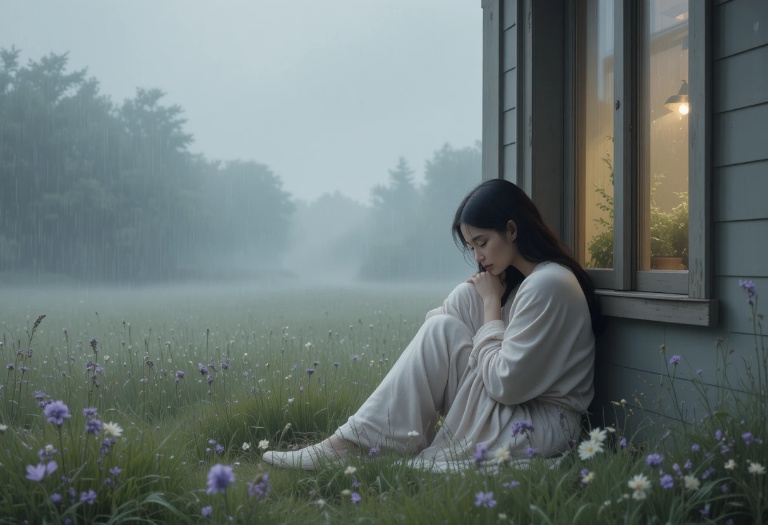
You don’t just enjoy solitude — you need it. Not because you’re lonely or broken or hiding from something. But because time alone is how you come back to yourself. It’s where you recharge, reflect, make sense of things. Without it, you start to feel scattered and out of sync, like a phone that’s been running too many apps for too long and is starting to overheat.
For an old soul, being around people — even people you love — takes something out of you. Not because you don’t care, but because you feel things deeply and absorb a lot. You pick up on moods, tensions, and unspoken things. You’re present in a way that’s quietly exhausting. And so when you finally get to be alone, it’s not emptiness you feel. It’s relief. Space. The ability to hear yourself think again.
This need for solitude is often misunderstood. People call you introverted, aloof, antisocial. And maybe some of those labels fit, in a technical sense. But what’s really happening is that you have a rich inner world — one that needs tending. Silence isn’t empty for you. It’s full. It’s where your best ideas live, where your feelings get sorted, where you do the quiet work of understanding yourself and the world around you.
Old souls have always been this way. Even as children, many of them preferred playing alone, daydreaming, lost in their own imagination. It wasn’t sadness. It was depth. And that same depth follows them into adulthood, making solitude not just a preference but a genuine necessity — as important as sleep, as nourishing as food.
4. You Have a Deep Sense of Empathy

You feel other people’s pain in a way that sometimes surprises even you. A stranger crying on a bus, a character in a film facing loss, a friend trying to hold it together — it lands in you. Really lands. Not as information to be processed but as something felt, almost in your own body. You don’t just understand that someone is hurting. You feel the weight of it alongside them.
This level of empathy can be a gift and a burden at the same time. On one hand, it makes you an extraordinary friend, listener, and human being. People feel truly seen around you, and that’s rare. On the other hand, you sometimes carry the emotional weight of the world in ways that wear you down. You leave difficult conversations feeling heavy. You absorb the energy of rooms. You care, sometimes, to the point of pain.
Old souls tend to have empathy that goes beyond the personal. They feel connected not just to the people around them, but to humanity in a broader sense. The suffering of people far away, the state of the planet, the stories of history — it all matters to them in a visceral way. They can’t always explain why they care so much about things that don’t directly affect them. They just do. It’s wired into them.
Learning to manage this kind of empathy is one of the ongoing challenges of being an old soul. You can’t turn it off, and you wouldn’t want to. But over time, most old souls learn the difference between feeling with someone and drowning with them. They learn to be present without losing themselves — a skill that takes lifetimes to master, and one they’re clearly still working on.
5. You’re Drawn to Wisdom, Philosophy, and the Big Questions

You’ve always wanted to know why. Not just the surface why — the deep one. Why are we here? What does it mean to live a good life? What happens after we die? What is consciousness, what is the self, what is any of this? These aren’t abstract exercises for you. They’re genuine questions that have followed you since you were young, probably long before you had the vocabulary for them.
Old souls are naturally philosophical. They’re drawn to the kind of thinking that doesn’t have clean answers — the kind that opens into more questions the deeper you go. They read old books and find wisdom that feels startlingly current. They sit with uncertainty better than most people, because they’ve learned — somehow, somewhere — that not everything needs to be resolved to be true.
This shows up in everyday life too. You find yourself drawn to conversations about meaning, drawn to people who think carefully about how they live. You’re less interested in trends and more interested in timeless things. You’re the person who reads Stoic philosophy on a Tuesday afternoon and feels something shift in your chest. Who finds a single sentence in an old book and thinks about it for a week. Who sits with a hard question not because you think you’ll solve it, but because sitting with it feels like the right thing to do.
The big questions don’t frighten you the way they frighten some people. Death, impermanence, the mystery of existence — you hold these things with a kind of reverence rather than dread. Maybe because some part of you, underneath the thinking mind, already knows more than it lets on. Old souls often carry a quiet certainty that can’t be explained — only lived.
6. You’ve Always Felt a Little Out of Place

Not in a painful way, necessarily — though sometimes it is that. More like a persistent, low hum of not quite fitting in. Even in rooms full of people who like you, even in families who love you, there’s often a sense that you’re watching from a slight remove. Like everyone else got a manual you never received, with instructions for how to want what they want and feel what they feel.
As a child, you might have been called an old head on young shoulders. You might have preferred the company of adults, or books, or your own imagination over games and noise and the things other kids seemed to love. Not because you were unhappy — just because something in you was already somewhere else. Already asking questions most kids your age hadn’t thought to ask yet.
This sense of displacement doesn’t go away with age. It just becomes more familiar, more manageable. You stop expecting to feel like you fully belong, and you start to find beauty in the in-between. Old souls often become the bridge between people — the ones who can move between worlds, understand different perspectives, hold space for complexity. Their outsider quality becomes, in time, one of their greatest gifts.
And there’s a particular kind of peace that comes when an old soul finally meets another one. When two people sit down and immediately understand each other in that wordless, bone-deep way. No explanation needed. No performance required. Just recognition. If you’ve ever had that experience, you know exactly what it feels like — and you know how rare it is, and how worth waiting for.
7. You’re Naturally Intuitive

You just know things sometimes. Not in a way you can always explain or defend. A feeling about a person the moment you meet them. A sense that something is off before anyone says a word. An instinct to turn left instead of right, to wait instead of act, to reach out to someone you haven’t thought about in months — only to find out they needed to hear from you. You’ve learned to trust this knowing, even when logic argues against it.
Intuition is something most people have, but old souls have it turned up high. They’ve spent enough time — across enough experiences, whether in this life or others — listening to the quiet frequency beneath everyday noise that they’ve gotten very good at hearing it. It’s not magic, exactly. Or maybe it is. Either way, it works.
This intuition often shows up in their understanding of people. Old souls are rarely fooled by surfaces. They can sense kindness behind awkwardness, pain behind anger, truth behind a carefully constructed story. They see people — really see them — in a way that sometimes unnerves the people being seen. More than one person has told an old soul, slightly unsettled, “I feel like you already know everything about me.” And the old soul usually smiles and says nothing, because yes. Kind of.
Learning to trust this intuition — especially in a world that prizes logic above all else — is part of the old soul’s journey. They’ve often been told they’re “too sensitive” or “reading into things.” But they’ve also been right too many times to dismiss it entirely. The intuition is real. The signal is real. And the older the soul, the clearer it comes through.
8. You Find More Meaning in Simple Things Than in Big Ones
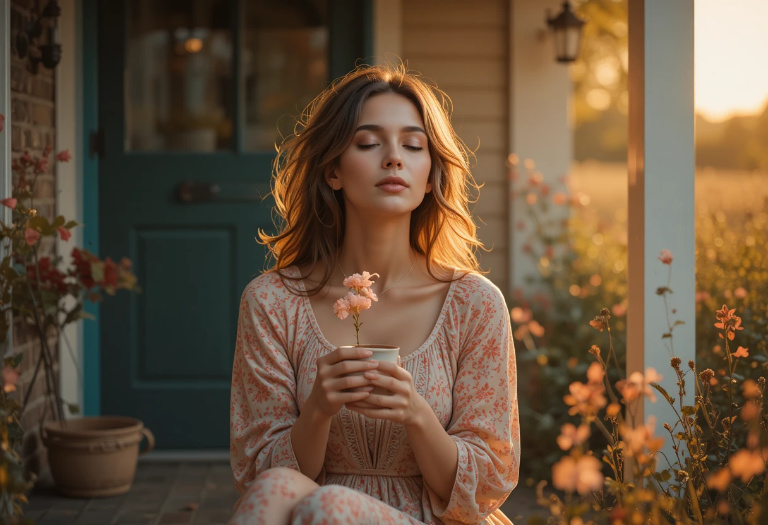
You don’t need grand gestures or spectacular experiences to feel alive. The things that move you most are usually the quiet ones. Morning light through a window. The smell of rain on dry earth. A song that catches you off guard. A conversation that goes somewhere true. A moment of stillness in a busy day. These small things aren’t small to you — they’re everything.
This isn’t about being easily pleased or lacking ambition. It’s about knowing, on some level, what actually matters. Old souls tend to have a natural sense of proportion about life. The things the world says should make you happy — status, money, the approval of others — often feel thin and unsatisfying to them. Meanwhile, the things the world overlooks — beauty, connection, presence, meaning — feel endlessly rich.
There’s a word for this in Japanese: mono no aware. It translates roughly to “the bittersweet awareness of impermanence.” It’s the feeling you get when something beautiful is happening and you know, even as it’s happening, that it will pass — and somehow that makes it more precious, not less. Old souls live inside this feeling a lot. They grieve the ordinary moment even while they’re still in it, because they love it that much.
This is why old souls often make extraordinary artists, writers, musicians, teachers, caregivers. They notice what others walk past. They slow down enough to feel what others are too busy to feel. And then they find a way to put it into words, or music, or a meal, or a kind act — offering the world a piece of what they saw. A small thing, carefully held. Which is, in the end, what most of the best things are.
9. You’re at Peace With the Idea of Death

This one surprises people. Not because old souls are morbid — they’re usually not — but because they hold death differently than most. Not with dread or denial, but with a kind of calm acceptance. An understanding, maybe even a familiarity. Like it’s not the ending it appears to be. Like they’ve been through that door before, and they know something about what’s on the other side.
Old souls tend to think about mortality more than average, and more comfortably. They’re drawn to the philosophy of it, the mystery of it, the way awareness of death sharpens life into something vivid and real. They find the Stoics’ meditations on impermanence not morbid but clarifying. They can sit with the fact that they — and everyone they love — will one day be gone, and feel not paralyzed but somehow freed by it.
This comfort with death is part of why old souls tend to live with a certain intentionality. They don’t take days for granted the way it’s easy to when you’re not thinking about endings. They know time is finite and they feel it in their bones. Not in a panicked way — in a grateful, present, this-matters way. Death, for an old soul, is less a wall at the end of the road and more a reminder to walk the road with care.
It’s also, perhaps, because old souls carry within them a quiet sense of continuity. They don’t experience themselves as entirely contained in this one life. Whether you call that past lives, the soul’s journey, spiritual memory, or simply a feeling — it’s real to them. And it makes the prospect of this life ending feel less like erasure and more like a transition. One chapter closing, and another waiting to begin.
10. You Feel a Connection to Something Much Larger Than Yourself

There are moments — quiet ones, usually — when you feel it. A sense of belonging to something vast. Something that holds all of it: the suffering and the beauty, the questions and the silence, the long arc of human history and the single moment you’re standing in right now. It doesn’t always have a name. It doesn’t need one. It’s just there, underneath everything, solid and real and impossible to explain.
Old souls feel this connection deeply and often. It’s not always a religious experience, though for some it is. It’s more like a knowing — the same kind of knowing you can’t argue someone into or out of. A felt sense that you are part of something ancient and ongoing. That this life, this body, this particular set of experiences is one small thread in a tapestry that stretches further than the eye can see.
This is why old souls often feel at home in nature, in sacred spaces, in music that seems to carry something beyond sound. They’re easily moved by acts of extraordinary human kindness. They feel the weight of history not as a lesson but as a living thing. They’re moved by art made by people who died centuries ago because something in them recognizes that art — recognizes the hand that made it, the heart behind it, the longing it came from.
And on the hardest days — when nothing makes sense and the world feels broken and being alive feels like too much — this connection is what holds them. Not a belief they have to argue themselves into. Just a feeling, quiet and unshakeable, that they are not alone. That they have never been alone. That something much larger than any one life has always been holding them, and always will. That, perhaps more than anything else, is the mark of a soul that has traveled far — and knows, in its bones, that it will keep going.