
Long before Christmas lights twinkled in shop windows and evergreen trees appeared in living rooms, the deepest magic of the season was already alive. The Winter Solstice—also known as Yule—was once the heart of midwinter celebration. This was the longest night of the year, when the Sun seemed to pause in the sky, and people gathered to protect the light, welcome its return, and keep hope alive through the cold.
In a world without electric lights or central heating, winter was not just a vibe—it was a real test of survival. Darkness came early. Food was scarce. The land slept. And yet, people believed this quiet, shadowed time was powerful. The veil felt thinner. Spirits were closer. The future could be whispered into being if you listened closely enough.
What we now call Christmas magic didn’t appear out of nowhere. It grew directly from these ancient Winter Solstice rituals. The songs, the candles, the greenery, the gift-giving—all of it has roots in older practices meant to honor the Sun, the Earth, and the unseen forces that move quietly through the cold.
When you peel back the modern layers, Christmas reveals itself as a spell that’s been cast again and again for thousands of years.
The Winter Solstice: When Darkness Holds Power
The Winter Solstice marks the longest night and the shortest day of the year. For ancient people, this moment mattered deeply. It wasn’t just astronomical—it was spiritual. The Sun appeared weak, distant, almost gone. And yet, the Solstice promised something vital: from this point on, the days would slowly grow longer.
This turning point felt like a miracle. Even in the deepest darkness, the light was already on its way back.
Many cultures believed the Sun was reborn on the Solstice. Some imagined it as a child. Others as a god regaining strength. Fires were lit not only for warmth, but to help guide the Sun home. Candles weren’t decoration—they were offerings.
This belief still hums beneath modern Christmas magic. Every light strung, every candle lit, carries the same quiet message: the darkness will not last forever.
Yule: The Pagan Heart of Christmas Magic
Yule was one of the most important festivals across Northern Europe. Celebrated by Germanic, Norse, and Celtic peoples, it stretched over several days—or even weeks—around the Winter Solstice.
This was not a single holy day, but a season of magic.
Homes were decorated with evergreen plants because they stayed alive through winter. This wasn’t random—it was sympathetic magic. By surrounding themselves with life, people believed they were inviting life to return to the land. Holly, ivy, pine, and fir weren’t pretty accents. They were protective charms.
Feasting during Yule wasn’t indulgence—it was ritual abundance. Sharing food told the spirits, the ancestors, and the land itself: we trust there will be enough. This belief lives on every time we gather for Christmas meals.
Even gift-giving began here. Small offerings were exchanged as symbols of goodwill, luck, and future prosperity. These gifts weren’t about value—they were about intention.
The Yule Log and the Spell of Fire
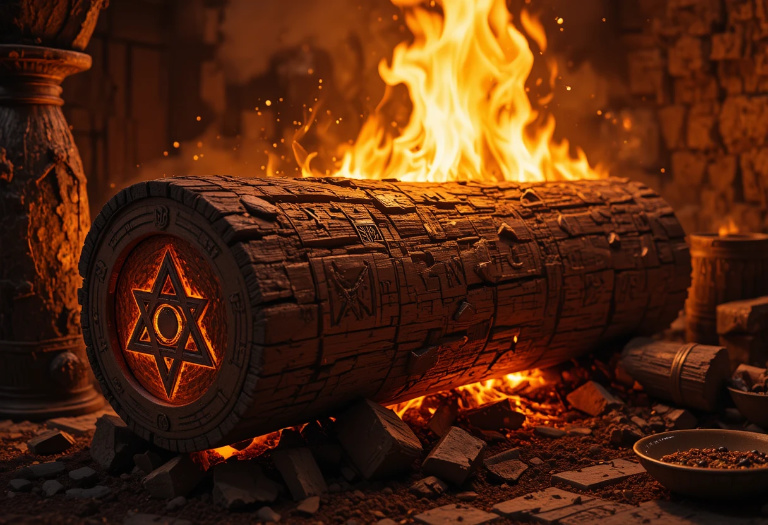
One of the strongest pieces of Winter Solstice magic was the Yule log. A large log was brought into the home and burned slowly, sometimes for days. Its fire was sacred.
Ashes from the Yule log were kept for protection, fertility, and luck. They were sprinkled on fields, mixed into charms, or saved to light the next year’s fire. This created a magical thread from one winter to the next.
Fire, during the Solstice, wasn’t just warmth. It was life-force. It was the Sun in miniature.
Today, we see echoes of this in fireplaces, candles, and even the warm glow of Christmas lights. The spell has changed shape, but it’s still being cast.
Evergreen Trees and the Living Spirit of Winter
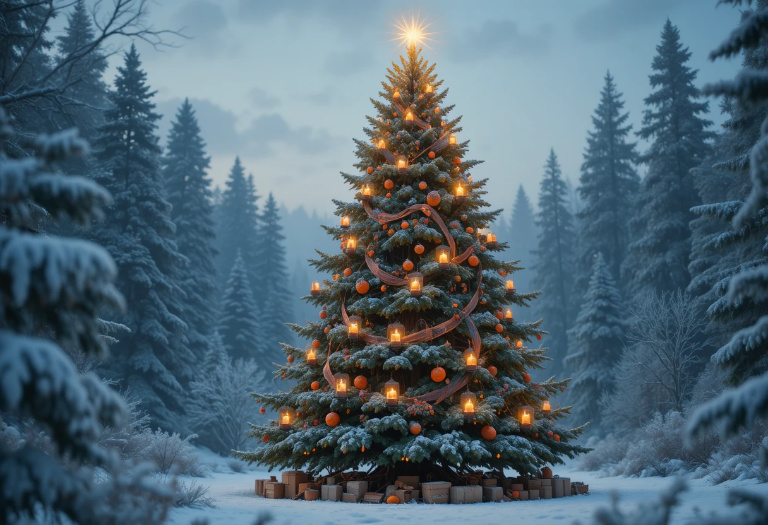
The Christmas tree is one of the most obvious remnants of ancient Winter Solstice rituals. Long before it stood in living rooms, evergreen trees were honored as sacred beings.
Because they stayed green when everything else died back, they were seen as guardians of life. Some believed spirits lived within them. Others saw them as bridges between worlds.
Decorating trees with lights, ornaments, and offerings wasn’t about decoration—it was about honoring the spirit within the tree. Apples, nuts, ribbons, and candles were once used as symbolic gifts to nature and the unseen.
When you decorate a Christmas tree today, you’re continuing a ritual older than written history. The magic remembers, even if we don’t.
Holly, Mistletoe, and Plant Spirits of Protection
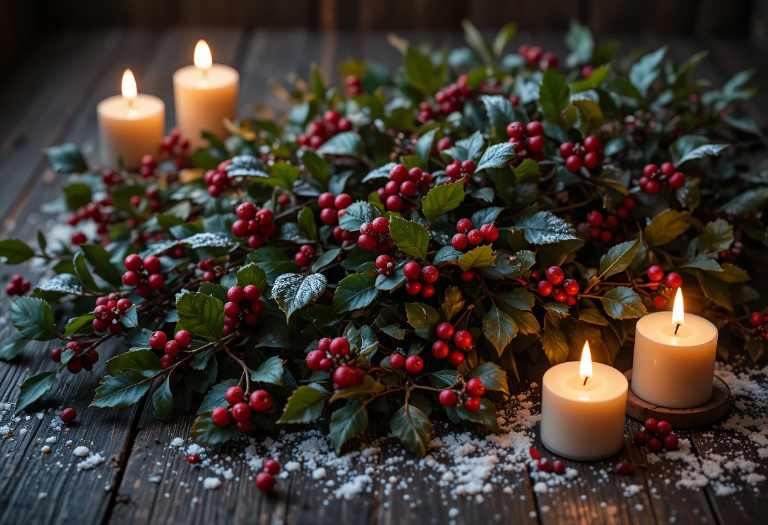
Plants carried strong magical meaning during the Winter Solstice. Holly was associated with protection and strength. Its sharp leaves were believed to ward off harmful spirits. Its red berries symbolized life-force and blood.
Mistletoe was considered especially sacred. Growing between earth and sky, it was seen as a liminal plant—one that belonged to both worlds. Kissing beneath it wasn’t just romantic; it was a blessing ritual tied to fertility, peace, and harmony.
Bringing these plants indoors was a way of inviting their spirits into the home for protection through the winter months. Even now, these traditions carry a subtle energy that feels warm, familiar, and quietly powerful.
Santa Claus and the Ancient Winter Spirit
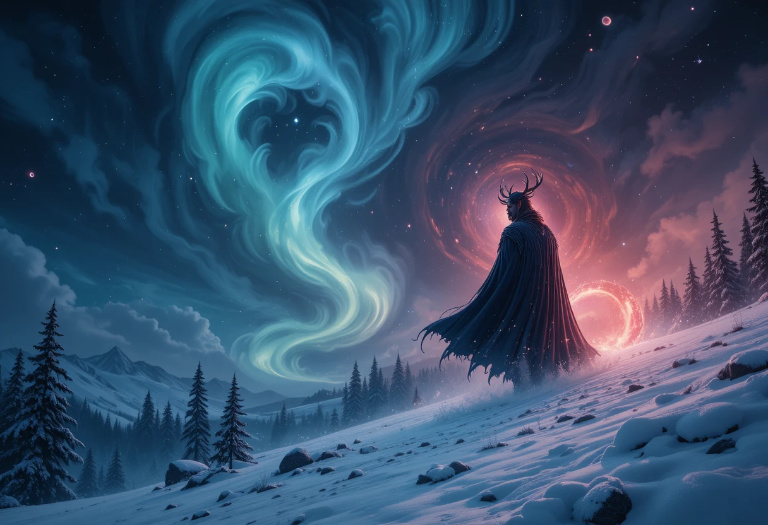
Santa Claus didn’t appear fully formed. He evolved from older winter figures, including Odin, the Norse god who rode through the sky during Yule. Odin was associated with wisdom, magic, and the Wild Hunt—a procession of spirits that swept across the winter sky.
Children would leave offerings for Odin’s eight-legged horse, and in return, they believed he would leave gifts. This feels very familiar for a reason.
Over time, this powerful winter god softened into a jolly figure, but the magic stayed. Santa still travels through the night. He still judges behavior. He still rewards generosity.
At his core, Santa is a spirit of winter magic, abundance, and unseen movement.
Christmas Magic as a Living Spell
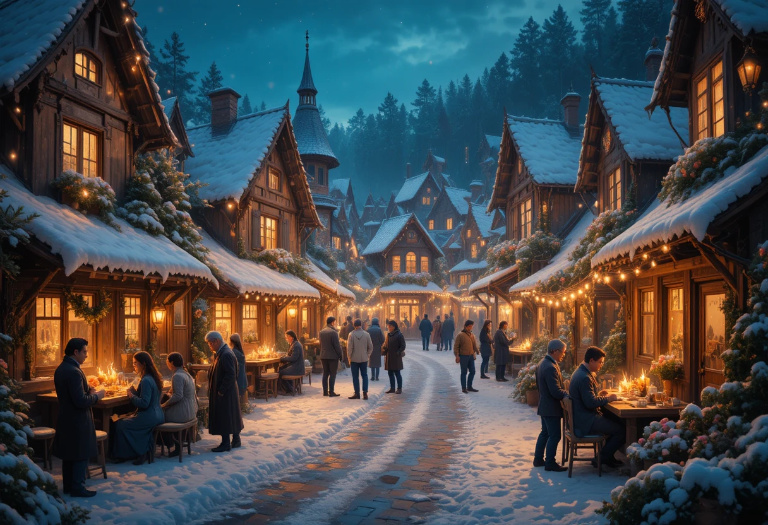
Modern Christmas often feels commercial, but beneath the noise, the old magic still breathes. The rituals remain. The symbols remain. The timing remains.
When families gather during the darkest days of the year, something ancient wakes up. When lights glow against the night, when songs fill cold air, when people reach for kindness more easily—this is Winter Solstice magic doing what it’s always done.
It softens the darkness. It reminds us to endure. It promises return.
You don’t need to practice old rituals exactly as they once were. The magic adapts. It always has. Every heartfelt tradition, every quiet moment of warmth, becomes part of the spell.
Remembering the Sacred in the Season
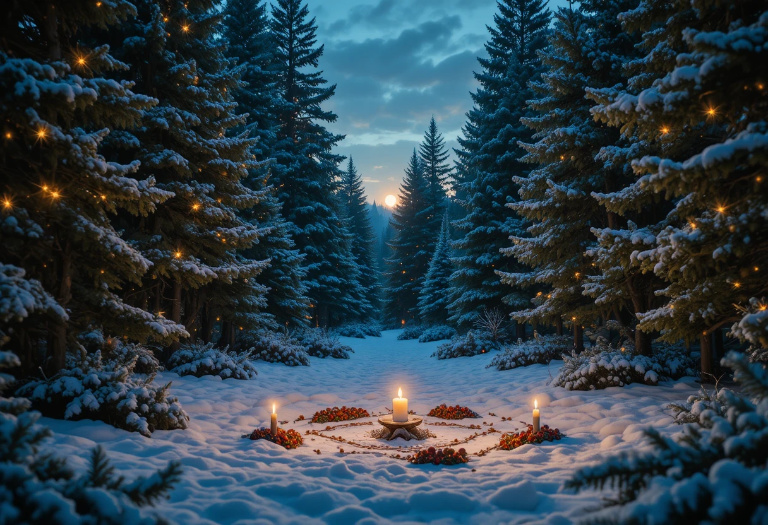
The forgotten origins of Christmas magic aren’t truly forgotten. They live in instinct, in atmosphere, in that feeling that something deeper is happening beneath the surface.
Winter teaches patience. The Solstice teaches faith. Christmas carries both, wrapped in lights and stories that feel older than words.
When you honor this season—whether through candles, greenery, gratitude, or rest—you are stepping into a stream of magic that has flowed for thousands of years.
And it still knows your name.
A Quiet Light That Never Went Out
Even as traditions changed and names shifted, the heart of Winter Solstice magic never disappeared. It waited quietly inside Christmas, glowing softly like an ember beneath ash. Every candle lit in the dark, every shared meal, every moment of warmth is proof that the old magic still works.
The season doesn’t ask you to believe harder or do more. It simply invites you to remember. In the longest night, light returns. In stillness, magic moves. And in winter’s silence, the ancient spell continues—steady, patient, and very much alive.